Good Men

Poetry / Sarah Kersey


:: Good Men ::

for JWH

I keep changing. This is
forever.
The wind applauds my red motorcycle
as it breaks 50 mph before
it sputters out on the side of the road,
gravel gray like gospel. Shattered.
Do you need help?
Tenderness reduces to copper,
calculates what I owe. I’ve climbed
into beds, onto faces, on top of waists,
now into this white pickup truck.
Bikers help each other.
When I told the elders I no longer
wished to be known as one of Jehovah’s Witnesses,
you, a good man, the only man I love,
cried into the Zoom screen; as if
the weather had changed 
to cool morning mist.
You knew everything I’d lost and wet all of it
so I wouldn’t crack.
Listen to me, you said.
I was going to be alone.
Kicking off gravel caught in my boots,
I got into the truck.
Next time, the man said,
take off your helmet.
It will signal to other bikers that
you need help.

From the writer


:: Account ::

Every year since Sep­tem­ber 2014, I always attempt to write a poem about one of the great­est loss­es I’ve had in my life. I was attempt­ing that poem last year when it became too dif­fi­cult to con­tin­ue the draft. At around that time, I took a poet­ry work­shop called Poet­ry and Inti­ma­cy, which was led by Taneum Bam­brick. One of their prompts was to write about an inti­mate moment between strangers. “Good Men” is the result. It’s based on my actu­al expe­ri­ence of run­ning out of gas while rid­ing my motor­cy­cle in New Jer­sey, and a man who stopped on the side of the road to help. I was also stuck on a sep­a­rate draft of a poem about my dis­as­so­ci­a­tion from the Jehovah’s Wit­ness­es in Decem­ber 2021. All these loss­es merged in my brain, on and off the page. Yet, this poem embod­ies a hope I’d nev­er pre­vi­ous­ly imag­ined for myself, even as I wres­tle between my old and new self, my old and new beliefs.


Sarah Kersey is a poet and x‑ray tech­nol­o­gist who lives right out­side Boston, MA. She has received sup­port from Tin House Work­shop. Their debut chap­book Anacru­sis is forth­com­ing with New­found in 2024. She tweets @sk__poet.


The Best Thing About Poetry Isn’t Poetry

Poetry / David Kirby


:: The Best Thing About Poetry Isn’t Poetry::

When I take my morning walk, I used to wave at every car that came my way, but only half of 
the drivers waved back, so I stopped waving, but the half that did wave became
accustomed to my friendly greeting, and now they wave at me before I can wave at them,
so I don’t know what to do. I do know I wouldn’t be having these problems if Frank O’Hara were my friend. Ashbery said O’Hara “gave you the feeling of belonging to an exclusive club with him, as if you
had hooked into some big, secret continuum of life. Frank had a personal kind of idea
about things, which made you feel you could think independently, too.” And according to Ginsberg, O’Hara’s “feelings for me seemed to vibrate with my feelings for
myself. I think he saw my ideal self-image; he articulated it and made it sound right.” Remember your first set of friends? When you were a kid, you’d go to their houses for dinner and learned not only about different
foods but also different ways of doing things. You learned that capers weren’t fish eyes but flower buds, that garlic was an actual vegetable
and not a hard dry powder. Sometimes you saw grown-ups drink wine for dinner instead of milk or Pepsi, and when they
gave you a sip, you didn’t like it, but you knew you would. Then there was the time you saw Ryan Mattingly’s dad pat Mrs. Mattingly’s butt in the kitchen
and waited for her to scowl at him the way your mom would, but she smiled instead. Some of my best friends ever are the ones I argued with most, such as Ed, Dennis, and Ken, my
grad-school roommates. Grad school had two effects on us: it made us think we were smarter than we were, and it
furnished us with quotes to use like rapiers as we feinted and lunged in our nightly duels,
a favorite being Blake’s “Mock on, Mock on, Voltaire, Rousseau / Mock on, ’tis all in
vain. / You throw the sand against the wind, / And the wind blows it back again.” Somebody, Ed or Dennis, say, would say, “Would somebody explain to me what structuralism is
so I’ll know whether or not I’m a structuralist?” and someone else, maybe Ken or me,
would say, “You’re wasting your time. Just say what you like and why you like it,” and
whoever said the first thing would say “Mock on, mock on, Voltaire, Rousseau!” and the
talk would go on forever because we weren’t contradicting each other, Blake was. A good quote attributes the animus to someone else, not you. Or it’s like a potholder you use to
pick up the argument when the argument’s too hot to handle. Mainly, though we spent our afternoon sitting on the floor of the library swapping books of
poems and reading aloud to each other in stagey whispers, our backs against the stacks
like harvesters in a painting by Millet taking a break from the soul-numbing grind of
work. Those guys are all married now. Or re-married. And far away. I never see them any more. I see them every day. Isn’t that how friendship works? Thank you, poetry! Thank you for my friends and the friends to come. When you’re young and you tell people you’re going to study art and poetry, they look at you as
though you’re crazy. When you’re older and you tell people you studied art and poetry,
they say, “I wish I’d done that.”

From the writer


:: Account ::

Ever get the feel­ing that your favorite poets are writ­ing the same good poems over and over again? I start­ed think­ing that way about my own work a few years ago, so I tried some new tricks: short­er poems, longer poems, dif­fer­ent for­mats, edgi­er syn­tax. Painters and song­writ­ers rein­vent them­selves all the time, so why not poets? At the same time I decid­ed to stop think­ing in terms of good, bet­ter, best. The thing is to be dif­fer­ent. If that leads to work you or your read­ers like, fine, but if it doesn’t, with­out a doubt these changes will lead you to some­thing new and then to some­thing even new­er, a way of writ­ing you haven’t come close to imag­in­ing. Remem­ber, poet­ry is the long con, and rein­ven­tion means you’ll stay in the game that much longer. I call some of these new poem types “Gins­bergs.” That doesn’t mean that they read like Gins­berg poems, just that that old bear’s spir­it freed me to take chances.


David Kir­by teach­es at Flori­da State Uni­ver­si­ty. He is the author of Lit­tle Richard: The Birth of Rock ‘n’ Roll, which the Times Lit­er­ary Sup­ple­ment described as “a hymn of praise to the eman­ci­pa­to­ry pow­er of non­sense” and which was named one of Booklist’s Top 10 Black His­to­ry Non-Fic­tion Books of 2010. Enter­tain­ment Week­ly has called Kirby’s poet­ry one of “5 Rea­sons to Live.” In 2016, Kir­by received a Life­time Achieve­ment Award from Flori­da Human­i­ties, which called him “a lit­er­ary trea­sure of our state.”


2 Poems

Poetry / Louie Leyson


:: pinay cyborg manifesto ::

I’ve been sick with woman’s want
to become beyond body—closer to chrome

glint & pearl oil than blood, than organ. this is how
I understand perfection after years watching

lola tuck herself beneath shadow, bending
like soft metal in her mistaking of bronze

for burning. my lipsticked titas under willow trees,
a collective absence of bone. each brown, full

limb a bruise refusing to heal, each charcoal
shade a fruitless makeshift cast. august a lesson

in how the injured pinay body has parts too rooted
to the human. when nanay said I wish she was born

whiter she meant wishing I entered this world intact,
born a heap of gleaming silver. & how could I

blame her? after so many motions to smooth the lines
rippling the round lake of her face, drawn from the wisps

of a father’s smoke. we both know the cyborg
is an unholy thing, spared edenic origins & therefore

cannot die. there is nothing she dreams of more
than to reach that point of endless healing, to spend

hours submerged in freezing water but still swim up,
intact. to drive through agate swaths of fire but still

speed out, old toyota charred to nothing, skin painted
ash like dove belly. perhaps there’s already

a cyborg quality to the pinay’s long survival, which
to this point has been bulletproof. I don’t know

titanium sturdy enough to withstand the plain hurt
of centuries, coalescing to meet my nanay like wounds

from ancient lives. pained, we keep peeling tamarind
for sinigang. keep gathering okra, patis, chilli pepper,

taro. isn’t that bionic? isn’t that miraculous?

:: a conversation between two choirs ::

ave, ave, ave maria. i am trying to find the root
of silence, like a voice that carries another voice
inside. mary thy praises we sing to the backs of a hundred
upturned heads. like tulips asleep inside the pillow
of your fist. in heaven the blessed crouch to dirty
dance atop a fruitless garden. a stone that falls in winter
& the intact walls of its crater. erupting from our chests
a bird named alleluia! alleluia! how stones make perfect bowls
out of snow. oh lord you arrive & sorrow goes like sparrow heads
buried in holy bark. is there anything more sharp than below
zero quiet. sun on the blood on the wood of the cross, bright
on bright on bright. is anything born from an absence
of mouths. on the pew i shake like a root in the rain.
from the soundlessness of a dead bug. twelfth Sunday
of ordinary time. mistaking a womb for the cave
of my throat. or was it during lenten season.
entombing the wound of my tongue
when you come. holy spirit i too burn like the wick
of a violent candle. a violet candle lit up & noiseless
in its yearning. yes, yes that’s what i always
meant. amen.

From the writer


:: Account ::

I was tired of want­i­ng word­less­ly. I need­ed some con­text, a tex­ture upon which to con­tem­plate desire, and so I wrote these poems. Desire, then, dic­tates the tone of these poems. Much of it restrained, as queer desire often is. There is so much on earth to long for. I need­ed to put that long­ing down, build it a bed in which to sleep through the night.

In her sem­i­nal essay “A Cyborg Man­i­festo,” Don­na Har­away writes, “Cyborg imagery can sug­gest a way out of the maze of dualisms in which we have explained our bod­ies and our tools to our­selves.” Since first encoun­ter­ing this, I’ve obses­sive­ly fig­ured the cyborg in my own work as a utopi­an shapeshifter, or as a nar­ra­tive machine with which to pro­pel our­selves from the dam­ag­ing mytholo­gies that have been instilled in us since child­hood. In “pinay cyborg man­i­festo” specif­i­cal­ly, I allude to mytholo­gies around what con­sti­tutes an ide­al Fil­ip­ina that have been informed by cen­turies of occu­pa­tion, patri­archy, and vio­lence. “This is a dream not of a com­mon lan­guage,” Har­away also writes, “but of a pow­er­ful infi­del het­eroglos­sia.” It is through the cyborg’s poten­tial towards this “pow­er­ful infi­del het­eroglos­sia” that I find new and lib­er­at­ed modes of pos­si­bil­i­ty, of exist­ing at last as myself in the world.


Louie Leyson is a UBC grad­u­ate and writer who lives on the unced­ed ances­tral ter­ri­to­ry of the Musqueam, Squamish, and Tsleil-Wau­tuth Nations. Their work has been nomi­nat­ed for the Push­cart Prize and Nation­al Mag­a­zine Awards. You can find their works in Cat­a­pult, The Mala­hat Review, Palette Poet­ry, The Rup­ture, Nat. Brut, Pleni­tude, and else­where. Their twit­ter is @aswang­po­em, their insta­gram is @cyborg­saints.


In the Dark Heaven of an Hour

Poetry / Joshua Robbins


:: In the Dark Heaven of an Hour ::

What if we can do no better
                                                   than this: on our own
	      and the only witnesses to the gravel
and weeds we are meant to become,
                                                                  but, for now,

	       ignore,
                            listening instead	
for the world to play the infinite
	       song of its last breath
                                                      as space

gathers like the crowd
	       at the edge
                                of police strobes
and caution tape

	       where the mini-mart sign’s buzz-glow
casts the assemblers’ shifting shadows
	       onto hot asphalt

and moon-washed oil slicks
	       uniform in their stillness
after the first good rain in months has receded

	       just as soon as it fell,
                                                       just as the body
of the late-shift cashier inside the store
	       fell out of dream

hearing the entrance bell’s
                                                  double-chime
	       like the declamatory end rhyme
of an unfinished poem

	      penned in his notebook’s margins
before dozing off,
	      as if he knew the night

could not do
                       without us
	      reflected hours later
in the doors’ glass we stared through

	      as though through
                                                  our own sleep
broken by gunshots at the end of our street
lined with oblivious crepe myrtles devoted, in a way I cannot understand, to this world, which no pale god watches tumble through the universe as he rocks on his heels somewhere in the dark heaven of an hour before bed and too late to do anything to stop the thief in the night who pulls his trigger twice and puts one in the gut and one in the chest of the man on the other side of the counter, who might have told us how we are more than fragmented ruins or shards of the ordinary things one gives one’s life to and which were already gone for him that moment he looked up and out and past this world that kills as calmly and deliberately as a perfect final couplet might if we could read it now or after we’ve all had a drink or a smoke on the porch to calm the nerves, we’d say, before morning yields to the traffic’s groans, as we shield our eyes and drive off toward nowhere.

From the writer


:: Account ::

This poem is an ele­gy for a young man work­ing the late-night cashier shift at a neigh­bor­hood con­ve­nience store near our house. He was shot and killed in a rob­bery. Even as I call this poem an ele­gy, I do won­der if I throw the term around too loose­ly here. Per­haps I like to think the con­tem­po­rary ele­gy has tran­scend­ed the stan­dards of the Roman­tics and Vic­to­ri­ans and even the rebel­lious Mod­ernists? Or per­haps even today’s ele­gy can­not escape the trap­pings of the ele­giac tra­di­tion, Freudi­an sub­sti­tu­tion and com­pen­sato­ry return, a lay­ing on of flow­ers, etc. But how to write an ele­gy in this case, in this moment, that does not abstract the sub­ject of the poem for the sake of ampli­fy­ing or illu­mi­nat­ing some so-called “truth” only deliv­er­able by the speak­er or poet? I’ve tried to write an ele­gy that isn’t con­cerned with what’s true or com­fort­ing as much as it is with assim­i­lat­ing grief into the real­i­ty of the moment rather than into solace and under­stand­ing. Shades of Levis here, but the trag­i­cal­ly mur­dered kid, who I did not know, was not put on this earth to be an exam­ple of some­thing else in my ele­gy. And so I am try­ing to put the fact­ness of the kid behind the counter before you, so you won’t mis­take him for any­thing else, this kid need­less­ly dead, because it is only by mak­ing the poem assim­i­late into its real­i­ties of its moment—police tape, rain, pover­ty and vio­lence, sub­ur­bia, reli­gious doubt—that any space to imag­ine his death in the abstract is removed. And then, after­wards, per­haps, it is pos­si­ble to move from the poem to a con­sid­er­a­tion of the socio-polit­i­cal actu­al­i­ties we must resist.


Joshua Rob­bins is the author of Praise Noth­ing (Uni­ver­si­ty of Arkansas Press, 2013), part of the Miller Williams Series in Poet­ry, and Escha­tol­ogy in Cray­on Wax (Texas Review Press, 2024). His recog­ni­tions include, among oth­ers, the James Wright Poet­ry Award, the New South Prize, and a Wal­ter E. Dakin Fel­low­ship in poet­ry from the Sewa­nee Writ­ers’ Con­fer­ence. He teach­es cre­ative writ­ing at the Uni­ver­si­ty of the Incar­nate Word and lives in San Antonio.

Counterpoint For Prophetic Voices 

Poetry / CJ Scruton


:: Counterpoint For Prophetic Voices ::

god and satan are not a part
of your body // yet
                                                                                  in most bible stories //
until they agree to invade // test some things out // see what will move you what will pull or break // if I say you’re not there // loudly // eventually it will come to be true // if you floated in a saltbath with headphones and a mask still there would be voices music // would you // listen // tenderness unnests in the body from places // we can point to // endocrine system // brain // cardiovascular response // we call heart ache // the feeling of clenching fistsized // reminder you haven’t taken // breath of real depth // for weeks // listen // to me I’m telling you // there is stone where once there was shade // you were not wrong not // about this // I told you // love is not a dead letter we hold // unreturned // when there’s nowhere // to arrive

From the writer


:: Account ::

A good account traces an arc, a motion, a work’s act of arriv­ing. But after years, I still don’t know what to do with the fact that I don’t have a clear arc in my life for arriv­ing to queer­ness or transness. There are fuzzy sto­ry-mem­o­ries, out-of-sequence images I can recall, but the real­i­ties of my own body and iden­ti­ty often feel almost as if they snuck up on me, a res­cu­ing hand held out in waters I had no idea I was sink­ing in. It’s a sto­ry of bod­ies, a clear one—to me—but a sto­ry that most sto­ries would miss since the words for it tend to make them­selves elusive.

Through the process of tran­si­tion, I’ve increas­ing­ly been drawn in poet­ry to forms that sug­gest gaps, missed trans­la­tions, mean­ings that seem obvious—and per­haps are obvi­ous, by log­ics out­side human language—but that don’t always get to be record­ed clear­ly in writ­ing. That resist this urge to tell the sto­ry per­fect­ly, choos­ing exact­ly the right words.

It’s an exer­cise in trust, in vul­ner­a­bil­i­ty: know­ing that I can’t say the full sto­ry, and know­ing what vio­lence can occur when oth­ers are allowed to write the sto­ry of mar­gin­al­ized people’s bod­ies for them. Know­ing how often peo­ple want to write a nar­ra­tive that’s con­ve­nient for them first and fore­most. But through these poet­ry exper­i­ments, I have also been accept­ing that open­ness and ques­tion­ing is often the only way to escape pre­scribed nar­ra­tives for what our bod­ies can be and do.

It’s an intox­i­cat­ing pos­si­bil­i­ty to try and estab­lish trans rights in clear, “log­i­cal” lan­guage that will make trans­pho­bes under­stand or change their minds. Except that pur­suit doesn’t work. Even when we express our­selves as clear as day, they act as if our bod­ies and sto­ries are blank pages for them to fill in. The pres­sure to assim­i­late, to express truths in a way that will be accept­ed, acceptable, will nev­er actu­al­ly work. The extend­ed hand we reach for here is not a life­line, but a snake, a tensed coil of fangs.

The prob­lem I’m try­ing to parse out, then, is find­ing lan­guage open enough to leave room to explore my own feel­ings and embod­i­ment with­out total­ly suc­cumb­ing to the fear of such vio­lences. And some­times, this requires fac­ing those fears head-on. What if I am the mon­ster, or let myself be? What if I want to know the past and future of my body, but admit this knowl­edge is impos­si­ble? In my poems I’m explor­ing what hap­pens when I lean into the lack of clear, sin­gu­lar nar­ra­tives for queer and trans embod­i­ment but also invite more pos­si­bil­i­ties of being known by myself and oth­ers in community.


CJ Scru­ton is a trans, non-bina­ry poet from the Low­er Mis­sis­sip­pi Riv­er Val­ley cur­rent­ly liv­ing on the Great Lakes, where they teach and research ghost sto­ries. Their work has pre­vi­ous­ly appeared in Shenan­doah, New South, Quar­ter­ly West, and oth­er jour­nals. Their full-length man­u­script has been a semi­fi­nal­ist for the YesYes Books Pamet Riv­er Prize and a final­ist for the Wil­low Springs Books Emma How­ell Ris­ing Poet Prize.

Two Poems

Poetry / Maggie Queeney


Queeney 2 Poems PDF

From the writer


:: Account ::

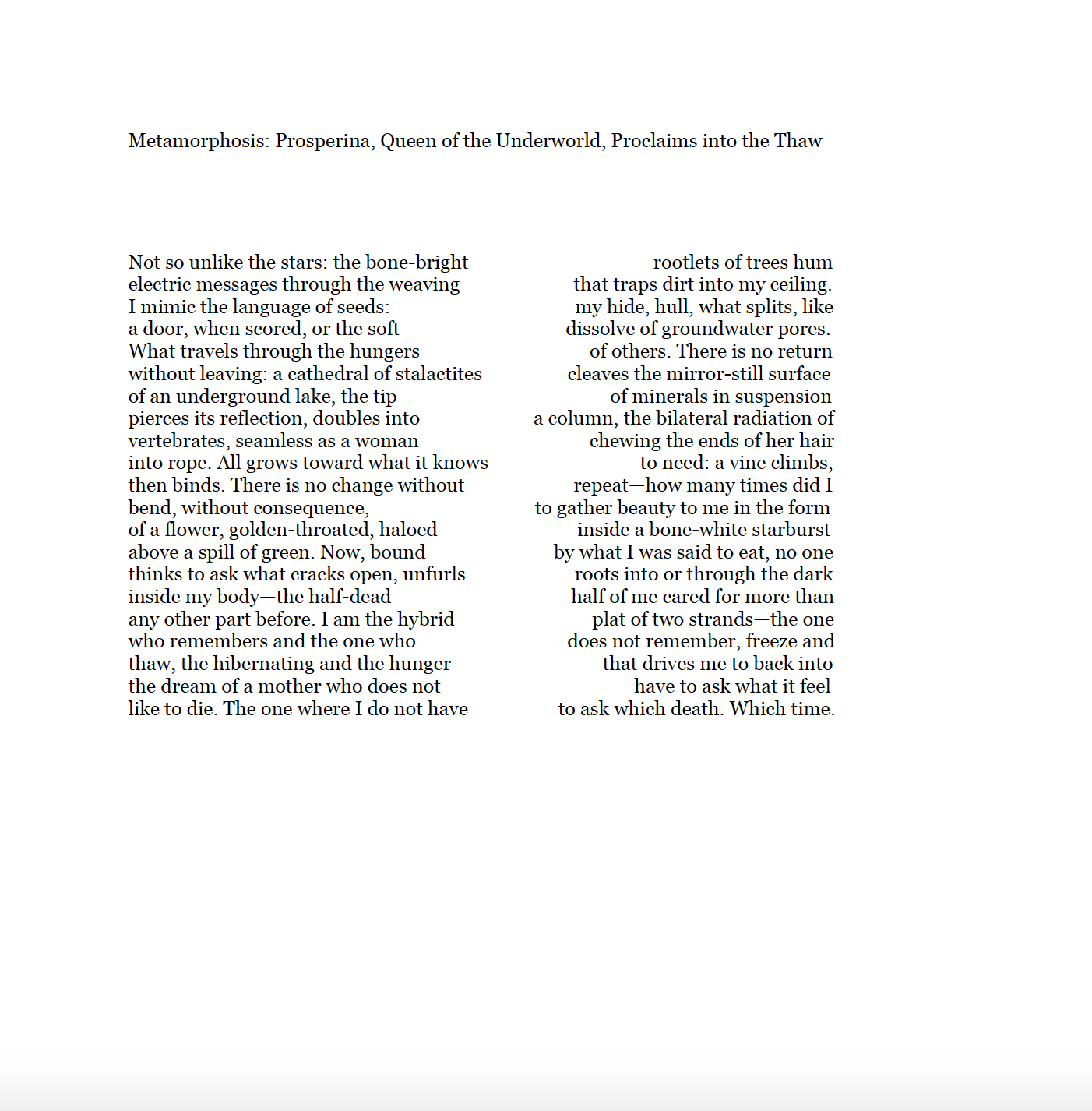
These two poems are reimag­in­ings of two of the myths in Ovid’s Meta­mor­phoses, a book-length poem that presents a series of mor­tals, most­ly women, who are trans­formed into non-human forms after an encounter with a God or God­dess. The divine encounter, and result­ing trans­for­ma­tion, almost always include sex­u­al vio­lence or gen­der-based vio­lence. I too am a sur­vivor of vio­lences (domes­tic, gen­der-based, and sex­u­al). I too have spent years as some­one or some­thing not quite human. Dr. Judith Her­man notes in her vital text about sur­vivors of domes­tic, gen­dered, and sex­u­al vio­lence, Trau­ma and Recov­ery: “vic­tim retains the dehu­man­ized iden­ti­ty of […] the robot, ani­mal, or veg­etable… While the major­i­ty of […] patients com­plained, ‘I am now a dif­fer­ent per­son,’ the most severe­ly harmed stat­ed sim­ply, “‘I am not a person.’”

Decades before I read Trau­ma and Recov­ery, before Com­plex-PTSD was a wide­ly-known and accept­ed term (although still not includ­ed in the newest Text Revi­sion of the DSM V, and so not includ­ed on any of my med­ical records), I read The Meta­mor­phoses. I, who from my ear­li­est mem­o­ry felt more rock than girl, more bird or riv­er or vine than human, rec­og­nized myself in these girls and women, and in the crea­tures and things they would become. Their sto­ries were my sto­ries, are my sto­ries, and in re-telling what hap­pened to them, in work­ing to speak in their voic­es, I tell what hap­pened to me. I sound the bounds of my voice, and find my place among the many of my kind. 

Mag­gie Queeney is the author of In Kind, win­ner of the 2022 Iowa Poet­ry Prize, and the chap­book set­tler. Recip­i­ent of the 2019 Stan­ley Kunitz Memo­r­i­al Prize, The Ruth Stone Schol­ar­ship, and an Indi­vid­ual Artists Pro­gram Grant from the City of Chica­go in 2019 and 2022, her most recent work is found or is forth­com­ing in Guer­ni­ca, The Mis­souri Review, and The Amer­i­can Poet­ry Review. She holds an MFA in Cre­ative Writ­ing from Syra­cuse Uni­ver­si­ty, and reads and writes in Chicago.

Two Poems

Poetry / Seth Leeper

:: cats in a bag ::

i learned my duplicity at a young age amidst late night serenades 
of shattering glass and slamming cupboards / slinking around 
corners to survive the impact from each sonic boom / donning 
my cheshire smile in the morning like a denial of the night before / 
an implicit approval / a strategy to avoid the jagged edge of a curse / 
the pointed edge of a cutting board / rolling across the floor showing 
my belly / projecting cute to survive / the long drive to the hospital 
for stitches above a crying eye / phone calls to mother explaining the 
accident / i don’t blame her anymore / we were cats in a bag tossing 
and hissing and fighting for love or approval / stalking a prey called 
loyalty or devotion / he’d left me once / i remember her perched on 
the kitchen counter looking at the clock / calculating the difference 
between time with him and time without 

:: the last time we saw you ::

we never got to see your final ascent she just dumped you 
like stale cigarette ashes into the delta and never apologized 
to anyone for the missed show or wasted gas which was her last 
power play her final triumph to singe the skin and squeeze 
the heart and she never had to touch any one of us to do it 
now she had something of you no one could take or give back 
her repulsive reflexes and cackling on the way back to her car 
ensured no one would try so you drifted away from us the wind 
carrying you across grass plains and water the wind chasing 
the wheels of her car down the dirt highway the keys in her 
ignition rattling as she slithered out of focus out of view 
out of our lives for good 

From the writer


:: Account ::

cats in a bag” and “the last time we saw you” are from my man­u­script, dou­ble fea­ture: anato­my of a star | of men and mon­sters. The manuscript’s first part fol­lows the Speak­er through planes astral and celes­tial in pur­suit of his father. The sec­ond part, which these poems are from, finds the Speak­er in more ground­ed spaces, anchored in the real­i­ty of his grief and trau­ma. The Speak­er is flee­ing from mem­o­ries and his own account­abil­i­ty in the rela­tion­ship between him­self and his father, and he has plunged head­first into pro­cess­ing the rela­tion­ship dynam­ics that were com­pli­cat­ed by his father’s spouse. Deprived of clo­sure for him­self and his fam­i­ly, the Speak­er makes attempts to forge his own res­o­lu­tion with his father, and make sense of the spouse who func­tioned as rival and vil­lain in his child­hood.   

Peel­ing back the cur­tain a bit on craft, these poems rep­re­sent exper­i­men­ta­tions with how space is uti­lized on the page. The deci­sion to use punc­tu­a­tion, or not, is meant to add an ele­ment of ten­sion, or dis­rup­tion. It com­pli­cates the nar­ra­tive and the expe­ri­ence of how the read­er engages with the text. It also mir­rors the frag­men­ta­tions of the Speaker’s mem­o­ries. 

I was also inter­est­ed in exper­i­ment­ing with prose blocks, since I had pri­mar­i­ly writ­ten in verse pri­or to this project. The blocks pro­vide a frame for each poem, and serve the over­all attempt to world-build in both por­tions of the man­u­script. The world in of men and mon­sters where these poems occur is one of harsh real­i­ties and uncertainty—filled with mon­sters both fic­tive and real—and it moves back and forth between the present and the past. This is the oppo­site of the world in anato­my of a star, where the Speak­er wields the pow­er of his imag­i­na­tion and grief to cre­ate moments out­side of com­mon­ly accept­ed con­scious­ness to inter­ro­gate and reunite with his father. The project is meant to tran­scend the per­son­al and the spe­cif­ic; to offer cathar­sis, com­fort, and hope­ful­ly heal­ing for the read­er who can empathize with the work.

Seth Leep­er is a queer poet. A Best of the Net nom­i­nee and 2022 Brook­lyn Poets Fel­low, his work has appeared or is forth­com­ing in Sycamore Review, Riv­er Styx, Sala­man­der, Hobart After Dark, Over­heard Lit, and Always Crash­ing. He holds an M.A. in Spe­cial Edu­ca­tion from Pace Uni­ver­si­ty and B.A. in Cre­ative Writ­ing and Fash­ion Jour­nal­ism from San Fran­cis­co State Uni­ver­si­ty. He lives and teach­es in Brook­lyn, NY. He tweets @seth­wleep­er.

Two Poems

Poetry / Sara Lynne Puotinen

:: Two Poems ::

To open a screen read­er acces­si­ble file in a new tab please click here

To down­load a PDF file please click here

From the writer


:: Account ::

Four years ago, I was diag­nosed with cone dys­tro­phy and told that all of my cen­tral vision would be gone in five years. I began to doc­u­ment the process of this vision loss. These poems are part of that doc­u­men­ta­tion. They are inspired by Georgina Kleege and her descrip­tion of find­ing the large blind spot in her cen­tral vision by star­ing at a blank wall.  

One day, dur­ing the ear­ly stages of the pan­dem­ic, I went to a blank wall in my liv­ing room, stood still, and stared at it. Soon I saw some­thing strange. It wasn’t a full spot but a dark ring with a light cen­ter. I taped a piece of paper to it at eye lev­el, closed one eye, and then traced the blind ring that appeared, first with a pen­cil, lat­er with blue cray­on. 

I was delight­ed to see this ring. Final­ly evi­dence of declin­ing vision that I could observe! I knew I was los­ing cen­tral vision by how much hard­er it was to read, how people’s faces were fuzzy blurs, how I nev­er noticed mold on my food, but my brain was com­pen­sat­ing remark­ably well and I often won­dered if I was imag­in­ing my vision prob­lems. 

Before see­ing my blind ring on the wall, the main method I used for mon­i­tor­ing my vision loss was to stare into an Amsler grid, which is a grid with a dot in the cen­ter used to detect dam­age to the mac­u­la. I would notice how the lines were wavy instead of straight, soft instead of sharp, how they fad­ed a few blocks from the cen­ter. I could reas­sure myself that I wasn’t mak­ing up my fail­ing vision. 

I decid­ed to use these forms—my blind ring and the Amsler grid—to cre­ate poems about my moods while liv­ing in the in-between state of not quite see­ing, not yet (legal­ly) blind. It seemed urgent and impor­tant to try to iden­ti­fy these moods and then find ways to express them, part­ly because I need­ed to work through my feel­ings, and part­ly because I want­ed to give atten­tion to some­thing that wasn’t dis­cussed enough: what it feels like to be in the process of los­ing sight, not after it is lost or before, but dur­ing. 

I cre­at­ed a grid and fit 3 poems describ­ing a mood into it: a main poem that was in the form of my over­all work­ing vision, a small­er poem that was in the form of the cen­tral vision with­in the blind ring that I still have left, and a hid­den poem with words fill­ing in the box­es in the space of my blind ring. Each box in the grid con­tains one char­ac­ter (a let­ter or space or punc­tu­a­tion) and I use a mono­type font to keep it even­ly spaced.  

Sara Lynne Puoti­nen lives in south Min­neapo­lis, near the Mis­sis­sip­pi Riv­er Gorge, where she reads and writes and tries to be upright and out­side as much as pos­si­ble. She earned a B.A. in reli­gion, an M.A. in ethics, and a Ph.D in women’s stud­ies, which all inform her exper­i­ments in pay­ing atten­tion and her play­ful trou­bling of what it means to write while mov­ing, to move while writ­ing, and to do both while los­ing her cen­tral vision from a degen­er­a­tive eye dis­ease (cone dys­tro­phy). Her writ­ing has appeared in Poemeleon, Hearth & Cof­fin, and Lon­gleaf Review, among oth­ers. Cur­rent­ly, she is work­ing on a series of poems that use Snellen Charts and Amsler Grids to describe her expe­ri­ences with vision loss. 

There are no synonyms for catharsis

Poetry / Chisom Okafor

:: There are no synonyms for catharsis ::

on the thesaurus of hearts. Only fear, then nothing       situated  
in-between 
 
You wonder what the moon       in all of its opaque        resplendence  
would become       tonight 
  
without       a beholder       and with its lights       of silver        
left hemorrhaging 
 
into this empty room       while we drown ourselves within       a lullaby 
you suddenly        stop to ask. 
 
if my joy       long lost       has returned       but I respond       in the way  
of being curious in my unhappiness 
 
and curious       in my joys       and in my silence       there is a force 
acting       to cause a displacement 
 
within my body       a force       equal and opposite 
to the powerhouse       of my body 
 
what does it mean       to be a fruit       tarrying       undecided 
between ripening        and decay? 
 
even a vain thing        as indecision       possess the power 
to change       every man. 
 
Tonight       I come to you        a man in the face of his epiphany 
 
dear lover       watch me sift       into the heart of the night       watch me echolocate 
watch me trip       over a rock       just as I prep 
 
my heart for disaster       each of the human eye       being god’s 
loneliest creation       and hidden away        
 
each in its socket       each without knowledge       of the presence       of an 'other' 
a few inches       across the street       of the nose 
 
and my body       synonym for      utopia        rising from the Greek word 
utopus       which is to say       best place 
 
But which also means       no place       waterless       if you defer  
to its original         translation. 
 
Tonight       I listen to my heart       whisper double-faced promises       in my hearing 
I’ll take you out       it says       which is to say       dine with you 
 
which is also to say       suffocate you. 
 

From the writer


:: Account ::

In the heat of the Covid-19 pan­dem­ic, I was diag­nosed of right ven­tric­u­lar dys­func­tion, which is a hyper­ten­sive heart dis­ease. I was just 26, and the car­diac clin­ic where I had series of ECG and echo ses­sions, was filled with much old­er men and women, peo­ple in their sev­en­ties and eight­ies, who looked at me with so much pity and ques­tions, that they for­got their own trou­bles. I had been engrossed with writ­ing love poems before then, but after my diag­no­sis, my writ­ing grav­i­tat­ed towards the con­fes­sion­al, a kind of tes­ta­ment to the phys­i­cal and men­tal trau­ma Ive been forced to go through, on my jour­ney to heal­ing. Unfor­tu­nate­ly, my heart con­di­tion, accord­ing to the car­di­ol­o­gist, may nev­er be ful­ly cor­rect­ed, and may lead to pos­si­ble car­diac arrests or cerebro-vas­cu­lar acci­dents in the near future. The poems I now write morph into repeat­ed echoes down a desert­ed land­scape, calls out to a kind of heal­ing, one that may nev­er arrive, but I keep call­ing, any­way. Also, I have spent about two years work­ing as a clin­i­cal nutri­tion­ist dur­ing the day, and writ­ing poet­ry at night. As a result, I often tend to think about bod­ies like mine, lin­ger­ing at the inter­sec­tions of death, depar­tures and clin­i­cal vul­ner­a­bil­i­ties. This mar­riage between the two, is also what my poems attempt to inter­ro­gate. They come close to trau­ma and dwell in its poet­ic pos­si­bil­i­ties, play­ing with the meet­ing point between heart as metaphor, heart as dead­ly lit­er­al organ and the body, and by so doing, attempt to stretch the real lim­its of being. 

Chi­som Okafor, Niger­ian poet and clin­i­cal nutri­tion­ist, has received nom­i­na­tions for the Brunel Inter­na­tion­al African Poet­ry Prize, the Push­cart Prize, Ger­ald Kraak Prize, and the Siller­man First Book Prize for African Poets. He tweets @chisomokafor16. 


Two Poems

Poetry /Julia Kolchinsky Dasbach

:: Week 9: Grape ::

louse: the singular form 
of lice, small, wingless, 
you’d never heard of
because you never find 
just one like the note 
from your son’s school
saying one girl has them
& she’s been treated & you 
should check every tangle 
of your son’s curls to make sure 
some haven’t found their way 
inside & another mother 
says she’d buzz it all off 
just to be safe, says he’s a boy 
so he’ll look tougher anyway 
& you recall how you 
were three then too 
when your parents nearly 
shaved you & the other kids 
wouldn’t share the bench, would 
run away & yell & point, 
would laugh how you were infected
& dirty & a louse, ruined 
—Jewish—so you’ll refuse
to cut his hair & scour
each perfect ringlet, twist
their multitudes around your fingers
& when you find
only more locks, you’ll tell him
to sit with Evelyn tomorrow,
to remind her 
she is beautiful & loved

:: Week 33: Pineapple ::

Every time she turns her head 
between your ilium & coxal bones, 
you feel your water 
about to break, afraid 
of that balloon-pop 
in your pelvis, afraid 
break is wholly wrong 
for what shifts or tears, slips 
& loosens. Bones break. 
Hearts, maybe. But the veil 
between your body’s end
& her beginning? There’s 
no breaking it. Looks like that baby
is about to fall 	      right out of you, 
the women call, holding 
tight to what’s already fallen 
from inside of them. Fall too, 
wholly wrong for the way 
a body enters breathing. 
Rain falls. Fruits from trees. 
But body from body? 
There must be more 
to describe such cleaving. 
Directionless & unfinished.   
I’m gonna report you 
to the grocery store, a man 
yells passing, you stole
one of their watermelons.  
How easy to be 
so wrong in naming 
what you’ve never carried. 
She is not a vine-trailing
scrambler yet, spreading 
as she clings to soil. For now,
she’s still reaching for the sun
atop a tall palm, still 
hardening, bones in her skull 
just starting to overlap, preparing
for descent, She’s only 
a pineapple, you correct him, 
& keep on walking, one 
slow bone in front 
of the other, unsure 
which one of you 
is going where or how
to name your joined, 
persistent motion.   

From the writer


:: Account ::

These poems come from a book-length man­u­script, 40 WEEKS (YesYes Books, 2023) in which I wrote a poem for each week of preg­nan­cy with my sec­ond child, play­ing with the fruits and veg­eta­bles the babys size is com­pared to in the week­ly emails those who are expect­ing can sign up to receive. While at times I take inspi­ra­tion from the objects them­selves, the poems aim to high­light the prob­lem­at­ic aspects of such comparisons—the way they gen­der and objec­ti­fy what is grow­ing inside—and focus instead on soci­etal taboos of the preg­nant body and our con­tin­ued cul­tur­al mis­rep­re­sen­ta­tion of and dis­com­fort with the expe­ri­ence of the more unfil­tered sides of moth­er­hood. These poems embrace the bare and grotesque, look­ing at what is often looked away from with­out shame, or at least ques­tion­ing why there is shame attached to the look­ing. They are also very much try­ing to fig­ure out how to con­tin­ue to moth­er my neu­ro­di­ver­gent old­er child, who is on the spec­trum, while preg­nant with my daugh­ter. In writ­ing a poem each week that con­nect­ed my expe­ri­ence of moth­er­hood and preg­nan­cy, I was able to stay con­nect­ed to my iden­ti­ties as a moth­er and writer, feel­ing that one was feed­ing the oth­er. I was a bet­ter moth­er because I was able to write, and I was a bet­ter writer because I was draw­ing on my vivid and vis­cer­al expe­ri­ence of moth­er­hood. I did not have to choose one, but rather, could be both, and for me, there is no oth­er way of being in the world. I am always nav­i­gat­ing space and inter­ac­tions as a moth­er, mul­ti­task­ing by simul­ta­ne­ous­ly try­ing to cap­ture the sto­ries and lyric moments all around memade more urgent and singing loud­er because of my chil­dren. 

Julia Kolchin­sky Das­bach (www.juliakolchinskydasbach.com) emi­grat­ed from Dnipro, Ukraine as a Jew­ish refugee when she was six. She is the author of three poet­ry col­lec­tions: The Many Names for Moth­er (Kent State Uni­ver­si­ty Press, 2019); Don’t Touch the Bones (Lost Horse Press, 2020); and 40 WEEKS, forth­com­ing from YesYes Books in Feb­ru­ary, 2023. Her recent poems appear in POETRY, Ploughshares, Amer­i­can Poet­ry Review, and AGNI, among oth­ers. She holds an MFA from the Uni­ver­si­ty of Ore­gon and a Ph.D. in Com­par­a­tive Lit­er­a­ture and Lit­er­ary The­o­ry from the Uni­ver­si­ty of Penn­syl­va­nia. Her dis­ser­ta­tion, Lyric Wit­ness: Inter­gen­er­a­tional (Re)collection of the Holo­caust in Con­tem­po­rary Amer­i­can Poet­ry, pays par­tic­u­lar atten­tion to the under­rep­re­sent­ed atroc­i­ty in the for­mer Sovi­et ter­ri­to­ries. Julia is the author of the mod­el poem for “Dear Ukraine”: A Glob­al Com­mu­ni­ty Poemhttps://dearukrainepoem.com/. She is the Mur­phy Vis­it­ing Fel­low in Poet­ry at Hen­drix Col­lege and lives in Lit­tle Rock, Arkansas with her family. 

re: Poet Laureate

Poetry / Mark Neely

:: re: Poet Laureate::

I am afraid 
I have to refuse 
 
the laureate  
after all 
 
must envision  
edifying projects 
 
stroll through schoolrooms 
dropping verse 
 
into children’s beaks 
or force it down  
 
their pretty teenage throats 
to fatten up their hearts 
 
a laureate should 
have the gravity 
 
of a minor planet 
a gaseous atmosphere 
 
that can easily liquify  
a soul 
 
and my mornings are rough 
already I choke down coffee 
 
by the thermos trying 
to see in the ink 
 
something other 
than self- 
 
loathing zipped in my space 
suit even simple chores 
 
become difficult there 
are days I cannot stand 
 
to look at my shoes 
lined up by the door 
 
once I saw a moose 
swim across a bay 
 
the miraculous driftwood 
of its antlers 
 
hovered above the water 
a laureate 
 
would have to get that 
in a poem somehow 
 
I want to build a monstrous ship 
that eats ten thousand 
 
tons of plastic every second 
that squeezes through each canal 
 
suturing the planet’s scars 
I steer  
 
it towards my father 
as his hospital bed sinks 
 
in the waves 
and the sun closes 
 
its furious eye 
I taste salt on my lips 
 
he can barely lift his arm 
to wave goodbye 

From the writer


:: Account ::

There was a time when I didn’t like “poems about poet­ry.” As soon as I caught a whiff of that kind of thing, I tuned out. Now I see how nar­row mind­ed I was in those days. Poet­ry is per­son­al­i­ty. Poet­ry is pol­i­tics. Poet­ry is how we love and grieve. The best ars poet­i­cas are, like all good poems, about a bunch of things all at once. These days I find myself work­ing away on a man­u­script about teach­ing, poet­ry, and art—a fact that would cer­tain­ly hor­ri­fy my younger self, who want­ed to be Gary Sny­der and write poems about chop­ping wood and oth­er such man­ly things. 

In one of the poems from the man­u­script, “re: Poet Lau­re­ate,” I want­ed to have a bit of fun—both with the idea that any­one would ever ask me to be poet lau­re­ate of any­thing (ha!), and with the whole con­cept of the lau­re­ate, which is the awk­ward mar­riage of poet­ry (per­haps the most thought­ful form of lan­guage) and gov­ern­ment (where lan­guage is typ­i­cal­ly man­gled and manip­u­lat­ed in an attempt to con­vince peo­ple to vote against their own best interests). 

Mark Neely is the author of Beasts of the Hill, and Dirty Bomb, (Ober­lin Col­lege Press). His third book, Tick­er, won the Ida­ho Prize for Poet­ry and was short­list­ed for an Indi­ana Author Award. His oth­er awards include an NEA Poet­ry Fel­low­ship, an Indi­ana Indi­vid­ual Artist Grant, the FIELD Poet­ry Prize, and the Con­crete Wolf Chap­book Award for Four of a Kind. He is a pro­fes­sor of Eng­lish at Ball State Uni­ver­si­ty, and a senior edi­tor at Riv­er Teeth: a Jour­nal of Non­fic­tion Nar­ra­tive.  


Bless the Damage

Poetry / Allisa Cherry

:: Bless the Damage ::

Now that time has nacred over
the rough edges of memory
I can say that you were a real beauty.
A shiner. You glittered like glass shards
in the baby formula. I mapped
my way forward in the darkness
by the pulsing gleam of you. Sometimes
the lung-stopping quartz in the quarry
and sometimes the toothy drill—
its circumference as wide as two bodies
entwined—bearing down and fruitful.
When I finally went to Oahu I went there
without you. I sliced my foot open
on a bit of coral. It was my first time
snorkeling. The first time I’d seen
a school of fish. My presence small
before a wall of countless eyes,
I felt—for the first time—beheld.
Back at the hotel, I sat on the sink
and scrubbed the wound out
with bar soap and a toothbrush
feeling resourceful and alone.
And it wasn’t the shine casting off
the warm water or the ribbon of blood
unwinding that I found most compelling,
but how the cut resembled a lightning strike
across the arch of my foot—plumped up
with white blood cells rushing before infection.
How the tight red skin looked like it might 
burst into bloom the way the peony buds 
you sent to my new apartment bloomed.
They were still petal-dense knots 
when they arrived. And I got to watch 
the entire life and death of them: 
the almost obscene way they swelled open,
and then the velvet bowl of each petal 
falling empty across my kitchen counter.

From the writer


:: Account ::

: I’ve spent much of my life think­ing about the sub­tle and not-so sub­tle threads of vio­lence that run through large fam­i­lies and rur­al com­mu­ni­ties. Because of the par­tic­u­lar­ly reli­gious bent of the town I grew up in, much of this vio­lence was shaped by tra­di­tion­al assump­tions about gen­der. It also dan­ger­ous­ly over­lapped with love and loy­al­ty. In fact, the whole of it—patriarchal faith, fam­i­ly, bru­tal­i­ty, sex­u­al­i­ty, love, and rur­al life—are so tight­ly entan­gled, I began writ­ing as a way to tease the ten­sion out of the knot.

I have found that the more com­plex the mat­ter is in my his­to­ry, the stronger my pref­er­ence for clean lines and clear syn­tax in poem. Though, of course, not always. It is often eas­i­est for me to inter­ro­gate my upbring­ing inter­tex­tu­al­ly, to tie my work to the reli­gious books that gave me both my ear­li­est affec­tion for lan­guage as well as my most dam­aged under­stand­ing of my des­ig­nat­ed role as a female in my com­mu­ni­ty. And so, I often see my poem’s speak­ers qui­et­ly strug­gling with lan­guage to wrest their own dig­ni­ty and pow­er back and to revise their posi­tion in sight of the patri­ar­chal sys­tems they grew up in.

Allisa Cher­ry grew up in a rur­al reli­gious com­mu­ni­ty seat­ed in an irra­di­at­ed desert in the south­west of the Unit­ed States and has since relo­cat­ed to the Pacif­ic North­west. A recent MFA grad­u­ate from Pacif­ic Uni­ver­si­ty, she has just com­plet­ed a man­u­script that explores the way faith, fam­i­ly, and land­scape are often reshaped by vio­lence. Her work has received Push­cart and Best of the Net nom­i­na­tions and can be found in High Desert Jour­nal, Westch­ester Review, and at SWWIM Dai­ly, and is forth­com­ing at The Colum­bia Review.

How to Make Beef Stew

Poetry /Stevie Edwards

Ste­vie-Edwards-1-Poem PDF

From the writer


:: Account ::

I wrote “How to Make Beef Stew” short­ly after war broke out in Ukraine. Beyond glu­ing my eyes to the news cycle, one of the only things I felt capa­ble of doing the day after the war broke out was mak­ing beef stew, which for me is a major com­fort food in win­ter. I love how it feels like a hug in a bowl and the aro­ma spreads through the whole house. In this poem I want­ed to cap­ture the jux­ta­po­si­tion between the com­fort­ing nature of the stew and the unthink­able vio­lence occur­ring. I also want­ed the poem to demon­strate the inabil­i­ty of dai­ly com­forts (like beef stew) to take my mind off the vio­lence, par­tic­u­lar­ly through the sim­i­le where sprin­kling flour on meat makes the speak­er think of the image of snow cov­er­ing dead bod­ies, which was some­thing I saw on the news. Ulti­mate­ly, this poem ends with rumi­nat­ing on whether this is the kind of world I would want to bring chil­dren into.

Ste­vie Edwards holds a PhD in cre­ative writ­ing from Uni­ver­si­ty of North Texas and an MFA in poet­ry from Cor­nell Uni­ver­si­ty. Stevie’s poems have appeared in Poet­ry Mag­a­zine, Amer­i­can Poet­ry Review, Crazy­horse, and else­where. They are a Lec­tur­er at Clem­son Uni­ver­si­ty and author of Sad­ness Work­shop (But­ton Poet­ry, 2018), Human­ly (Small Dog­gies Press, 2015), and Good Grief (Write Bloody Pub­lish­ing, 2012). Edwards is cur­rent­ly Poet­ry Edi­tor of The South Car­oli­na Review and their third full-length col­lec­tion of poet­ry, Qui­et Armor, is forth­com­ing from North­west­ern Uni­ver­si­ty Press’s Curb­stone imprint. Orig­i­nal­ly a Michi­gan­der, they now live in South Car­oli­na with their hus­band and a small herd of res­cue pit­bulls (Daisy, Tin­ker­bell, and Peach­es). Ste­vie uses she/they pronouns. 

Four Poems

Poetry / Jenny Molberg

:: Four Poems ::


Mol­berg — 4 Poems PDF

From the writer


:: Account ::

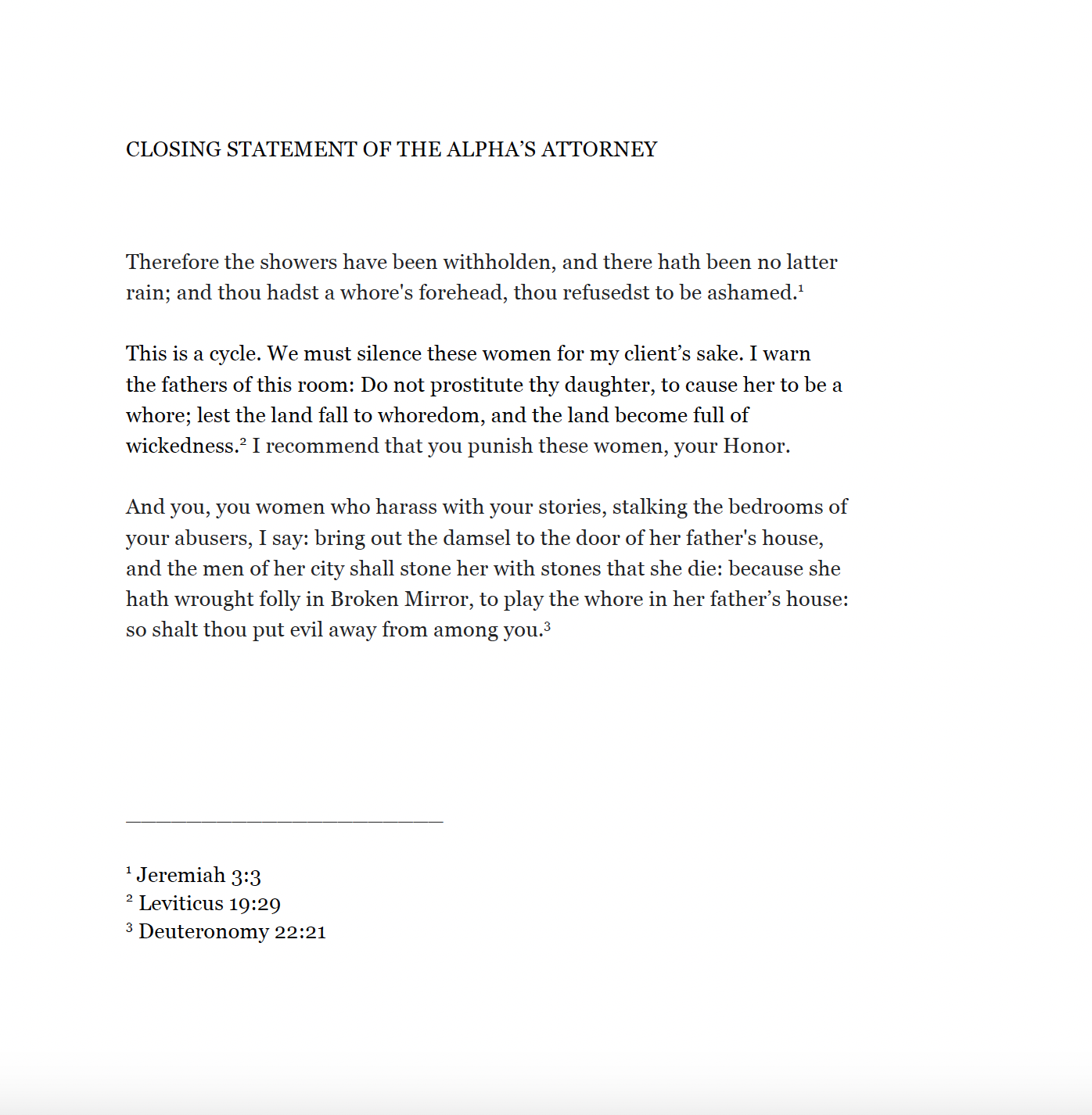
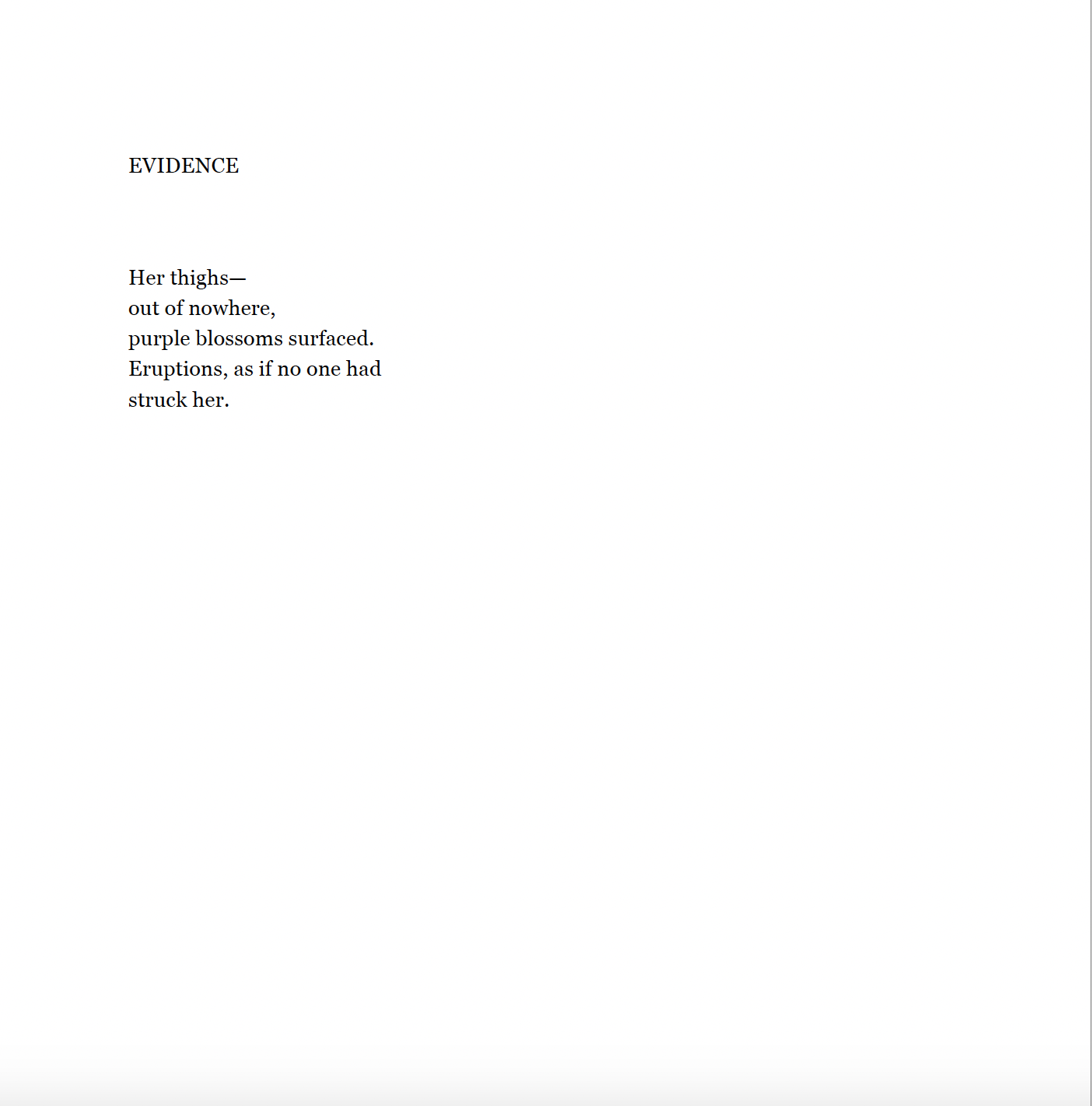
These poems seek to shed light on the fail­ures of the Amer­i­can jus­tice sys­tem to pro­tect vic­tims of abuse and inti­mate part­ner vio­lence. The poems are a part of a forth­com­ing book, The Court of No Record (LSU Press 2023), in which a court tran­script in verse presents a cast of characters—the Alpha, the per­pe­tra­tor of abuse and the peti­tion­er in court; two women who have spo­ken out against his abuse; the Hon­or­able Answer, a judge with ques­tion­able con­flicts of inter­ests; and the two attor­neys who rep­re­sent the peti­tion­er and respon­dent. The Alpha’s attor­ney speaks most­ly in anti­quat­ed Bible vers­es, illu­mi­nat­ing the oppres­sive dam­age of patri­ar­chal reli­gious insti­tu­tions on our society’s response to inti­mate part­ner vio­lence and the gaslight­ing that occurs when vic­tims break their silence. “Evi­dence” sug­gests what the court will not hear—that is, tes­ti­mo­ny often silenced in cas­es of abuse, as a victim’s sto­ry may not be con­sid­ered evi­den­tiary sup­port or is called hearsay. Unfor­tu­nate­ly, as many vic­tims of abuse know, legal action can exac­er­bate a dan­ger­ous sit­u­a­tion, and often an abuser’s ver­sion of events is weighed in equal mea­sure to a victim’s. Orders of pro­tec­tion are often manip­u­lat­ed by abusers or proven inef­fec­tive because the court will not see “proof” of abuse until a vic­tim is already injured, or, dev­as­tat­ing­ly, killed. With these poems, I hope to encour­age a con­ver­sa­tion that needs to be made more urgent—how to demand change with­in our sys­tems’ fail­ures and how to recon­sid­er the word “jus­tice” in hege­mon­ic and misog­y­nis­tic legal set­tings.  

Jen­ny Mol­berg is the author of three poet­ry col­lec­tions: Mar­vels of the Invis­i­ble (win­ner of the Berk­shire Prize, Tupe­lo Press, 2017), Refusal (LSU Press, 2020), and The Court of No Record (LSU Press, 2023). She edit­ed the Unsung Mas­ters book, Ade­laide Crapsey: On the Life & Work of an Amer­i­can Mas­ter. She has received fel­low­ships and schol­ar­ships from the Nation­al Endow­ment for the Arts, the Sewa­nee Writ­ers Con­fer­ence, Ver­mont Stu­dio Cen­ter, and the Lon­gleaf Writ­ers Con­fer­ence. Her poems and essays have recent­ly appeared or is forth­com­ing in Ploughshares, VIDA, The Mis­souri Review, The Rum­pus, The Adroit Jour­nal, Oprah Quar­ter­ly, and oth­er pub­li­ca­tions. She is Asso­ciate Pro­fes­sor of Cre­ative Writ­ing at the Uni­ver­si­ty of Cen­tral Mis­souri, where she directs Pleiades Press and co-edits Pleiades magazine. 

Wrestling

Poetry / Maxwell Suzuki

:: Wrestling ::

Maxwell Suzu­ki Wrestling — PDF


From the writer


:: Account ::

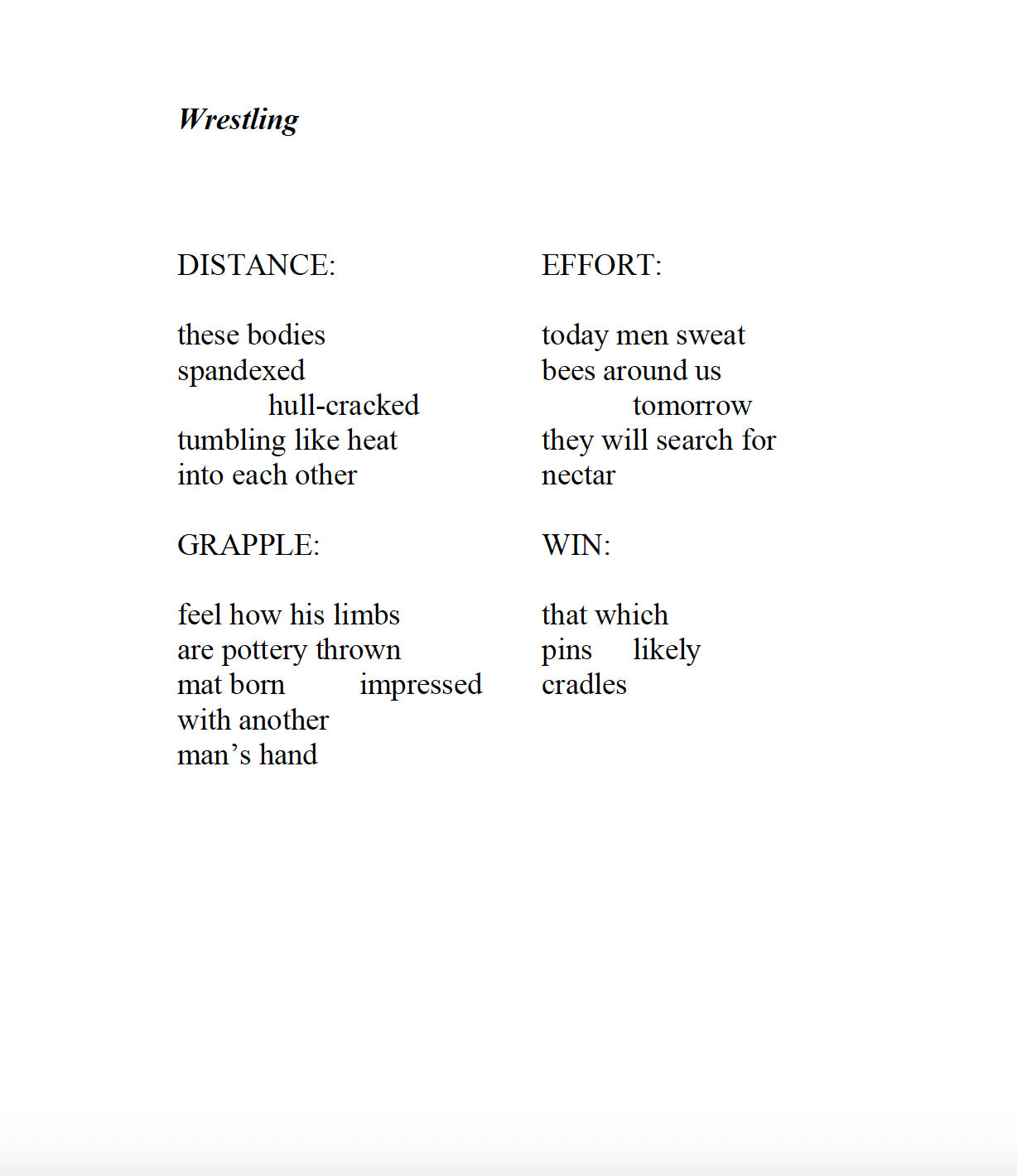
In my poet­ry, I have been obsessed with what it means to be queer, to have loved some­one, and for it to bub­ble deep with­in his­to­ry. I want­ed to chal­lenge our under­stand­ings of mas­culin­i­ty (and sex­u­al­i­ty) with­in the con­text of ancient cul­tures as well as our own; how they min­gle and diverge from each oth­er. And when learn­ing about Ancient Greece in par­tic­u­lar, I was fas­ci­nat­ed with how pow­er, as a man, was tied to sex­u­al­i­ty rather than strict­ly being about gen­der. This dimen­sion of sex­u­al­i­ty was some­thing I hadn’t thought about and want­ed to delve into that com­plex­i­ty. 

When writ­ing “Wrestling”, I decid­ed to play with space, in that I imag­ined the stan­zas as being two men inter­con­nect­ed and fight­ing for dom­i­nance. And in that dom­i­nance, there is an intrin­sic emo­tion­al fragili­ty to the wrestlers. That inti­mate phys­i­cal­i­ty through aggres­sion, I think, is the only way for some men to feel a con­nec­tion beyond them­selves. “Wrestling” under­stands these rela­tion­ships, is restrained in divulging the secrets of the wrestlers, and works to reveal their queer sub­tleties. 

Maxwell Suzu­ki is a queer writer who lives in Los Ange­les. Maxwells work has appeared or is forth­com­ing in CRAFT, Lunch Tick­et, ANMLY, and trampset. He is writ­ing a nov­el on the gen­er­a­tional dis­con­nect between Japan­ese Amer­i­can immi­grants and their chil­dren. 

Two Poems

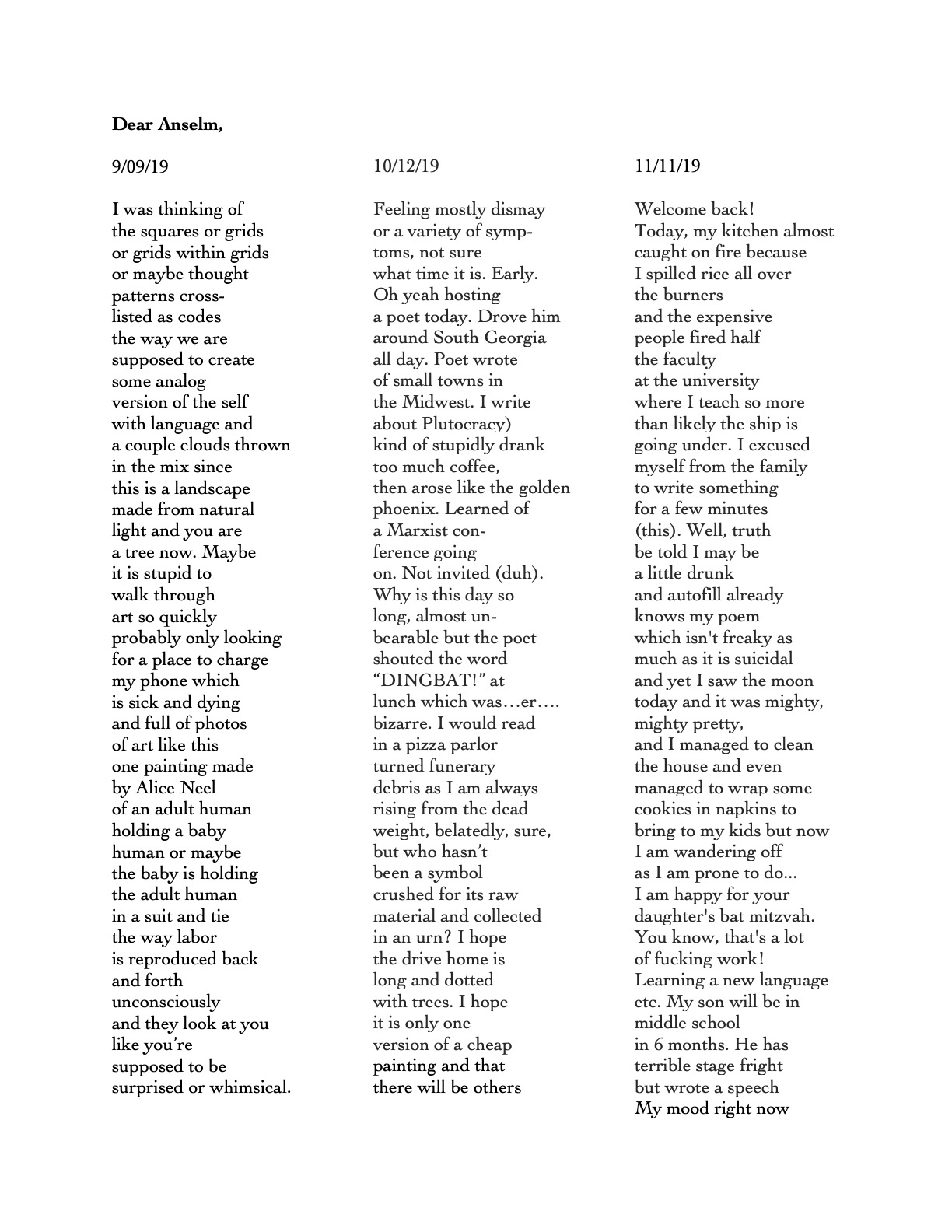
Poetry / Dear Anselm

:: Dear Anselm ::

Dear Anselm PDF


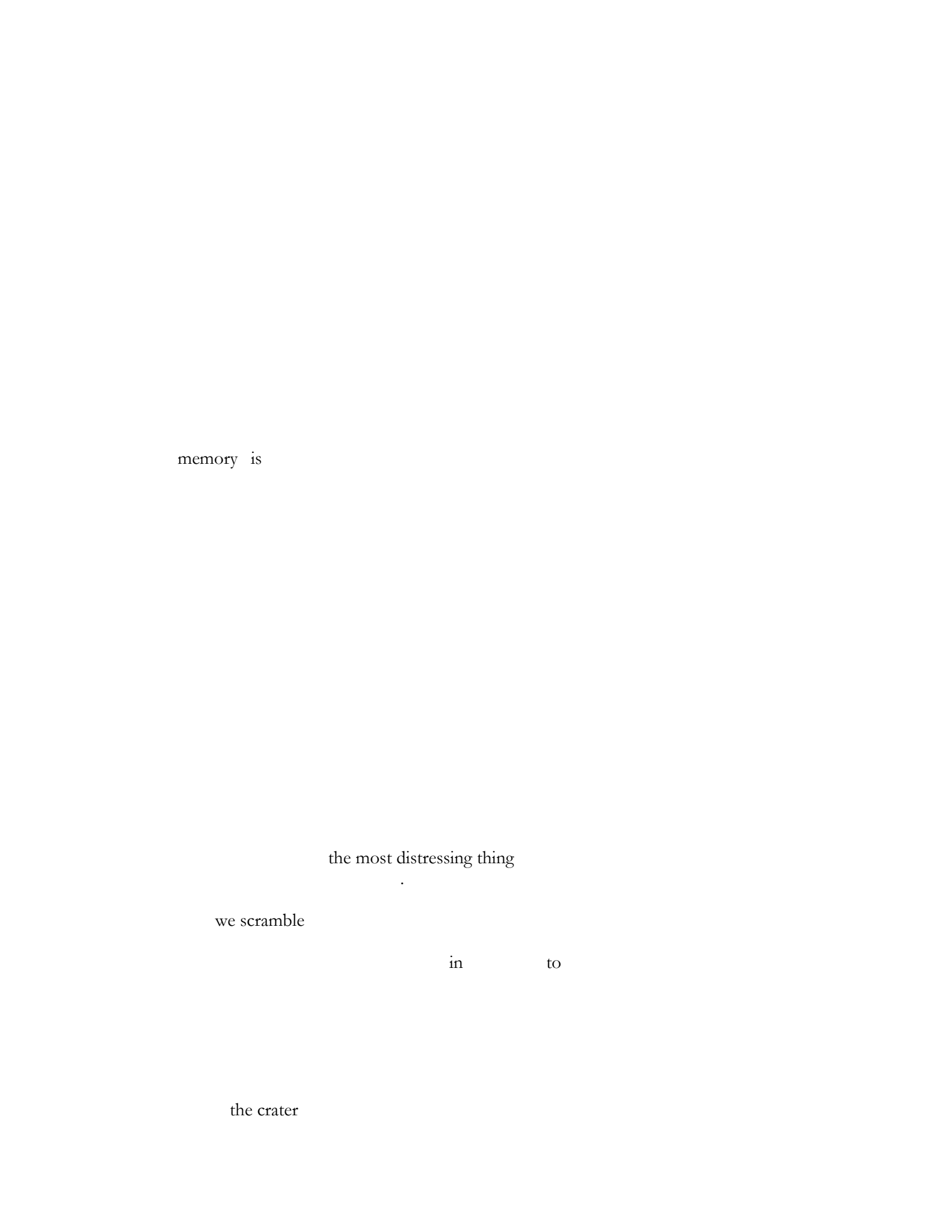
:: As in Leaving the Pyroclastic Volcano ::

As in Leav­ing PDF


From the writer

:: Account ::


Dear Anselm”

I took some emails I had writ­ten to my friend and decid­ed to turn some of them into a poem. I still feel guilty for not return­ing his MoMA mem­ber­ship card.

As in Leav­ing the Pyro­clas­tic Volcano”

The first pan­el was inspired by the stark land­scape of North­ern Ice­land. I imag­ined a broth­er and sis­ter hold­ing hands and wit­ness­ing a vio­lent tra­di­tion (a whale heli­coptered above the caldera of a vol­cano and dropped in). I guess it’s a metaphor for how adults treat the envi­ron­ment and what we pass to our chil­dren. The sec­ond pan­el is a kind of light Frue­di­an dra­ma between two gey­sers in Ice­land. This was inspired by a geyser that went dor­mant (the father) and the younger geyser (the son) who keeps blow­ing steam into the world. The third pan­el was writ­ten on the flight leav­ing Ice­land. I turned on the TV and clicked on the flight path and we were fly­ing above a place called “Hap­py Val­ley Goose Bay” and I loved the name so much, I had to put it into a poem. 


San­dra Simonds is a poet and crit­ic. Her eighth book of poems, a col­lec­tion of trip­tychs, will be pub­lished by Wave Books in 2022. Her forth­com­ing nov­el, Assia (Noe­mi Press, 2023) is based on the life of Assia Wevill.

Three Poems

Poetry / Claire Wahmanholm

:: Meltwater ::


:: Meltwater ::


:: Meltwater ::


From the writer

:: Account ::

These poems are based on Lacy M. Johnson’s 2019 New York­er arti­cle “How to Mourn a Glac­i­er.” They would usu­al­ly be called “era­sures,” though I’d like to find a dif­fer­ent word for them since the poems—and I—don’t have the rela­tion­ship with the source text that often char­ac­ter­izes era­sure projects. I’m not inter­est­ed in using era­sure as a method of cri­tique or con­fronta­tion; I pre­fer to think of my inter­ac­tions as a kind of close read­ing. I see the era­sures func­tion­ing like any oth­er crit­i­cal essay on a text, except that I’m using only the lan­guage of the orig­i­nal source. 

My inten­tion was that the vis­i­ble words would point up a series of par­al­lel storylines—ones that are some­times more micro, and more macro, than the orig­i­nal. There are only so many things that can be made explicit/conscious at one time, so iso­lat­ing cer­tain words might be a way of untan­gling those threads and mak­ing each more vis­i­ble. In the case of Johnson’s orig­i­nal essay, she’s writ­ing about Okjökull while simul­ta­ne­ous­ly writ­ing about much more than it, and I see the lone­ly words as mak­ing that “more­ness” explicit. 

I am hop­ing that the project also makes a point about the way we read news, and our ten­den­cy to notice nar­ra­tives we’re already invest­ed in. The poems obvi­ous­ly say some­thing about me and my own pen­chant for see­ing grief in every­thing (as well as my impulse to put every­thing with­in the con­text of children). 

I saw the essay’s instruc­tion­al title as mak­ing an invi­ta­to­ry ges­ture to mourn, or to at least con­sid­er how mourn­ing looks for each read­er. I was com­pelled by the fact that my own mourn­ing, maybe, is already embed­ded in the orig­i­nal text, so that the essay is (poet­i­cal­ly) enact­ing the mourn­ing that it (jour­nal­is­ti­cal­ly) describes. I was try­ing to repli­cate on the page what I felt like my body was doing when I read the arti­cle, which was like a slow­ing down of my heart, or an uneven­ness in its beat­ing. Like large chunks of myself were being eat­en away. 

I was inter­est­ed in doing more than one era­sure (and iso­lat­ing dif­fer­ent words every time) to empha­size the cycli­cal nature of mourning—how we make minor adjust­ments with­out any sweep­ing over­haul, how it’s (appar­ent­ly) pos­si­ble to mourn the same things again and again but using dif­fer­ent words. I am hop­ing that the poems high­light the ten­sion between the appar­ent inabil­i­ty to communicate—the way we write arti­cles and arti­cles (and poems and poems), and noth­ing changes—and the impulse to keep try­ing any­way. And by mak­ing the high­light­ed words off-lim­its for the next poem, I was try­ing to show how the pool of words to draw from drains and drains. The way our vocab­u­lary dimin­ish­es and dimin­ish­es, we have few­er and few­er resources avail­able to us as we descend into grief.


Claire Wah­man­holm is the author of Night Vision (New Michi­gan Press 2017), Wilder (Milk­weed Edi­tions 2018), Red­mouth (Tin­der­box Edi­tions 2019), and the forth­com­ing Melt­wa­ter (Milk­weed Edi­tions 2023). Her work has most recent­ly appeared in, or is forth­com­ing from, Cou­plet, Ninth Let­ter, Black­bird, Wash­ing­ton Square Review, Good Riv­er Review, Des­cant, Cop­per Nick­el, and Beloit Poet­ry Jour­nal. She is a 2020–2021 McK­night Fel­low, and lives in the Twin Cities. Find her online at clairewahmanholm.com

Two Visual Poems

Poetry / Nance Van Winckel

:: Clearly ::


:: Auto Pilot ::


From the writer

:: Account ::

I’ve been work­ing on a kind of graph­ic nar­ra­tive about a char­ac­ter I call Admi­ral Dot. He’s full of hubris. He keeps try­ing, and fail­ing, to con­quer the skies. For the pages of his sto­ry, I begin with old pages from children’s books and oth­er pub­lic domain illus­tra­tions. Con­sid­er­ing these pieces my “can­vas­es,” I col­lage onto them and make many alter­ations as I crop and col­orize, etc. The text is my own, and gen­er­al­ly it evolves AS I rework the pages and think about poor old Admi­ral Dot and his world.


Nance Van Winck­el’s ninth poet­ry col­lec­tion, The Many Beds of Martha Wash­ing­ton, will appear in 2021 from the Pacif­ic North­west Poet­ry Series/Lynx House Press. She’s also pub­lished five books of fic­tion, includ­ing Ever Yrs, a nov­el in the form of a scrap­book (Twist­ed Road Pub­li­ca­tions, 2014) and Boneland: Linked Sto­ries (U. of Okla­homa Press, 2013). The recip­i­ent of two NEA poet­ry fel­low­ships, the Wash­ing­ton State Book Award, a Pater­son Fic­tion Prize, Poet­ry Soci­ety of America’s Gor­don Bar­ber Poet­ry Award, a Christo­pher Ish­er­wood Fel­low­ship, and three Push­cart Prizes, Nance teach­es in Ver­mont College’s MFA in Writ­ing Pro­gram, is visu­al poet­ry edi­tor for Poet­ry North­west, and lives in Spokane, Washington.

The Thing About Nature

Poetry / Wendy M. Thompson

:: The Thing About Nature ::

You lie smooth on your back, 
a long pier. 
Each bone is a cliff 
overlooking skin, fatty tissue, 
the best parts around the hooked jaw. 
 
The hairs at the back of your neck, 
small tufts of alumroot,  
were singed by the fire,  
along with feathers, claw,  
and cartilage. 
Smoky with ash, your teeth, and 
an upturned skull in the debris 
were the only evidence they found  
of global warming. 
 
Because there is never a soft way  
to indicate that  
          Man is responsible for the death of earth, 
they extracted the science first: 
a hair pulled from the lab, 
an entire species folded into extinction  
in the back of a  
leather-bound encyclopedia. 
What is science anyway but a wholly  
irrational, irrelevant, omnivorous,  
long-tailed thing? 
 
Instead, it was convenient to lie  
while looking for the 
match that ended the world:  
          an arsonist, white male, about 30,  
          wearing camouflage, holding a beer. 
It’s never the tire marks that  
mar your bed of sage, 
or the eventual highway that  
cuts across the height of your thigh, 
slicing through tendon, 
the fur still warm. 
 
                    New single family homes are being built in this development 
                    New single family homes are being built in this development 
                    New single family homes are being built in this development 
 
The deer that you carried,  
fractured by headlights, 
have migrated further east, onto  
new land  
slated for development. 
 
Every hour,  
the ocean drags you further away  
from  
your mother, 
your children, 
until there is no name  
left in the sand but, always,  
bits of shell and the people  
who come  
to collect them. 
Perhaps one of them will listen  
deeply enough to hear you  
calling for your family. 
 
It isn’t an echo, 
it’s an owl. 
It isn’t an owl, 
it’s a hybrid car backing out of the driveway. 
 
Night constellations map the fibers 
of your many homes: 
a womb,  
a nest,  
a meadow,  
a new three bed / two bath house 
inside of a cul-de-sac 
that was just built in this development. 
The sky is a quilt,  
is a mirror  
through which you look,  
and ask your ancestors,  
          Who’s the fairest of them all: 
          the gophers that dig up my lawn 
          or my right as a tax-paying homeowner to kill them? 
 
Because after all is said and done,  
the wet membrane  
from which you crack, 
the yolk that runs down  
the scruff of your throat when  
you (try to) pick up women  
ten years your junior, 
the savage expression you hide  
behind giant luminescent wings  
when your coworker Eric  
claims full credit and is  
promoted over you, 
the sea cave that rages 
in your throat  
when your father tells you  
he’s getting remarried  
to a brunette your brother’s age, 
the territorial way you mark  
your job title,  
your woman,  
your assets, 
even the blood that fills your mouth  
when you make her 
lie smooth on her back, 
a long pier, 
each bone, a cliff 
overlooking skin, fatty tissue, 
your erect jaw and open teeth 
tearing through her best parts around  
the hooked jaw, 
is anything but fully human. 


From the writer

:: Account ::

I wrote this poem after think­ing about the inter­re­lat­ed rela­tion­ship between Amer­i­can mas­culin­i­ty, pow­er, prop­er­ty own­er­ship, and nature. There’s this way in which the struc­ture of Euro­pean set­tler colo­nial­ism orga­nized all four into a matrix of dom­i­na­tion, pos­ses­sion, and (over)use that con­tin­ues to shape our lives and world today. Through force and vio­lence, the con­quest of native inhab­i­tants, flo­ra, and fau­na led to the aggres­sive amass­ing of land and resources with the ulti­mate intent being max­i­mum extrac­tion and pro­duc­tion for prof­it. Today, dom­i­na­tion, pos­ses­sion, and (over)use reside as core tenets that define a man’s val­ue and worth in soci­ety: his abil­i­ty to dom­i­nate all liv­ing and non­liv­ing things using direct or indi­rect vio­lence, his abil­i­ty to amass great wealth or prop­er­ty at the expense of the nat­ur­al envi­ron­ment, and his abil­i­ty to extract max­i­mum val­ue from what he owns or pos­sess­es. It is an unnat­ur­al way of life that has been made to feel and seem nat­ur­al. It is also the cause of tremen­dous detri­men­tal stress on our nat­ur­al world. 

I begin the poem describ­ing the human body as though exam­in­ing a non­hu­man ani­mal, sit­u­at­ing it in the midst of a land­scape that is per­pet­u­al­ly on fire and marked by human overde­vel­op­ment. Here, I want­ed to link us back to the world we work so hard to dis­tance our­selves from: one con­nect­ed to trees and plants and birds and preda­to­ry mam­mals. I then move to empha­size the way humans have ren­dered our nat­ur­al world unfa­mil­iar, exter­nal, and patho­log­i­cal, an emp­ty excess onto which we can build ever-expand­ing sub­di­vi­sions and cook­ie cut­ter hous­ing devel­op­ments. While we look at nat­ur­al dis­as­ters as vio­lent dis­rup­tions to our idyl­lic lifestyles, we rarely rec­og­nize the vio­lence that is present in our addic­tion to sub­ur­ban sprawl, to widen­ing and con­gest­ed free­ways and express lanes, and to the attack on nature when it shows up in the form of “inva­sive pests” in our back­yards.     

The rest of the poem inter­ro­gates how our man-made sur­round­ings have left us unable to imag­ine or reclaim our link­ages to our ani­mal kin and nat­ur­al world. Wildlife is dis­pos­able when it comes to build­ing new­er town­homes and sub­ur­ban devel­op­ments. And we find our­selves seek­ing out the calm­ing and heal­ing prop­er­ties of nature, dri­ving miles or fly­ing to pre­serves and oth­er wilder­ness sites far away to escape the mun­dane­ness and monot­o­ny of our every­day lives. In writ­ing this poem, I want­ed to stress the fact that we as human ani­mals have a respon­si­bil­i­ty to our nat­ur­al world, that our strained rela­tion­ship to/with nature must be appraised and reme­died, and that our prox­im­i­ty to non­hu­man ani­mals is a lot clos­er than we’d like to believe. 

I end the poem by play­ing with the notion of the “ani­mal,” a pejo­ra­tive term that we apply to humans who we per­ceive as behav­ing in ways that do not adhere to social norms or exhib­it accept­able deco­rum. Here, I cat­a­logue the ways that cer­tain expres­sions of raw human emo­tion, respons­es, and behav­iors are per­ceived as ani­mal­is­tic and can sig­nal our inher­ent wild­ness, chal­leng­ing us to con­sid­er how our instincts sit­u­ate us always close to nature no mat­ter how advanced and civ­il we strive to be. 


Wendy M. Thomp­son is an assis­tant pro­fes­sor of African Amer­i­can Stud­ies at San José State Uni­ver­si­ty. Her cre­ative work has most recent­ly appeared in Palaver, the San­ta Fe Writ­ers Project, Rap­pa­han­nock Review, Jet Fuel Review, and Wac­ca­maw Jour­nal. She is the co-edi­tor of Sparked: George Floyd, Racism, and the Pro­gres­sive Illu­sion (Min­neso­ta His­tor­i­cal Soci­ety Press, 2021).