Four Poems

Poetry / Lee Ann Roripaugh

:: #coldspringwithptsd #string of beads ::

midnight’s icicle  ::  each day longer in the tooth  ::  the end of winter
fangs its way in toward your  ::  palely exposed jugular

~

hawk unfluffs a  ::  bunny into aperture  ::  the unraveling
ribbons of slick intestines  ::  rain’s sullen legerdemain

~

panic’s acetone  ::  chipping night’s glitter-  ::  polish of stars / next
morning a stray balloon dream-  ::  tangled in real tree branches

~

relentless birdsong  ::  see-sawing under the eaves  ::  ativan’s static
an impotent snow / tin-foiled  ::  antennae / poor reception

~

leapday: drinking black  ::  coffee / black coffee / drinking  ::  black coffee / stare
at the walls / black coffee / black  ::  coffee / black coffee / stare—

~

the muffled thud of  ::  damp socks Stockholm Syndroming  ::  in the dryer / you
never really listen to  ::  the non-sequiturs of rain

~

relentless birdsong  ::  see-sawing under the eaves  ::  april’s tight green buds
popcorn to ruptured cloud in  ::  anxiety’s hot oil sheening

~

young hawk plucks apart  ::  something tender in the tree  ::  outside your window
white fluff dandelioning  ::  down / spring broken / sprung forward

~

melancholia  ::  unfolds its wiry, anised  ::  uncoiling like a
bitter licorice / roadkill’s  ::  flat pancaked halo of calm

~

exsanguinated  ::  stone / no-more-shake-left injet  ::  spilled milk / licked-clean plate
sac’s cul / crumpled juicebox / dis-  ::  pensed pez / inkless octopus

~

relentless birdsong  ::  see-sawing under the eaves  ::  migraine’s struck tuning
fork blowtorching a fountain  ::  of sparks behind your right eye

~

rain’s slack gray phrases  ::  slurring the blurred windowpanes  ::  ostinato of
the gutter’s percolated  ::  rattle / wilting confetti

of storm-drenched lilac  ::  in the alley / Monday noon’s  ::  tornado siren
diluted, like too-weak tea  ::  in the day’s triggering wet

~

today you are a  ::  delicate glass shattering  ::  under cold water
after rain’s gray anthems / comes  ::  snow’s staticky off-signal


:: #sandhillcranes #string of beads ::

sizzle of orange  ::  lightning / the corrugated  ::  tin blind a gaunt bell
clanging in the wind and rain  ::  curious deer near to see

~

roosting overnight  ::  in clusters on the river’s  ::  sandbars / cranes stirred to
call and response by the storm  ::  say hello (hello) hell-oh

~

scribbled warble of  ::  cranes graffiti night’s water  ::  a river otter’s
sleek whiskered head interrupts  ::  the river’s tense murmuring

~

train whistle’s blurred smear  ::  curlicued by coyotes’ yip and wail  ::  the wood-block chortling
of cranes gets frenetic / as  ::  sun’s wobbly gold yolk slides up

~

thousands of sandhills  ::  helix off sandbars into  ::  spirographed kettling
football stadium loud / iced  ::  river exhales puffs of fog

~

a whooping crane takes  ::  wing from the cornfield in snow  ::  ukiyo-e
cranes in snow / moon craning  ::  the river trills all night long  

~

obfuscatory  ::  crooning slices through the mist  ::  filaments of cranes
unraveling / shaggy yarn  ::  from a woolly skein of fog

~

a flyover plane  ::  cranes burble silver water  ::  chirping lotto balls
oil empire’s blinking neon  ::  signage strobes the horizon


:: #to the tardigrades #kaze no denwa ::

                    o microscopic water bear!
                    o infinitesimal moss piglet!

                    let us squee and coo over 
                    the winsome gambol
                    of your eight pumping legs
                    the slovenly crumpled origami
                    of your brown-paper-bag body

                    even given the anus-like
                    pucker of the mouth-hole
                    on your face 
                    your optics are far
                    more comforting
                    than the cockroach’s
                    as sole survivor
                    of post-atomic apocalypse

                    your cryptobiotic superpower:
                    an uncanny ability 
                    to freeze-dry and thrive
                    in the vacuum of outer space
                    for decades at a time
                    then resurrecting back to life
                    with a single drop of water

                    your microfossils
                    date back 520 million years
                    and you’ll survive
                    supernovae / killer asteroids
                    and gamma-ray bursts
                    of searing radiation

                    (it would take vesta—
                    an asteroidal ocean killer
                    with a diameter of 326 miles—
                    to potentially erase you)

                    o, tenacious survivor
                    of cosmic trauma / how
                    I wish I could channel
                    the matter-of-factness
                    of your resilience
                    in the face of nothingness
                    your ability to just be
                    and keep on being

                    what is it about myself
                    and other humans
                    that harbors the sweet fruit
                    of suicidal ideation
                    the genocidal fire
                    of self-destruction?

                    why the reverse morse
                    of nuclear codes?

                    spill of poison
                    into the water supply?

                    the seductive electricity
                    of the third rail—
                    that magnetic urge
                    to swerve and plummet 
                    from mountain’s switchback
                    and fall and fall and fall?


:: #to the robobees #kaze no denwa ::

                    a machination of horsehair
                    with a sticky ion gel

                    pygmalioned from tiny drones

                    your plastic spinners
                    mix-mastering an electric whir

                    sound of thousands
                    of microscopic blenders
                    pureeing summer’s air

                    a drone for a drone

                    (technological revolution
                    in the means of production?)

                    (linguistic sleight-of-hand
                    in which representation
                    replaces the real?)

                    it begins with
                    the dwindling of
                    the hawaiian
                    yellow-faced bee

                    the withering away
                    of the rusty patched
                    bumblebee

                    diminishing habitats
                    invasive species
                    neonicotinoids
                    climate change
                    colony collapse disorder

                    post-apocalyptic prophecy:
                    a fleet of you
                    pollinating a field
                    of shriveled flowers
                    with the uncanny thrum
                    of plastic zombies

                    is a bee still a bee
                    without honey?

                    (if poets become extinct
                    will the algorithms
                    keep humming?
                    is a poem still
                    a poem when no one’s
                    left to read?)

                    who will miss
                    the idiosyncrasies?

                    bee-flies who mimic
                    honeybees / but with
                    obscenely long
                    tongues to plunder
                    shy primroses

                    sphinx moth wings
                    a throated purring
                    in the night / as they ravish
                    the honeysuckle

                    honeybees lured in
                    by their fascination
                    for blue flowers
                    (lavender / borage / marjoram
                    veronica / love-in-a-mist)
                    returning to the hive
                    with heavy pollen baskets
				
                    who will secrete royal jelly
                    from glands in their head?

                    who will pass the pollen 
                    from bee to bee / each of them
                    chewing and grinding
                    until it’s refined and sweet
                    ready to store in wax cells?

                    (it takes eight bees
                    their entire lives
                    to make a single teaspoon)
				
                    who will make the honey
                    that smells like nostalgia
                    tasting like a memory
                    of lavender flowers
                    fragrant in sunlight?


From the writer

:: Account ::

#stringof­beads is envi­sioned as an eco­crit­i­cal and decol­o­niz­ing col­lage of braid­ed tan­ka, zui­hit­su, and “kaze no den­wa” (“wind phone” trib­utes) that inter­ro­gates the false bina­ry of Nature and Tech­nol­o­gy. In this false bina­ry, Tech­nol­o­gy is the term that’s priv­i­leged as pro­gres­sivist, urbane, smart/intellectual, sci­en­tif­ic, cre­ative, and patriarchal/male. Nature, con­verse­ly, is cast as atavis­tic, raw, unde­vel­oped, pri­mal, unen­light­ened, and female. These terms and the ways in which they’re aligned simul­ta­ne­ous­ly echo racial/racist stereo­types in which Nature occu­pies the oppressed (i.e., raced/Orientalized) pole of the bina­ry: exoti­cized, fetishized, primed for “mas­tery,” sit­u­at­ed to be “known”/subject to “know­ing­ness,” oth­ered, ide­al­ized, and pen­e­trat­ed. Along sim­i­lar lines this con­fla­tion of Ori­en­tal­iz­ing and gen­der­ing cathects in ten­den­cies to always rep­re­sent Nature as pure, “pris­tine,” “untouched” as in virginal.

The idea of Nature as “pris­tine,” “untouched,” and “vir­ginal” is a patri­ar­chal and col­o­niz­ing fan­ta­sy. Even at nation­al parks, Nature is imbri­cat­ed with tech­nol­o­gy and indus­try: roads, sig­nage, visitor’s cen­ters, cell phone ser­vice, etc. etc. To take a pho­to­graph of Nature at the scenic outlook/view is to pho­to­graph a care­ful­ly engi­neered illusion—one in which industry/technology has cre­at­ed the means to the view, but is elim­i­nat­ed from the frame to cre­ate the illu­sion of Nature as pure/pristine/untouched. This nos­tal­gia for an Orientalizing/colonizing fan­ta­sy is also, per­haps, the recre­ation of a phal­lo­cen­tric rape fantasy?

Yet Nature always/already exists along­side indus­try and tech­nol­o­gy. Nature is always/already part of indus­try and tech­nol­o­gy in that indus­try and tech­nol­o­gy are con­struct­ed, at root/base, from nat­ur­al mate­ri­als, and industry/technology is always/already “nat­ur­al” in that industry/technology are organ­ic cre­ations of bio­log­i­cal organ­isms of our plan­et. Mean­ing that the oxy­moron­ic term “man made” is a false sep­a­ra­tion from “nature made.” As if “man” is some­how above/in charge of/master of nature, as opposed to a part of and sub­ject to the “laws” of nature. “Man made” is not nec­es­sar­i­ly pro­gres­sivist or “evo­lu­tion­ary” (in a pos­i­tivist sense), either. “Man made” is an evo­lu­tion­ary process, yes, but eas­i­ly a process that could lead to extinc­tion, as could any num­ber of evo­lu­tion­ary processes.

Nat­ur­al ecosys­tems are, bio­log­i­cal­ly speak­ing, all plan­e­tar­i­ly inter­con­nect­ed, and so there is no such thing as “pris­tine” Nature. The act of dis­cov­ery auto­mat­i­cal­ly cre­ates a First Con­tact between Nature and Tech­nol­o­gy even in out­er space—the result being that the definition/scope of Nature is only enlarged? It’s inter­est­ing that out­er space seem­ing­ly belongs to the realm of Technology/Science/Science Fic­tion, until First Con­tact is made, at which point the “flag is plant­ed” and it becomes a focus of col­o­niza­tion, domin­ion, belong­ing to, and hence Nature. Nature in this sense is con­struct­ed as pas­sive, and await­ing col­o­niza­tion. Nature only exists once ownership/dominion occurs, and is there­fore a term of prop­er­ty rights and col­o­niza­tion. (Hence align­ment with the fem­i­nine and racial­ized others.)

Thus, Nature is always/already Cyborg.

And so what does it mean to trou­ble the bina­ries between Nature and Tech­nol­o­gy in rep­re­sen­ta­tions of, par­tic­u­lar­ly, Nature? What does an inter­ven­tion that attempts to desta­bi­lize the essen­tial­ized notion of Nature as an exoti­cized, fetishized, fem­i­nized, pas­sive, “pris­tine” Oth­er look like?

And in a fem­i­nist rewrit­ing of the pri­mal rape fan­ta­sy (and its nos­tal­gic iter­a­tions) doesn’t Nature tend to trump Tech­nol­o­gy (i.e., nat­ur­al dis­as­ters such as floods, earth­quakes, tor­na­does, tsunamis, etc.)?

And if nature is always/already Cyborg, does this mean that Nature, like all Cyborgs, is semi­ot­i­cal­ly unsta­ble, but also mete­o­ro­log­i­cal­ly volatile (and pos­si­bly unhap­py at being tam­pered with/interfered with by her cyber­genic creator(s))?

With respect to lit­er­ary rep­re­sen­ta­tions, I also feel that con­tem­po­rary ren­di­tions of tra­di­tion­al Asian forms are par­tic­u­lar­ly guilty of rep­re­sent­ing Nature in this “pris­tine,” fetishized, Ori­en­tal­ized man­ner which (in tan­dem with the appro­pri­a­tion of a tra­di­tion­al Asian form by a non-Asian prac­ti­tion­er), leads to a sense of dou­ble Ori­en­tal­iz­ing (both for­mal and the­mat­ic): “muse­um cul­ture” nos­tal­gia for a pre-West­ern­ized Asia, etc. This is ridicu­lous giv­en what a tech­no­log­i­cal­ly-dri­ven and tech­no­log­i­cal­ly-savvy group of coun­tries com­prise con­tem­po­rary Asia.

Non-Asian prac­ti­tion­ers of haiku, tan­ka, sen­ryu, et al. are not auto­mat­i­cal­ly offen­sive­ly Ori­en­tal­ist for their appro­pri­a­tion of the forms, per se (although the ques­tion of (mis)appropriation here is def­i­nite­ly worth dis­cussing), but rather for their per­for­mance of the form in such a way that rei­fies and express­es a nos­tal­gia for Ori­en­tal­ist stereotypes—particularly through rely­ing on sta­t­ic imagery of/for a Nature-that-is-no-more (pure, pris­tine, etc.) in a lin­guis­tic style that is like­wise static/dated in terms of con­tem­po­rary poet­ry and poet­ics. (As anoth­er sub­set is (mis)appropriation, per­haps we might con­sid­er West­ern/non-Asian “haiku” (and oth­er) soci­eties that sim­i­lar­ly defend the “puri­ty” and “tra­di­tion” of the form—even as it has already been West­ern­ized through trans­la­tion and non-cal­li­graph­ic practices.)

#stringof­beads plays in this flu­id, hybrid spec­trum between Nature and Tech­nol­o­gy, matri­archy and patri­archy, occi­den­tal and “Ori­en­tal,” pay­ing homage to that which is lost, destroyed, and made extinct through ele­giac intru­sions of #kazen­oden­wa (“wind phone”) poems.


Lee Ann Ror­i­paugh is the author of four vol­umes of poet­ry: Dan­dar­i­ans (Milk­weed Edi­tions, 2014), On the Cusp of a Dan­ger­ous Year (South­ern Illi­nois Uni­ver­si­ty Press, 2009), Year of the Snake (South­ern Illi­nois Uni­ver­si­ty Press, 2004), and Beyond Heart Moun­tain (Pen­guin, 1999). A fifth vol­ume, tsuna­mi vs. the fukushi­ma 50, is forth­com­ing from Milk­weed in 2018. She was named win­ner of the Asso­ci­a­tion of Asian Amer­i­can Stud­ies Book Award in Poetry/Prose for 2004, and a 1998 win­ner of the Nation­al Poet­ry Series. The cur­rent South Dako­ta State Poet Lau­re­ate, Ror­i­paugh is a pro­fes­sor of Eng­lish at the Uni­ver­si­ty of South Dako­ta, where she serves as Direc­tor of Cre­ative Writ­ing and Edi­tor-in-Chief of South Dako­ta Review.

To the White Woman…

Poetry / Simone Person

:: To the White Woman with the Tiny Backpack in Indiana Who Interrupted Me and a Friend to Ask if We Knew This Was a Non-Smoking Campus as I’m Halfway through a Cigarette ::

Yes, we knew, as surely as your Tevas know the way to the closest
food co-op. There is so little for me here. So little of me
here. So much time wasted crafting myself into edges, of flossing 
barbs through my teeth, and braiding razor blades in my hair 
just to be able to walk down the street. Just to smoke in peace
on the non-smoking campus I was born too broke and not
enough enough to even be assumed to attend. I don’t 
expect you to understand what it feels like here 
in Indiana, how the footsteps behind me on my walks home
are louder, that every car passing feels sinister. There’s less
sunlight every day. Fewer reasons that seem to warrant leaving bed. 
White people are always asking me questions we both know
the answers to, trying to string me up and drag me behind sentences.
And if this was the first time a white person talked at me 
like I was stupid, maybe my mouth wouldn’t have spit nails
so quick, rattling your tiny backpack, and transforming you
into afraid and me into the spook you knew I was anyways.


From the writer

:: Account ::

As a fat, queer, Black woman grow­ing up in the Mid­west, I’ve always felt out of place in my pre­dom­i­nate­ly white schools and towns. After mov­ing to an even more racial­ly homo­ge­neous state for grad­u­ate school, that feel­ing of per­pet­u­al dis­lo­ca­tion inten­si­fied, and peaked after leav­ing my abu­sive part­ner in the begin­ning of the year.

These poems are part of a larg­er project titled Smoke-Girl, which process­es inti­mate part­ner vio­lence and rape, espe­cial­ly the shame, self-blame, and anger. This project also focus­es on how often Black women are seen as dis­pos­able and as threats, and how Black women and our lives, expe­ri­ences, and trau­mas are usu­al­ly infan­tilized and seen as infe­ri­or, or even non-exis­tent, com­pared to our white and non-Black counterparts.

My work—both prose and poetry—is often drawn from my own expe­ri­ences and explores the ways dis­lo­ca­tion and trau­ma inter­sect, espe­cial­ly focus­ing on the con­fus­ing, con­tra­dic­to­ry, and unsa­vory emo­tions that arise at that inter­sec­tion. I want my work to push back against the Strong Black Woman tropes, to show­case that Black women can be vul­ner­a­ble, men­tal­ly ill, feel pain, and that we’re still here with any and all con­fus­ing, con­tra­dic­to­ry, and unsa­vory emo­tions despite the odds.


Simone Per­son grew up in Michi­gan and Tole­do, Ohio, and is a dual MFA/MA in Fic­tion and African Amer­i­can and African Dias­po­ra Stud­ies at Indi­ana Uni­ver­si­ty. Her work has appeared in or is forth­com­ing from Puer­to del Sol, Kweli Jour­nal, among oth­ers, and has been anthol­o­gized in Crab Fat Mag­a­zine: Best of Year Three. She spo­rad­i­cal­ly uses Twit­ter and Insta­gram at @princxporkchop.

Two Poems

Poetry / Juan R. Palomo

:: A Shy One ::

A few minutes in the recreation cage.
Winter’s chill has begun to sneak into fall’s
time and, as he’s escorted back to his cell,
he shivers despite his recent exercise.

The Dallas Cowboys’ game will soon start. He won’t
see it and he won’t hear it but he will know
the results: as soon as the game is over,
the score will echo loudly from cell to cell.

The Cowboys will play again the next Sunday
and Sundays after that until the season
ends. Then they’ll start another season, only
he might not be around to hear about it.

The days are growing short. Fifty days before
his own date with fate, he is now seeing the
world through the eyes of the hundreds of men
who lived this experience in these same cells.

No doubt all felt about their approaching death
just as he does now: whatever happens is
God’s will, and all he can do now is pray—pray
for His favor, for strength—and smile and walk on.

A tour group comes through, looking like regular
Joes and Janes. Three women stand as far from him
as they can and look at him. He walks away
from his door. “Oh, a shy one,” he hears one say.


:: His Future ::

1. The Barber

From his cell, he can see
the prison barber on days
 
the recreation cage is used
for cutting hair. He enjoys

the view and he likes the
banter as inmates are led

in and out of the cage, 
and hearing them ask

for different cuts, as if they
had a choice. The view from

his cell window is not bad either. 
He can see horses in a pasture. 

He sees woods, and cars
on a road. Far away. 

2.  The Taquería

He thinks of how he’d feel   
if he were to suddenly find 
himself outside the walls, amid 

the aroma of a panadería 
or a taquería. How he would
love to order some taquitos

de barbacoa, con guacamole 
or pico de gallo. And a Bud
or a Dos Equis, por favor. 

He smiles, realizing he
just sounded as if he were 
in a cafe, talking to a waiter.

3.  The Painkillers

The painkillers make it bearable but he’s
beginning to wonder if there’s something 
really wrong. Could it be stress? Or is
it all in his mind? His body may be filled

with pain, he tells himself, but he should
not allow pain to also take over his days,
and he struggles to remain in good humor.
He just has to learn to be more active,

that’s all, and hopeful. He wonders if the
hearing on the twenty-ninth was held.
He doubts it, for he’s sure he would have 
heard by now if the court had set his date.


From the writer

:: Account ::

Nine­teen years ago I became friends with a per­son on Texas’ Death Row, Roge­lio (Roy) Reyes Cannady.

Over the next twelve years, Roge­lio and I exchanged let­ters at least once a week, some­times more often. Sev­en months after our first com­mu­ni­ca­tion, I made my first of many vis­its to Liv­ingston, where the state’s death-row inmates are housed. Each let­ter, each vis­it told me this was a spe­cial per­son, extreme­ly intel­li­gent. I soon real­ized he was also a damn good writer, despite his nev­er hav­ing fin­ished high school.

His case was on appeal through­out most of our friend­ship, but Roge­lio was a real­ist and knew that soon­er or lat­er his time would come, and he asked me if I could be a wit­ness to his exe­cu­tion. I agreed, reluc­tant­ly. Unfor­tu­nate­ly, I was unable to keep my promise (for rea­sons that would take too much space to explain), but we remained friends and in con­stant contact.

Three months before his sched­uled exe­cu­tion date of Novem­ber 6, 2008, he was moved to what is called “Death Watch,” a group of cells designed to hold inmates whose dates are approach­ing. It was then that he decid­ed he want­ed to blog about the rest of his days on earth. Even though he had nev­er seen the Inter­net, he had heard and read about blogs and was intrigued by the idea. Of course, he had no access to a com­put­er, much less the Inter­net, so he asked me to start and main­tain a blog for him. He wrote his posts, in long hand, and mailed them to me to tran­scribe and post. I received his last post a few days after his even­tu­al exe­cu­tion, May 19, 2010.

I have always known I would write about my rela­tion­ship with Roge­lio, and about our cor­re­spon­dence. I just didn’t know how or when. Ear­li­er this year, how­ev­er, in response to a prompt in a poet­ry work­shop, it became clear to me that verse was how I would address it, and I wrote a poem based on a tele­phone con­ver­sa­tion I had with him a few hours before he died, and on a blog post from a few days earlier.

I wrote oth­er poems, includ­ing the two fea­tured here, based on his words as found in some of the hun­dreds of let­ters he wrote to me. In many ways, these are his words and thoughts. These are his poems.

In writ­ing them, I wish to offer oth­ers a bet­ter insight into the dai­ly lives and thoughts—and the humanity—of some of those we con­demn to death. In doing so, I also hope to allow myself a bet­ter under­stand­ing of that friendship.


Juan R. Palo­mo was born into a migrant farm­work­er fam­i­ly in North Dako­ta and grew up in South Texas and sev­er­al Mid­west­ern states. He received a BS in art edu­ca­tion from Texas State Uni­ver­si­ty and an MA in jour­nal­ism and pub­lic affairs from The Amer­i­can Uni­ver­si­ty. He was a reporter, colum­nist, and edi­to­r­i­al writer for The Hous­ton Post, cov­ered reli­gion for the Austin Amer­i­can-States­man, and wrote a col­umn for USA TODAY. His work has appeared in The Acen­tos Review.

Two Poems

Poetry / Paul Otremba

:: The New Republic of California ::

I was not remembering the Republic—the cooked egg expertly peeled and split,
a more perfect union toppled by a hair—because that was love they split.

It’s a problem with the math, being told to pick points on a map, then to imagine 
your body in towns you’ll never visit, the distance constantly split.

On this side, a landscape of prisons, pox, slumping extractions of minerals;
on that side, prayer groups and quarterly projections, so hardly a good split.

It’s the recipe for taking what can’t be lost and smashing it
from the charge and orbit, the spin of the matter/antimatter split.

The climate never lets you forget—water might get into the cracks
and freeze, so the face of the statue would split.

On this side, the hand-dipped rag full of gasoline; on that side, the same 
hand offering the rag as a salve to your lip it had split.

I was ready to go Dutch, but your grand juries, emergency sessions,
and Sunday schools have racked up a bill I can’t split.

So what if we cry, Lightning! No hard feelings! Then slap palms moving  
through the line-up—Good game. Good game—just call the score a split?

Don’t feel bad if you recognize you’re just a little bit excited. Everybody  
knows when you come up aces, there’s reward in just saying you’ll split.

We still believe in fair warnings, like any good protagonist: One if by late night 
host. Two if by C-SPAN. Then I’ll know to get back on my horse and split.


:: Peripatetic ::

	—After Pablo Neruda and Tomás Q. Morín

I don’t want to continue as a root and a tomb.
I don’t want all this misery.
And I don’t think I ever imagined a workable future,

or any future, for that matter, reading in the bedroom,
or basement, or public park, although getting on
at Station A presupposed some notion of Station B.

And of course it’s not like a train,
but more like a slide, if a slide were full of holes
falling onto other slides with still other holes

opening upon new surfaces to walk along,
this street onto this street, this block
of condos with 24-hour concierge, business

and fitness centers, or these homes hugging
lot lines. Each encouragement announced 
for the continually updating optimal route 

inevitably leading where? It’s the kind of game
we can play interminably: was it getting in the car 
or not getting in the car? The absentee ballot

instead of just rolling over in bed?
If you ask me today, I’ll say I’m tired,
while in front of the cameras, a man in all seriousness

claims if you inspect a gift horse’s mouth 
and discover rotten teeth, it’s only the horse’s 
moral failing you are witness to. Of course,

it isn’t about a horse, and the gift
is only a gift in the sense that you didn’t ask for it
but woke to it in your bed sheets anyway. 

I’d say prop him up, look him in the eyes,
if they weren’t only divots plugged with coins
and palm ashes. His tongue is forked

and the tips can fill both his ears. What image
of the world does he summon forth
when his tongue beats the air?


From the writer

:: Account ::

The New Repub­lic of California”

It’s hard not to get caught up in the divi­sive­ness of con­tem­po­rary Amer­i­can pol­i­tics, and I’m find­ing it hard­er and hard­er not to give in to some exhaus­tion about main­tain­ing a more per­fect union. When I read some tweets a cou­ple months ago that joked about start­ing a new coun­try on the west coast that would take as its prin­ci­ples real lib­er­ty, accep­tance, and com­pas­sion, I had the thought, “Why not? I’d go.” This poem let me indulge in that rhetoric, with—I hope—a healthy bit of skep­ti­cism and self-mock­ery. The “rav­ish­ing dis­uni­ties” of the ghaz­al seemed appro­pri­ate for the sub­ject, and ear­ly on in the writ­ing process, I had the idea for how I might “sign” my name into the final couplet.

Peri­patet­ic”

This is anoth­er poem in the spir­it of exhaus­tion with the state of con­tem­po­rary Amer­i­can pol­i­tics and gov­er­nance. Find­ing myself lit­er­al­ly think­ing “I’m tired” remind­ed me of Pablo Neruda’s great poem “Walk­ing Around,” and so I went and reread Tomás Q. Morín’s excel­lent trans­la­tion of that poem, which let me feel that sol­i­dar­i­ty of poet­ry and its human com­pan­ion­ship. The poem opens with two lines from Morín’s trans­la­tion. That com­pan­ion­ship of poet­ry helps me when I’m slid­ing into my despair.


Paul Otrem­ba is the author of two poet­ry col­lec­tions, Pax Amer­i­cana (Four Way Books, 2015) and The Cur­ren­cy (Four Way Books, 2009). Recent poems have appeared or are forth­com­ing in West Branch, the Keny­on Review, Over­sound, and Waxwing. He is an Assis­tant Pro­fes­sor of cre­ative writ­ing at Rice Uni­ver­si­ty and teach­es in the War­ren Wil­son low-res­i­den­cy MFA program.

Three Poems

Poetry / Kathryn Nuernberger

:: Pennyroyal, Active Ingredient Pulegone, I’ll Meet You in the Centrifuge ::

Pennyroyal, smallest of the mints, with weak prostrate stems.

Pennyroyal, a purple button for your pocket. 

Pennyroyal, called Run-by-the-Ground.

Pennyroyal, called Lurk-in-the-Ditch. 

Pennyroyal, “It creepeth much” and “groweth much.” 
It comes into blossom “without any setting.”

Pennyroyal, Pliny couldn’t help himself going on at length.

Pennyroyal, creeping on my field for years.

Pennyroyal, before I knew what an old witch you really are, 
I brought you home to be a bouquet for my mother. 

Pennyroyal, drunk with wine for venomous bites.

Applied to nostrils with vinegar to revive those who faint and swoon. 

The inside of my body is very dark I think. Or maybe the skin 
lets a light in like when I close my eyes in the sun.

Pennyroyal, to relieve upset stomach.

Pennyroyal, to reduce flatulence.

Pennyroyal, to flavor hog pudding with pepper and honey.

Strengthens the gums, helps the gout, cleanses the foul ulcers. Drives out the fleas.

Pennyroyal, for menstrual derangements. 

Pennyroyal, to abort the thing.

Pennyroyal, to kill the bitch.

Pennyroyal, to take away the marks of bruises and blows about the eyes.

Pennyroyal, asked and answered. 

“By putting flies and bees in warm ashes of pennyroyal, they shall recover
life as by the space of an hour and be revived.” 

We’re so many versions of ourselves. We try this, we try that. 

Sometimes we’re efficacious. Sometimes we don’t know what we’re for.


:: Queen of Barren, Queen of Mean, Queen of Laced with Ire ::

          If a woman dreams of lace, it is said, 
          she will be happy in the realization 
          of her most ambitious desires 
          and lovers will bow to her edicts.

There were two Annes—the one who dreamed of lace 
and the one who dreamed of waxen seals, as there are two 
Queen Anne’s Laces—the one with the purple dot at its center 
like a needle prick of spilled blood, which is edible wild carrot, 
and the one with no dot, stalk spackled in purple like Socrates’ 
blood, it is said, though he spilled no blood when he was 
executed by hemlock, which is non-edible wild carrot 
also blooming in an upturned face of white blossoms.

Carrots, it was said, are such an aphrodisiac Caligula amused himself 
by feeding the court nothing but, then watched them rut like animals. 

When I lived in that lonely place, I bought a field guide to learn the name 
of every flower. There were not many to learn, stitched as I was to a field 
between a cascade of crop-dusted corn on the left and an ocean of soy 
on the right. Where there might have been poppies and cornflowers 
and honey bees needle-pointing the rows, only Queen Anne’s Lace 
was hardy enough to make a kingdom out of such long-barren dirt.

          My ire at these impossible, 7-dusted acres.

          My ire at the billboards with ultrasounds as big 
          as a cloud floating over the rows of copyrighted 
          beans, irrigated so green.

When everything on a tract is alive and buzzing, a fallow field 
will bloom one medicine after another. If you look them up 
in Culpepper’s guide or Pliny’s, almost all in leaf or seed or stem, 
some small dose or a large one, will “provoke the menses,” 
as the euphemism goes. When everything is alive, there is never 
a week when the soil does not offer you some kind of choice. 

When I lived in that lonely place I thought I’d turn to 
Rousseau, who understood so well what we give up 
in exchange for the social contract, who wrote the great 
treatises on romanticism and democracy from his place 
in exile. Rousseau, I thought, my antidote to this minister 
who does his abstinence-only counseling for teenage 
girls and pep talks the boys on Godly masculinity just 
one diner table over. If you knew how many times 
I’ve heard, “Our Lord is a jealous lover.” 

But he is also Rousseau who dumped his bastard children
in an orphanage. Rousseau who had no care for what
the social contract did to the women he took as lovers
and then left as lovers. Rousseau who goes on and on
about breastfeeding and natural motherhood like a man
who has no idea. Had Rousseau written his botanical letters 
to me, his “dear and patient lady,” with the tedious thought 
experiment of teaching a “most willing pupil” to visualize 
the flowers through written language alone—“After you have 
looked over my letter once or twice, an umbellate plant 
in flower will not escape you” —I would have been too eager 
to agree with his post-script. “The meanest kitchen-maid 
will know more of this matter than we with all our learning.” 

In describing the umbellate Queen Anne’s Lace in flower, 
a maid would not have forgotten to mention that crimson 
dot at the center, calling the bracid wasp to his favorite 
pollenatrix, the drop, it is said, the queen pricked from 
her own finger on the spindle of her perfect lace, the one 
that slips from a kitchen-maid when the great philosopher 
returns from the prairie of his letters to the greener pasture 
of her idealized womanhood, the mark by which a kitchen-maid 
knows which umbelliferous queen is the one who stops 
your heart and which the one that sets it beating once more.

It is said the queens upset the cows’ milk if they founder 
on too much lace. It is said the queens upset the sheep’s 
digestion, but watch the hoofed beasts and see how they know 
after a miscarriage to graze the medicine of those leaves. 

At the end of the season the blossoms turn brown and brittle 
and close in on themselves like a bird’s nest. The meanest 
maid knows this is when you gather your clumps of seeds. 
No one writes down what the kitchen-maids say, so no one 
is anymore sure whether you drink them only after sex 
or every day or when you are ovulating or for the full 
two weeks between ovulation and menstruation. Some say 
you must chew the seeds to release the tannins. Some say 
drink them down in a glass of water. Some say it is a crime 
to publish such information. Some say only that it is a liability. 
Now in the laboratories of the minds of the great thinkers 
they call it rumors and old wives tales. As if none of us 
has ever needed an old wife. As if only fools would 
allow themselves to turn into such wizened things. 

There was Anne I who was known for making beautiful lace. 
And there was Anne II who was known for her sixteen 
miscarriages, four dead children, and slipshod petticoat 
of a government. There was Anne I who employed subterfuge 
and intrigue to manipulate the King’s policies. And there was 
Anne II who had no king and no heir and no wars and hardly 
even an account of discontent among the flourishing and well-fed 
people. And yet what is said of her is only that she was Anne 
the fat, Anne the constantly pregnant, Anne the end of her line.  

          My ire at the kingdom.

          My ire at the kings.

          My ire at the philosophers who think 
          they can just reinvent the world 
          inside the eye of their own minds.

          What I want I want on terms as I dictate them. 

          My ire at my terms. 

          My ire at my impossible wanting. 

          That I can be no flower and be no field, my ire.

          That there will be more castrated queens,
          an endlace necklace of almost enough, my ire.

          My ire, if you wait enough years, the field will finally grow. 

          If you wait years enough you will be long dead, my ire.  


:: Regarding Silphium, the Birth Control of the Roman Empire for 600 Years, Extincted by Careless Land Management in the Year 200 AD ::

When I was just about done being married
and he was a blossomed-out nerve of seeing
himself through the ugly eyes of how I had
come to see him and myself for letting
our lives get so Tupperware-fur-molded,
for thinking I could lace and pinprick it back
with just the right delicacy, when a good
punch in the face was what a mess this bad
required. (I know, you’re thinking a punch
in the face is never the answer, but that’s
the lace talking.) When I was just about done
with the lace-throated maybe-violence, 
our daughter, who is five, told me how
he broke—she didn’t say he broke, she said 
he got really worked up—driving past
all the protestors outside Planned Parenthood
on Providence Ave., from which the university
medical school had just withdrawn funding
and also the option for residents to do
training there, how he took a hard left
into the parking lot and with our daughter
by the hand marched in with an urgency
that made the young man working the desk 
say, “Sir?” with some alarm. He took a breath
to be more steady and said, “I’m so sorry
about all of this—all of that out there—
and I just thought I’d make a donation” 
as he pulled all the money from his wallet,
some of it crumpled, a mixture of 5s and 1s,
and pushed it across the counter, our daughter
watching and looking around the room, 
studying the faces of timid and nervous
young women, I imagine, in those plastic
chairs I remember from when I once sat
in this exact waiting room myself, so many
years ago, feeling embarrassed and ashamed
because it seemed that’s what I was supposed
to feel, though if I could have felt my way
beyond supposed to back then to my 
actual self, I would have known I didn’t feel 
sorry at all, only annoyed by the tedium 
of appointments, the practical necessity
of that clean smell, the chilly dustless air
of a building with nothing soft except
the aspect of the resident, who is the only
doctor I have ever had who joked as she
put her gloved hand in my body. “I guess this
is the most awkward thing you’ll do today,
huh?” It was funny and made me feel like 
we’d been friends a long time. My husband,
who is still my husband after all, knew 
that story and I guess he wanted our daughter 
to somehow know it too. “Sometimes 
you’ll feel very alone,” I tell her on a day 
when I find her pressing her face against 
the window, watching the children next door 
play in the grass, wiping tears from her face 
as fast as they fall. “Other times you’ll be 
so wonderfully surprised by the strange bridges 
people manage to build out to you when 
you never would have expected they could.”


From the writer

:: Account ::

I began writ­ing about plants his­tor­i­cal­ly used for birth con­trol when Todd Aiken said in the course of his cam­paign for the Mis­souri Sen­ate seat that there was such a thing as “legit­i­mate rape” and he lost the race, but Mis­souri still, through var­i­ous oth­er legal loop­holes and meth­ods of sub­terfuge, became for all prac­ti­cal pur­pos­es what my state sen­a­tor Caleb Row­den has called in inter­views “A Pro-Life state.”

I began writ­ing about plants his­tor­i­cal­ly used for birth con­trol when I was liv­ing on a farm in rur­al Mis­souri and my bee­hive col­lapsed, like­ly due to the crop dusters over­head, and my pig died, like­ly due to snakebite. So I start­ed cat­a­loging what could live in that place.

I began writ­ing about plants his­tor­i­cal­ly used for birth con­trol when my six-year-old daugh­ter, an aspir­ing sci­en­tist, brought a book home a pic­ture book about Maria Sibyl­la Mer­ian, the first ecol­o­gist, who wor­ried very much about being accused of witch­craft because but­ter­flies were often thought to be trans­mo­gri­fied witch­es, as were women who upset the patri­ar­chal social order.

I began writ­ing about plants his­tor­i­cal­ly used for birth con­trol when my friend, the painter Sarah Nguyen, began a series of por­traits of plants that have been used to assist abor­tions. They are col­lect­ed in a lim­it­ed edi­tion artist book, How Does Your Gar­den Grow.


Kathryn Nuern­berg­er is the author of two poet­ry col­lec­tions, The End of Pink (BOA Edi­tions, 2016), which won the James Laugh­lin award from the Acad­e­my of Amer­i­can Poets, and Rag & Bone (Elixir Press, 2011). Her lyric essay col­lec­tion is Brief Inter­views with the Roman­tic Past (Ohio State Uni­ver­si­ty Press, 2017). A recip­i­ent of fel­low­ships from the NEA, Amer­i­can Anti­quar­i­an Soci­ety, and Bakken Muse­um of Elec­tric­i­ty in Life, she is an Asso­ciate Pro­fes­sor of Cre­ative Writ­ing at Uni­ver­si­ty of Cen­tral Mis­souri, where she also serves as Direc­tor of Pleiades Press.

Hello, detective

Poetry / Kristi Maxwell

:: Hello, detective ::

Rename me the quiet execution of a nail
Rename me mouthwork and guesswork
Gethsemane, a Sunday in France
Rename me no widow
Rename me no whited-out error
or whittled branch, no wood debris
No bereavement
Rename me concussion, cocoon, ca-caw,
a series of useless birdsong, bird-sound, 
the brain’s own birth-pain, delivering a thought
Rename me coddler or god
witness or withness
an unforgiveable act, an ax or an ask
Rename me afraid
but do not name me without
Do not name me without
not minnow
Do not name me bait or beaten or deterred
Rename me turd, but not porcelain, not flesh
Rename me commotion
Rename me the proximity of salt and sugar
as the distance between assault and assure
Rename me sugar-assured, rename me
ushered, rename me hush
Do not rename me hush 
Do not take us out of the world
Rename me a series of pills
but not swallow
but not even a swallow’s wingspan
or prey
Rename me prayer or drawer into which
one folds her desperation
but do not name me opened
and do not open me
Rename me father, further, pelt,
trade, treason, logic, and lube
Rename me bunny-tail of moon on the wide ass of night
Rename me after accumulation, after the fact
Rename me after after
Rename me then
Rename me any, rename me anon, avast,
a Kevlar vest never needed
Rename me sinew
Rename me insinuation
Rename me remain but not remains
Do not rename me tooth-sized or canine
blasted or blessed
Rename me have, rename me as having
Rename me sleep, but not sleeper, sleep


From the writer

:: Account ::

In the spread of a week, I was in the ER because of acute pain caused by a her­ni­at­ed disc, and my hus­band was in the ER after being beat­en and robbed while bik­ing home from work. My mind was on the ten­u­ous, my mind was on the body—that spec­trum of fragili­ty and resilience. I’m sure most of us have expe­ri­enced frus­tra­tion at our inabil­i­ty to help some­one in the way we’d like—the tex­ture of my morn­ings changed; my day began with a call to the detec­tive because a call made me feel like I was doing some­thing. I got mar­ried some­what spon­ta­neous­ly in July 2016, and, to my sur­prise, I liked my new name: wife. I want­ed to keep it. This poem is as much about the talk I did not have with the detec­tive as the talks I did. It’s about the col­li­sion between grief and cel­e­bra­tion. It’s either lul­la­by or tor­na­do or spell. It’s a poem on hold­ing, a poem on hold, wait­ing less patient­ly than it might.


Kristi Maxwell is the author of five books of poet­ry, includ­ing Realm Six­ty-four (Ahsah­ta Press, 2008), That Our Eyes Be Rigged (Sat­ur­na­lia Books, 2014), and PLAN/K (Horse Less Press, 2015). She lives in Ken­tucky, where she is an Assis­tant Pro­fes­sor of Eng­lish at the Uni­ver­si­ty of Louisville.

Two Poems

Poetry / Lindsay Lusby

:: What’s the story, Mother? ::

Take comfort in this: 
you are not dear to me. 

O Night of Desirable Objects,
you are the honeytrap 
			                 I cast deep 

into this bracken of asters 
and catchflies. 
		          You will watch 

the dark undress, 
peel back its beard of sepals. 

          Do not call out for me:

Let this pale hand cover your mouth.
Let it smother you with my love. 


:: You still don’t understand
what you’re dealing with, do you?::

	Natural selection cannot fashion perfect organisms.
	—“The Evolutions of Populations,” Campbell Biology textbook

Inside its mouth, 
		                 another mouth:

                    a fearful symmetry that rips 
through every soft-bellied thing 

          like worms through wet earth. 


On top of bone, 
                             more moonbright bone. 

                    Holds the nightbloom of your face 
in thrall and you will tremble at the feet 

          of all its terrible glory. 


Behold, child:    
                            this is Leviathan. 


From the writer

:: Account ::

The titles of each of these poems are lines of dia­logue bor­rowed from Rid­ley Scott’s Alien, which hap­pens to be one of my favorite hor­ror movies. Since zero-grav­i­ty and oxy­gen tanks aren’t real­ly my poet­ic aes­thet­ic, I want­ed to bring Alien back down to earth. I approached the sto­ry through the lan­guage of fairy tale and Catholi­cism, the alien-ness through the imagery of plants and wild­flow­ers. I want­ed to cre­ate an earth­ly strange­ness with them, one that hor­ri­fies through its grotesque famil­iar­i­ty. The titles came first, of course, and then I let the poems grow from there.

When I began, I assumed the char­ac­ter of Rip­ley would be my main focus, oth­er than the xenomorph itself. But strange­ly, the char­ac­ter of Moth­er emerged as the voice of these poems. This, I think, was the one thing that tru­ly sur­prised me in the writ­ing of them. The ship com­put­er, called MU-TH-UR, begins as such a benign and neu­tral influ­ence in the back­ground of the film; but by the end she becomes a true antag­o­nist, telling the ship’s crew (her chil­dren, you could say) that they are expend­able in the ser­vice of a greater mis­sion: bring­ing the xenomorph back to earth for pro­pri­etary study. She becomes the cal­lous, neglect­ful, mur­der­ous fairy-tale moth­er we know from Broth­ers Grimm sto­ries like “Hansel & Gre­tel” and “The Juniper Tree.” Bits of each of those sto­ries end­ed up in the poems as well. The places where sto­ries over­lap with each oth­er just light up for me and those are the places where I build my poems.


Lind­say Lus­by is the author of two chap­books, Black­bird White­tail Red­hand (Pork­bel­ly Press, forth­com­ing 2017) and Ima­go (danc­ing girl press, 2014), and the win­ner of the 2015 Fairy Tale Review Award in Poet­ry, judged by Joyelle McSweeney. Her poems have appeared most recent­ly in Faerie Mag­a­zine, North Dako­ta Quar­ter­ly, Tin­der­box Poet­ry Jour­nal, and Fairy Tale Review.

Two Poems

Poetry / Daniel Blokh

:: Cold Doesn’t Like Being Forgotten ::

	After Kathryn Hargett 

I’m 6 years old and can’t keep my medicine down. 

Quite terrible. This world will do anything to keep you
from the easy drift you wish for. The large pill makes it
halfway down, then wakes some ripple

in the murky depth of me—my mouth
cracks open, breakfast and cough syrup all wasted.

I hope enough regret might wash them down
but my body lunges forward time

after time, reaching for somewhere I don’t know. 
My mother grabs the mop. Doesn’t even sigh.

*

When my brother was born back in Moscow, 
he was always sick. My parents didn’t have much 
medicine, but they had superstition.

They fed my brother honey mixed with lemon and onion,
rubbed his throat with cotton dipped in gasoline, made him

gargle beet juice. He wore potato compresses on his skin.
Doctors put hot jars on him to drain
the wrongness out. 

Who can blame them? People have done odder things 
than swallowing a dandelion’s leaves 
to kill sickness, to clean the winter from a bone. 

When something climbs into your body
and writhes there, how can you reason with it?

*

In her dream, my mother was in Moscow yesterday.
In waking, it’s been more than twenty years.

She left her home and became mine, bowl of water waiting 
for hair, railing of a staircase. 

Still it tugs at her voice, the hint of back there hanging
on her Rs and Ths, spilling this country out of her,

the hold of homesickness

she found no superstition for getting rid of,
could never scrub away completely.

*

Now my mother places Airbornes next to Kurantil, 
makes me bloat with vitamins they only sell thousands of miles away,

antibiotics from online stores. She gives me my pills 
beside bowls of borscht, tells me, Swallow them together 

and you won’t even notice it. But I do
and red stains swell into the carpet.

No wet drowning can steal 
the pill’s dust from my throat, 
the cling of taste. 


:: Tonkaya Ryabina ::

The tired green of it, the sprawl
around the porch, the wind tussling
the blades so they dance with the song
we’re listening to, rustling
your lips. It’s heat, but won’t be heat
until I name it. For the first time today, your eyes
are questionless. Something in you is sliding 
awake. We could be anywhere: a summer house
in Moscow, a nursing home beside a wide green field.
The song flickers out and we settle back
into one of those two options
and I think about the rain that brushed past 
us last week, ate up the summer. You were almost 
smiling when the song played. Now you sit. 
You sit. You sit. You sit. You sit. You look at me 
and start to sing. Your voice too thin to hold the weight 
of melody, but I can still make out the lyrics: Chto stoish 
kachayas. . . You don’t know the next word. 
Tonkaya, I say, Tonkaya, and you say, I’m afraid,
and I say, Why, and you say, What if I forget? and water 
can scare away a summer, but heat always settles 
back around the world. Our voices drops clinging
to each other in a hopeless throat. 

What if everything falls out—What if I don’t remember the lyrics—
Will they forgive me? 


From the writer

:: Account ::

Cold Doesn’t Like Being Forgotten”

In “Cold Doesn’t Like Being For­got­ten,” I tell the par­al­lel sto­ries of my mother’s immi­gra­tion to Amer­i­ca and of me catch­ing a cold. The run­ning feel­ing through­out both sto­ries is that of the desire to reshape one’s self—both in chang­ing one’s phys­i­cal well-being and one’s iden­ti­ty. My moth­er came to Amer­i­ca from Rus­sia (large­ly for me and my sib­lings) with­out know­ing the lan­guage. Her 20+ years in Amer­i­ca have been spent large­ly on try­ing to adapt to the envi­ron­ment, but she is still an imme­di­ate­ly obvi­ous out­sider and treat­ed as such; there is still “the hint of back there hang­ing / on her Rs and Ths.” I present her past in this poem in the way I imag­ine her see­ing it in the past—something she can­not hide or get rid of, a dis­ease she “could nev­er scrub away com­plete­ly.” Yet there is a shift at the end of the poem, when, in the present, she puts “Air­bornes next to Kuran­til” and “gives me my pills / beside bowls of borscht.” She is no longer try­ing to erase her past, but has embraced it. She has real­ized it as a part of her.

Tonkaya Ryabi­na”

Music has often come into the poet­ry I write about my grand­moth­er; through­out her stages of demen­tia, even when she can’t rec­og­nize any­one around her, she has always been able to remem­ber the songs of her past in Rus­sia. In the poem “Tonkaya Ryabi­na,” the song is a link between that past and the present, between her real­i­ty and mine. As I sit with my grand­moth­er on a nurs­ing home porch and lis­ten to the music, it seems as though “We could be any­where: a sum­mer house / in Moscow, a nurs­ing home beside a wide green field.” For the dura­tion of the song, it doesn’t mat­ter; we are hap­py. Yet after the music stops and the moment of hope­ful­ness ends, the real­i­ty of the sit­u­a­tion returns, my grandmother’s men­tal dis­tress and dis­ori­en­ta­tion inescapable. “Heat always set­tles back around the world.”


Daniel Blokh is a 16-year-old Amer­i­can writer of Russ­ian-Jew­ish descent, liv­ing in Birm­ing­ham, Alaba­ma. He is the author of the mem­oir In Migra­tion (BAM! Pub­lish­ing, 2016), the micro-chap­book The Wad­ing Room (Origa­mi Poems Project, 2016), and the chap­book Grim­mening (forth­com­ing from Diode Edi­tions). His work has been rec­og­nized by the Scholas­tic Art and Writ­ing awards and the Foyle Young Poet awards, and has appeared in DIALOGIST, Per­mafrost, Blueshift, Cleaver, Gigan­tic Sequins, For­age Poet­ry, Avis, Thin Air, Cica­da, and more. He’s bad at tak­ing naps, which sucks, because he real­ly needs a nap right now.

Two Poems

Poetry / Derek Annis

:: Damages ::

Annis-Damages-new


:: Manifest ::

Manifest-new


From the writer

:: Account ::

I live in Spokane, Wash­ing­ton, where I was born and raised. Spokane is the sec­ond largest city in Wash­ing­ton State. It’s sur­round­ed by pine for­est. There is a spec­tac­u­lar water­fall right in the cen­ter of the city. There is a fair­ly small down­town area with a hand­ful of sky­scrap­ers, two hos­pi­tals, a mall, and a movie the­atre. It has many prob­lems, includ­ing crime and home­less­ness, but it is an exceed­ing­ly pleas­ant place to live. It’s one of the few places in the US where the min­i­mum wage is a liv­ing wage for a sin­gle per­son. There are four rep­utable col­leges and uni­ver­si­ties here. The lit­er­ary scene is thriv­ing, as is the rest of the arts com­mu­ni­ty. It is also home to a group of rav­en­ous devel­op­ers who would like to turn Spokane into a stereo­typ­i­cal big city. This group favors econ­o­my over ecol­o­gy. They favor large cor­po­ra­tions over local busi­ness. They run cam­paigns against increased fund­ing for pub­lic trans­porta­tion because those who use it are unde­sir­able to peo­ple of high­er socioe­co­nom­ic stand­ing. They oppose any leg­is­la­tion that would give res­i­dents the pow­er to decide which busi­ness­es can oper­ate in their city. And they are get­ting what they want. I didn’t sit down to write about these devel­op­ers or their envi­ron­men­tal impact, but I think that both “Man­i­fest” and “Dam­ages” came from my fear over what I see these devel­op­ers doing to the city I love.


Derek Annis is a grad­u­ate of the MFA at EWU. Dur­ing his time at East­ern Wash­ing­ton Uni­ver­si­ty, he was the assis­tant poet­ry edi­tor for Wil­low Springs. He was a final­ist for the 2016 MBF emerg­ing writ­ers con­test, and his work has appeared or is forth­com­ing in The Get­tys­burg Review, Mis­souri Review: Poem of the Week, Crab Creek Review, Fugue, and The Mead­ow, among others.

Three Works

Art / Xiaoze Xie

From the Artist

:: Account ::

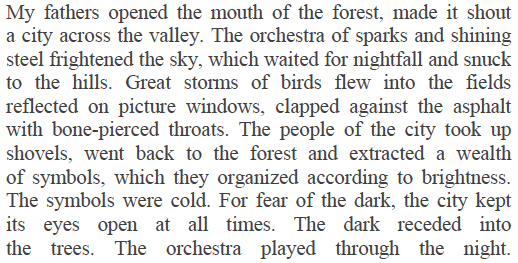
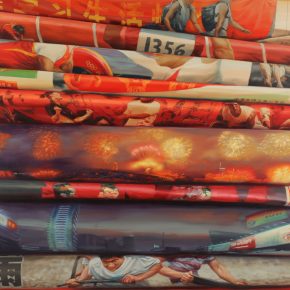
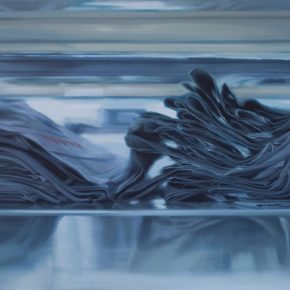
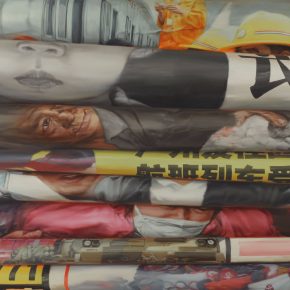
I am inter­est­ed in the tem­po­rary nature of news­pa­pers as every­day objects loaded with all-encom­pass­ing infor­ma­tion of chang­ing dai­ly life: from the front-page news to stock mar­ket columns to birth announce­ments and obit­u­ar­ies. News­pa­pers are recy­cled. Life goes on. “The Silent Flow of Dai­ly Life” (1998 – ) is a series of paint­ings that depict news­pa­per stacks found on the shelves as arranged by librar­i­ans, usu­al­ly marked or labeled with dates. In these paint­ings, the abstract pat­tern on the side of a stack gives away no spe­cif­ic infor­ma­tion. In the “Frag­men­tary Views” series (2001– ), the close-up view of the news­pa­per stack reveals frag­ment­ed news pic­tures and texts of seem­ing­ly unre­lat­ed events, from the qui­et pas­sage of the every­day to the dis­turb­ing con­flicts and tragedies of our time. The acci­den­tal jux­ta­po­si­tion of images and texts sug­gests, and at the same time con­ceals, a larg­er, more com­plex social picture.

What can you say, in the face of what’s hap­pen­ing every day? Noth­ing comes as a shock, real­ly. In the news­pa­per paint­ings, I am try­ing to find a way to com­bine my ideas and inter­ests in the ear­li­er “Library Series” paint­ings of decay­ing books and instal­la­tions deal­ing with his­tor­i­cal events in a sim­ple format.


Xiaoze Xie is an inter­na­tion­al­ly rec­og­nized artist who has exhib­it­ed exten­sive­ly in the U.S. and abroad. His work is in the per­ma­nent col­lec­tion of the Muse­um of Fine Arts Hous­ton, Oak­land Muse­um of Cal­i­for­nia, San Jose Muse­um of Art, and Scotts­dale Muse­um of Con­tem­po­rary Art. Xie received the Painters & Sculp­tors Grant from the Joan Mitchell Foun­da­tion (2013) and the Pol­lock-Kras­ner Foun­da­tion Grant (2003). Xie is the Paul L. & Phyl­lis Wat­tis Pro­fes­sor of Art at Stan­ford University.

History in the Future Tense

Criticism / Eric Weiskott

:: History in the Future Tense ::

His­to­ry in the future tense sounds like an oxy­moron. Every­one knows that his­to­ry lives in the past tense. The col­lo­qui­al or jour­nal­is­tic use of the present tense to nar­rate past events is known as the his­tor­i­cal present. To be rec­og­niz­able as such, his­to­ry writ­ing must occu­py one of these two gram­mat­i­cal modalities.

It was not always so. In the British Isles from the twelfth to the sev­en­teenth cen­turies, read­ers often con­sumed “his­to­ry writ­ten in the future tense.” [i] In the wild­ly pop­u­lar genre of polit­i­cal prophe­cy, recent and dis­tant his­tor­i­cal events became estranged from the past and appeared as imag­ined futures. Prophe­cy expressed his­tor­i­cal expe­ri­ence as appre­hen­sion, refract­ed through polit­i­cal par­ti­san­ship and his­to­ri­o­graph­i­cal tra­di­tion. The unmod­ern affec­tive tex­tures of British polit­i­cal prophe­cy account for its post-Enlight­en­ment occlu­sion, in schol­ar­ship no less than lit­er­ary cul­ture. The genre is now rarely read and scarce­ly remem­bered. In the eigh­teenth cen­tu­ry, his­to­ry in the future tense devolved from a vital mode of pro­cess­ing and inter­ven­ing in polit­i­cal events to a self-con­grat­u­la­to­ry punch­line about the super­sti­tions of an igno­rant age. Prophe­cy was sub­sumed in a hermeneu­tics of sus­pi­cion, [ii] which diag­nosed the (often trans­par­ent) ulte­ri­or motives of prophet­ic writ­ing, but in doing so dis­placed the actu­al expe­ri­ences of its ear­li­er read­ers. Return­ing to the archive of polit­i­cal prophe­cy throws into relief this digres­sion in intel­lec­tu­al his­to­ry, reveal­ing what “every­one knows” about his­to­ry to be a symp­tom of the divi­sion of the past, since the Enlight­en­ment, into medieval and mod­ern seg­ments. Con­fronting his­to­ry in the future tense in 2017 means acknowl­edg­ing the ide­o­log­i­cal work that futures still per­form in polit­i­cal dis­course. Polit­i­cal prophe­cy is alive and well today. Our politi­cians and pub­lic fig­ures fore­tell a brighter future, but their com­ments are rarely rec­og­nized to be his­tor­i­cal in nature.

Polit­i­cal prophe­cy, and the mode of his­tor­i­cal con­scious­ness it implies, can be traced back to a par­tic­u­lar scene of cul­tur­al pro­duc­tion. In the 1120s or 1130s, a Welsh cler­ic named Geof­frey pub­lished a Latin prose chron­i­cle called His­to­ry of the Kings of Britain. This text nar­rates major episodes in British polit­i­cal his­to­ry, from the arrival of the leg­endary Bru­tus of Troy to the reign of the sev­enth-cen­tu­ry Welsh king Cad­wal­lad­er. At the cen­ter of the His­to­ry is the Prophe­cies of Mer­lin, in which Mer­lin, at the request of King Vor­tigern, tells the future of the Sax­on and British peo­ples. Though prob­a­bly com­posed sep­a­rate­ly from the His­to­ry, the Prophe­cies appears with­in it, as book 7 of 11. Prophe­cies book­end the His­to­ry as well. Book 1 opens with pre­dic­tions of Brutus’s birth. At the end of book 11, an angel com­mands Cad­wal­lad­er to leave Britain to the Sax­on invaders until the proph­e­sied return of King Arthur and the vin­di­ca­tion of British (i.e., Celtic) hege­mo­ny on the island.

Geoffrey’s inser­tion of prophe­cy into his­tor­i­cal nar­ra­tive bespeaks an atti­tude toward his­to­ry from which post-Enlight­en­ment sec­u­lar­ist sub­jects have become estranged. In medieval and ear­ly mod­ern British cul­ture, prophe­cy expressed the same truth as his­to­ry. The two gen­res of writ­ing described the same object of inquiry from dif­fer­ent van­tage points. They stood in rough­ly the same rela­tion as bib­li­cal prophe­cy and bib­li­cal his­to­ry. Cru­cial­ly, in the case of both bib­li­cal and polit­i­cal prophe­cy, the cycle of antic­i­pa­tion and ful­fill­ment was just the process where­by the real world came into being. One should not mis­take prophe­cy for metaphor­i­cal com­men­tary on a world that pre­cedes it. Rather, ear­ly authors and read­ers posit­ed prophet­ic dis­course as a ground for pol­i­tics as such. (Pre­mod­ern ontolo­gies res­onate with Michel Fou­cault and oth­er post­mod­ern philoso­phers who describe the world, and the polit­i­cal world above all, as the prod­uct of dis­cours­es.) [iii] Merlin’s prophe­cies begin not with an act of imag­i­na­tion but with two real drag­ons, whom Vor­tigern observes fight­ing. Mer­lin opens his dis­course by iden­ti­fy­ing the drag­ons with the Sax­ons and the Britons, respectively:

As Vor­tigern, King of the Britons, sat on the bank of the drained pool, the two drag­ons emerged, one white, one red. As they neared each oth­er, they fought a ter­ri­ble bat­tle, breath­ing fire.… As the drag­ons fought in this way, the king com­mand­ed Ambro­sius Mer­lin to tell him the mean­ing of their bat­tle. He burst into tears and was inspired to proph­esy thus:

Alas for the red drag­on, its end is near. Its caves will be tak­en by the white drag­on, which sym­bol­izes the Sax­ons whom you have sum­moned. The red rep­re­sents the peo­ple of Britain, whom the white will oppress …’ [iv]

In book 6, Vor­tigern had invit­ed Hengest and the Sax­ons to Britain, an over­ture that proved dis­as­trous. Here, the sym­bol­ic world of polit­i­cal prophe­cy, in which nations are drag­ons and “light­ning bolts … flash from Scorpio’s tail,” occu­pies the plane of real­i­ty. [v] Indeed, like the Old Tes­ta­ment with­out the New in medieval Chris­t­ian typol­o­gy, real­i­ty remains under­spec­i­fied with­out prophecy.

Weiskott

This full-page illus­tra­tion from a four­teenth-cen­tu­ry man­u­script offers an instruc­tive response to Geoffrey’s vision of prophet­ic his­to­ry. The man­u­script is shelf­mark Cam­bridge, Cor­pus Christi Col­lege (CCCC), 476, one of many stand­alone copies of the Prophe­cies of Mer­lin. Care­ful­ly drawn and lib­er­al­ly gild­ed, the illus­tra­tion is divid­ed into four quad­rants. Vor­tigern sits enthroned in the upper left quad­rant, and Mer­lin as a boy stands in the upper right quad­rant, while the white drag­on and the red drag­on occu­py the squat low­er quad­rants. Mer­lin holds a long emp­ty scroll, looks across at Vor­tigern, and points down toward the drag­ons. The four fig­ures are labeled in Latin, respec­tive­ly, “king Vor­tigern,” “the prophet Mer­lin,” “the Sax­on peo­ple are sym­bol­ized [fig­u­ratur] here,” and “it sig­ni­fies [sig­ni­fi­cat] the British peo­ple.” On one hand, the illus­tra­tion reduces Geoffrey’s prophet­ic his­to­ry into alle­go­ry. The drag­ons are metaphors, sep­a­rat­ed from the real world by the schema­tism of the four quad­rants and the inter­pre­tive verbs are sym­bol­ized and sig­ni­fies, which cor­re­spond to the verbs sym­bol­izes and rep­re­sents in the open­ing of the Prophe­cies. On the oth­er hand, the illus­tra­tion cap­tures the court­ly dra­ma of the scene. Mer­lin inter­prets the world for a nation­al king. The emp­ty scroll echoes the shape of the arched labels. It waits, like the British polit­i­cal future, to be inscribed with the his­to­ry that lurks behind dra­con­ic facades.

The pro­logue to a lat­er four­teenth-cen­tu­ry Eng­lish chron­i­cle express­es com­pa­ra­ble reci­procity between prophe­cy and his­to­ry. Thomas Gray’s Scalacron­i­ca (1362), writ­ten in Anglo-Nor­man French, is a world his­to­ry that merges into a chron­i­cle of Eng­land and Scot­land. In the pro­logue, Gray visu­al­izes his­to­ri­og­ra­phy as a lad­der with five rungs, rest­ing on the Bible and the his­to­ry of the destruc­tion of Troy. The great­est hits of medieval Eng­lish chron­i­cle writ­ing, includ­ing “the Brut,” i.e., Geoffrey’s His­to­ry, com­prise the first four rungs, but the fifth (and unat­tain­able) rung belongs to the prophets. Guid­ing the avatar of Gray through his vision­ary pro­logue is Sibyl, a famous ascribed author of medieval prophe­cies. “You can­not climb up the fifth rung,” she informs him, “for it sig­ni­fies [sig­ni­fy] future events that are envis­aged [ymag­ine] by cer­tain peo­ple in ancient tales.” The French verb ymag­in­er “imag­ine, envis­age, con­ceive” sug­gests a tech­ni­cal func­tion of the imag­i­na­tion in medieval psy­chol­o­gy, but one to which the nar­ra­tor and read­er of Scalacron­i­ca have no access. Sibyl then gives illus­tra­tive quo­ta­tions from Latin and Eng­lish polit­i­cal prophe­cies, named as “the life of St. Edward,” “the Eng­lish Brut,” and “the tales of Mer­lin.” [vi] For Gray, as for Geof­frey and the CCCC 476 artist, polit­i­cal prophe­cy crowns and super­in­tends all of his­to­ry. The sit­u­a­tion in the pro­logue, like the title “Scalacron­i­ca” itself, par­takes in the pun­ning sym­bol­ism of polit­i­cal prophe­cy, for the lad­der (Latin scala) was the heraldic emblem of the Gray fam­i­ly (cp. Old French gré, grey “rung”).

The pecu­liar his­tor­i­cal con­scious­ness of polit­i­cal prophe­cy finds its lit­er­ary com­ple­ment in plot­less­ness. Take, for exam­ple, the Ire­land Prophe­cy, a prophe­cy in Eng­lish allit­er­a­tive verse (the meter of Beowulf and Sir Gawain and the Green Knight) com­posed in the ear­ly 1450s, on the eve of the Wars of the Ros­es between the York­ists and the Lan­cas­tri­ans. [vii] The poem sur­vives in eight man­u­script copies, an unusu­al­ly large num­ber. It stages the Wars of the Ros­es as a show­down between Britons and Sax­ons, in which the Sax­ons, appar­ent­ly to be iden­ti­fied with the Lan­cas­tri­ans, get the worst of it. The poet rep­re­sents the Sax­ons as lions, after the lions in the Eng­lish coat of arms. Richard Neville, earl of War­wick, a key play­er in the Wars who switched alle­giances twice, appears as a bear and a ragged staff, two ele­ments of his heraldic badge. The poem ends with an acros­tic that looks to Ire­land for the vic­to­ri­ous British king. The ref­er­ence to Ire­land is like­ly an allu­sion to Richard, duke of York, Lieu­tenant of Ire­land from 1449 and a York­ist leader. Richard appears ear­li­er in the poem as a fal­con, after his badge.

Like oth­er polit­i­cal prophe­cies, the Ire­land Prophe­cy frus­trates mod­ern lit­er­ary expec­ta­tions by avoid­ing both nar­ra­tive and lyri­cism. Things do not hap­pen in the poem. Pre­dic­tions of cat­a­stro­phe for the lions/Saxons (ll. 1–14) give way to descrip­tion of the emo­tion­al and polit­i­cal fall­out of the final con­flict (ll. 15–18), a hunt for a lone sur­viv­ing lion (ll. 19–24), a doomed mar­riage to patch things up (ll. 25–30), a war of ret­ri­bu­tion led by a British hero (ll. 31–8), destruc­tion for the Sax­ons (ll. 39–44), and so on. The con­nec­tions between the poem’s vignettes depend not on the log­ic of nar­ra­tive but on the require­ments of poet­ic syn­tax, the con­ven­tions of prophe­cy, and the vagaries of polit­i­cal his­to­ry. Mod­ern read­ers are accus­tomed to ver­ti­cal read­ing, where­by the read­ing expe­ri­ence leads from a psy­cho­log­i­cal or social prob­lem to its res­o­lu­tion. But the Ire­land Prophe­cy demands hor­i­zon­tal read­ing, where­by the same polit­i­cal propo­si­tion takes mul­ti­ple forms in dis­con­nect­ed pas­sages. The cat­a­stro­phe of lines 1–14 is the destruc­tion of lines 39–44. The emo­tion­al fall­out of lines 15–18 is the “roar­ing and calami­ty” of line 55. The bear is the earl of War­wick, and the ragged staff is the same earl of War­wick. A fal­con flies north one time but in two pas­sages (ll. 45, 61), and the fal­con is Richard, and Richard is the hero of the bat­tle at the end of the poem, which is the war of ret­ri­bu­tion described in lines 31–8. The clos­ing sequence presents a hero­ic British king on the move, from Ire­land (“Of I R and L | will that noble one arise / A N and D,” 83–4) to Eng­land (to defeat “the Sax­on hound,” 70) to Rome (“Over all Chris­tians | he will bear the crown,” 85). (In these quo­ta­tions, “|” marks the caesura or inter­nal bound­ary of the allit­er­a­tive line.) The map of the mil­i­tary cam­paign of a redeemer-king is the map of a reimag­ined Chris­ten­dom, pal­lia­tive to the resent­ment of an Eng­lish elite in the after­math of ter­ri­to­r­i­al loss­es in the Hun­dred Years’ War with France. The poem begins in Eng­land, with the redeemer fig­ure from Ire­land already on the ground and in action, a state of affairs first pre­dict­ed in the clos­ing lines of the poem. All these descrip­tions, of course, are in the future tense. The expe­ri­ence of read­ing the poem mim­ics a future-ori­ent­ed expe­ri­ence of his­to­ry, in which var­i­ous poten­tial­i­ties loom in no par­tic­u­lar order.

All the more note­wor­thy, then, that sev­er­al of the sit­u­a­tions depict­ed in the Ire­land Prophe­cy cor­re­spond to doc­u­ment­ed polit­i­cal events of the late 1440s and ear­ly 1450s. Like oth­er polit­i­cal prophe­cies, the poem offers read­ers the oppor­tu­ni­ty to encounter the polit­i­cal present through the medi­um of antic­i­pa­tion or, con­verse­ly, to relive the ful­fill­ment of ancient prophe­cies through par­ti­san­ship or polit­i­cal action. To under­stand the extent to which prophet­ic dis­course struc­tured every­day polit­i­cal prax­is in medieval Eng­land, con­sid­er the behav­ior of mag­nates. The thir­teenth-cen­tu­ry his­to­ri­an Ger­ald of Wales risked alien­at­ing his patron, Hen­ry II, by declin­ing to write a com­men­tary on the Prophe­cies of Mer­lin. [viii] Edward II evi­dent­ly dis­patched an envoy to the pope in order to pro­cure the Holy Oil of St. Thomas of Can­ter­bury, a rel­ic which was, or would soon become, the sub­ject of a pop­u­lar polit­i­cal prophe­cy. [ix] A man­u­script of prophe­cies caused Anne Boleyn to think twice about mar­ry­ing Hen­ry VIII. [x] The list goes on. Prophe­cy sim­u­lat­ed the expe­ri­ence of pol­i­tics, and pol­i­tics, in turn, reflect­ed the tra­di­tion of prophecy.

The pro­jec­tion of the polit­i­cal past into the polit­i­cal future was a main­stay of prophet­ic dis­course. For lat­er read­ers, it was a tar­get of dis­dain. With­in a hermeneu­tics of sus­pi­cion, his­to­ry in the future tense can only be a par­ti­san ruse. In its time, as we have seen, prophe­cy facil­i­tat­ed a cer­tain atti­tude toward the polit­i­cal world. Whether ear­ly read­ers expe­ri­enced prophet­ic texts as “tru­ly” prophet­ic, while a valid historical/psychological ques­tion and a nat­ur­al one for mod­ern sec­u­lar­ists, is to the side of the issue. Prophet­ic texts were not sta­t­ic, pro­pa­gan­dis­tic edicts but moved through space and time. Ear­ly com­men­taries on the Prophe­cies of Mer­lin, for exam­ple, arrive by dif­fer­ent means at dif­fer­ent inter­pre­ta­tions. The Ire­land Prophe­cy occurs in one York­ist man­u­script col­lec­tion of the 1450s, but it also occurs in six oth­er man­u­scripts, some of them much lat­er, whose polit­i­cal affil­i­a­tions are opaque or mixed. 

After the end of their active pro­duc­tion, polit­i­cal prophe­cies could pro­voke strong neg­a­tive reac­tions. Already in 1588, the astrologer John Har­vey had won­dered aloud in his print­ed book A Dis­cur­sive Prob­lem con­cern­ing Prophe­cies:

Nay, is any device eas­i­er, or any prac­tice read­ier, than to forge a blind prophe­cy, or to coin a coun­ter­feit tale, or to foist in a new-found old-said saw, or to set coun­te­nance upon some stale poet­i­cal frag­ment, or oth­er antique record, or to play upon the advan­tage of some old mem­o­ran­dum, with­out rhyme or rea­son; or to gloze, and jug­gle with knacks of the mak­er, where they may pass, and repass for cur­rent pay­ment; or final­ly, to revive some for­lorn Mer­lin, or Pierce Plow­man, or Nos­tradame, or the like sup­posed prophet? Alas, is this wise world so sim­ple, to believe so fool­ish toys, devised to mock apes, and delude chil­dren? [xi]

In a para­dox typ­i­cal of ear­ly print dis­course, Har­vey engages prophe­cies while argu­ing against doing so. He posi­tions prophe­cy as a socioin­tel­lec­tu­al “prob­lem” inher­it­ed from a sim­ple­mind­ed past—though some of his exam­ples are in fact drawn from six­teenth-cen­tu­ry com­po­si­tions. By 1833, when the Ban­natyne Club brought out Col­lec­tion of Ancient Scot­tish Prophe­cies, in Allit­er­a­tive Verse, a reprint of a 1603 print edi­tion, his­to­ry in the future tense no longer made sense. The social stigma­ti­za­tion of prophe­cy, per­cep­ti­ble from its first appear­ances in writ­ing, was now com­plete. The unti­tled pref­ace to Col­lec­tion of Ancient Scot­tish Prophe­cies begins:

It seems dif­fi­cult for any­one, at the present day, to be ful­ly aware of that degree of fond creduli­ty with which, at a peri­od even with­in the last cen­tu­ry, cer­tain polit­i­cal prophe­cies were regard­ed and cher­ished by the par­ti­sans of oppo­site fac­tions in this coun­try [i.e., Scot­land], which the least instruct­ed peas­ants of a lat­er age would prob­a­bly treat with con­tempt and deri­sion. [xii]

Dif­fi­cult, indeed. Here the emer­gence of a mod­ern present from the medieval past is trans­act­ed by class and lit­er­ary genre. Moder­ni­ty puts “the least instruct­ed peas­ants” above even the noblest benight­ed “par­ti­sans” in the hier­ar­chy of lit­er­ary good sense.

Mod­ern lib­er­al sub­jects inhab­it the intel­lec­tu­al con­sen­sus for which David Laing, the (unnamed) edi­tor of Col­lec­tion of Ancient Scot­tish Prophe­cies, pre­sumes to speak. One con­se­quence of this sit­u­a­tion is that polit­i­cal prophe­cy now appears remote. If the past is a for­eign coun­try, so too are the past’s futures. Anoth­er, more press­ing con­se­quence is that some forms of future-ori­ent­ed his­tor­i­cal thought are dif­fi­cult to per­ceive now. A strict divi­sion between medieval and mod­ern has become the price of entry to sub­jec­tiv­i­ty and the unspo­ken pre­con­di­tion of a sec­u­lar­ist-impe­ri­al­ist present. To real­ize this, one has only to note modernity’s geo­graph­i­cal exclu­sions, how it is secured for the devel­oped world pre­cise­ly at the expense of the devel­op­ing world. The medieval/modern peri­odiza­tion, in turn, depends on a con­cep­tu­al dis­tinc­tion between past, present, and future, now iden­ti­fi­able with his­tor­i­cal con­scious­ness as such. Fol­low­ing the Enlight­en­ment, medieval sub­jects could be named as those who squan­dered their (clas­si­cal) past, endured their drea­ry present, and har­bored delu­sions about their future. This is the schemat­ic his­tori­cism guid­ing, for exam­ple, Stephen Greenblatt’s The Swerve, in which the dog­mat­ic igno­rance of medieval monks becomes pre­lude to the Renais­sance redis­cov­ery of lib­er­al human­ism. [xiii] In the con­text of this hard right turn in intel­lec­tu­al his­to­ry, it can be “dif­fi­cult for any­one” to imag­ine futures that escape the log­ic of con­tain­ment under­writ­ing the idea of the Mid­dle Ages.

In clos­ing, I point to two exam­ples of postmedieval polit­i­cal prophe­cy, both from the Unit­ed States. Mar­tin Luther King, Jr.’s oft-quot­ed line about “the arc of the moral uni­verse” posits a future of polit­i­cal vin­di­ca­tion. In a ser­mon deliv­ered at Tem­ple Israel of Hol­ly­wood in 1965 and redis­cov­ered in 2007, King pairs the “moral uni­verse” line with bib­li­cal prophe­cy (Isa­iah 40:4). [xiv] Like his “I Have a Dream” speech at the 1963 March on Wash­ing­ton, King’s ref­er­ences to “the arc of the moral uni­verse” have been cap­tured by reac­tionary neo­con­ser­vatism. These frag­ments of prophet­ic dis­course entered the polit­i­cal main­stream as assur­ances that the present redeems the past, or, in oth­er words, that the prophe­cy of the Civ­il Rights Move­ment of the 1960s has been ful­filled. For neolib­er­als, mean­while, King’s words autho­rize poli­cies that bran­dish mul­ti­cul­tur­al­ism and racial equi­ty as shields for cor­po­ra­ti­za­tion. Restored to the con­text of King’s lib­er­a­tion the­ol­o­gy and demo­c­ra­t­ic social­ism, “the arc of the moral uni­verse” per­forms a dif­fer­ent ide­o­log­i­cal func­tion: it ori­ents grass­roots polit­i­cal action toward a future imag­ined but not yet realized.

In “I’ve Been to the Moun­tain­top” (1968), King reversed this pro­ce­dure, fol­low­ing the arc of the moral uni­verse back through sal­va­tion his­to­ry and polit­i­cal his­to­ry. [xv] He imag­ines “stand­ing at the begin­ning of time, with the pos­si­bil­i­ty of tak­ing a kind of gen­er­al and panoram­ic view of the whole of human his­to­ry up to now.” The speech ends with the pre­dic­tion that “we, as a peo­ple, will get to the promised land.” King’s com­mit­ment to prophe­cy lay in the con­vic­tion, not that the present redeems the past, but that the future redeems the present.

A more con­tem­po­rary (and dark­er) exam­ple is Pres­i­dent Trump’s inau­gur­al address, in which he alleged a dystopia of “Amer­i­can car­nage” and promised redemp­tion for “the for­got­ten men and women of our coun­try.” [xvi] Trump’s cam­paign plat­form had named real prob­lems in America—income inequal­i­ty, the entrench­ment of a polit­i­cal class, the cen­tral­iza­tion of cul­tur­al pow­er, terrorism—but pro­posed to solve them with the fan­ta­sy of a nation that becomes an island unto itself. His inau­gur­al address took the form of a prophe­cy. “But that is the past,” he said. “And now we are look­ing only to the future.” Trump­ism could very well be sum­ma­rized by the phrase his­to­ry in the future tense, inso­far as it projects a fan­ta­sized ver­sion of 1950s white mid­dle-class pros­per­i­ty as the des­ti­na­tion of a new hyper­na­tion­al­ism. King’s and Trump’s polit­i­cal prophe­cies both evoke insti­tu­tions: respec­tive­ly, the church and the nation. Yet Trump’s prophe­cies may prove more resis­tant to ide­o­log­i­cal recap­ture due to their bla­tant racial and socioe­co­nom­ic particularity.

The ide­o­log­i­cal work of these postmedieval polit­i­cal prophe­cies can­not be appre­ci­at­ed ful­ly with­in the his­tori­cisms of sec­u­lar­ist moder­ni­ty since moder­ni­ty is that which both King and Trump seek, in dras­ti­cal­ly dif­fer­ent ways, to escape. Both sit­u­ate their polit­i­cal futures in the mind’s eye, King in the famous anapho­ra of “I have a dream …” and Trump in his ref­er­ence to “a new vision” and his promise that “we will bring back our dreams.” Vision­ary poet­ics refers in both cas­es, of course, to the Amer­i­can dream, the U.S. equiv­a­lent of the Prophe­cies of Mer­lin. As an intel­lec­tu­al con­sen­sus and a mate­r­i­al real­i­ty, moder­ni­ty over­shad­ows the pow­er of imag­ined futures. In 2017, we ignore that pow­er at our peril.


[i] Rupert Tay­lor, The Polit­i­cal Prophe­cy in Eng­land (Colum­bia Univ. Press, 1911), p. 3.

[ii] The phrase hermeneu­tics of sus­pi­cion was coined by Paul Ricoeur, with ref­er­ence to Marx, Niet­zsche, and Freud, and is rein­vig­o­rat­ed for lit­er­ary crit­i­cism by Rita Fel­s­ki, The Lim­its of Cri­tique (Chica­go, 2015).

[iii] This is no acci­dent, for medieval lit­er­a­ture and cul­ture pro­vide a lit­tle-acknowl­edged ground for (post)modern the­o­ry. See Bruce Holsinger, The Pre­mod­ern Con­di­tion: Medieval­ism and the Mak­ing of The­o­ry (Chica­go, 2005); The Legit­i­ma­cy of the Mid­dle Ages: On the Unwrit­ten His­to­ry of The­o­ry, ed. Andrew Cole and D. Vance Smith (Duke Univ. Press, 2010); and Cole, “The Call of Things: A Cri­tique of Object-Ori­ent­ed Ontolo­gies,” min­neso­ta review 80 (2013): 106–18.

[iv] Geof­frey of Mon­mouth: “The His­to­ry of the Kings of Britain”: An Edi­tion and Trans­la­tion of “De gestis Briton­um,” ed. Michael D. Reeve and tr. Neil Wright (Boy­dell & Brew­er, 2007), §§111–12. I quote from Wright’s fac­ing Eng­lish trans­la­tion, with the British spelling sym­bol­is­es Amer­i­can­ized.

[v] Geof­frey of Mon­mouth, ed. Reeve, §117.

[vi] All quo­ta­tions in this para­graph refer to Scalacron­i­ca, ed. Joseph Steven­son (Mait­land Club, 1836), p. 3. Trans­la­tion mine.

[vii] See Eric Weiskott, “The Ire­land Prophe­cy: Text and Met­ri­cal Con­text,” Stud­ies in Philol­o­gy 114 (2017): 245–77. I cite the text from this edi­tion. Trans­la­tion mine.

[viii] Julia Crick, “Geof­frey and the Prophet­ic Tra­di­tion,” The Arthur of Medieval Latin Lit­er­a­ture: The Devel­op­ment and Dis­sem­i­na­tion of the Arthuri­an Leg­end in Medieval Latin, ed. Siân Echard (Univ. of Wales Press, 2011), pp. 67–82, at p. 73.

[ix] J. R. S. Phillips, “Edward II and the Prophets,” Eng­land in the Four­teenth Cen­tu­ry: Pro­ceed­ings of the 1985 Har­lax­ton Sym­po­sium, ed. W. M. Orm­rod (Boy­dell & Brew­er, 1986), pp. 189–201, at pp. 196–201.

[x] Tim Thorn­ton, Prophe­cy, Pol­i­tics, and the Peo­ple in Ear­ly Mod­ern Eng­land (Boy­dell & Brew­er, 2006), pp. 20–21.

[xi] John Har­vey, A Dis­cur­sive Prob­lem con­cern­ing Prophe­cies (Short Title Cat­a­logue no. 12908), p. 2. I have mod­ern­ized the spelling and word divi­sion of the text and title.

[xii] Col­lec­tion of Ancient Scot­tish Prophe­cies, in Allit­er­a­tive Verse: Reprint­ed from Waldegrave’s Edi­tion, M.DC.III., ed. David Laing (Bal­lan­tyne, 1883), p. v. I have mod­ern­ized the phrase any one.

[xiii] Stephen Green­blatt, The Swerve: How the World Became Mod­ern (W. W. Nor­ton, 2011). See fur­ther Lau­ra Saetveit Miles, “Stephen Greenblatt’s The Swerve Racked Up Prizes – and Com­plete­ly Mis­led You about the Mid­dle Ages,” Vox 20 July 2016. http://www.vox.com/2016/7/20/12216712/harvard-professor-the-swerve-greenblatt-middle-ages-false.

[xiv] See “A New Addi­tion to Mar­tin Luther King’s Lega­cy,” NPR 15 Jan­u­ary 2007. http://www.npr.org/templates/transcript/transcript.php?storyId=6843464.

[xv] See “I’ve Been to the Moun­tain­top,” The King Cen­ter. http://www.thekingcenter.org/archive/document/ive-been-mountaintop‑0#.

[xvi] “The Inau­gur­al Address,” whitehouse.gov 20 Jan­u­ary 2017. https://www.whitehouse.gov/inaugural-address.


Bib­li­og­ra­phy

Crick, Julia. “Geof­frey and the Prophet­ic Tra­di­tion.” The Arthur of Medieval Latin Lit­er­a­ture: The Devel­op­ment and Dis­sem­i­na­tion of the Arthuri­an Leg­end in Medieval Latin, ed. Siân Echard, Univ. of Wales Press, 2011, pp. 67–82.

Phillips, J. R. S. “Edward II and the Prophets.” Eng­land in the Four­teenth Cen­tu­ry: Pro­ceed­ings of the 1985 Har­lax­ton Sym­po­sium, ed. W. M. Orm­rod, Boy­dell & Brew­er, 1986, pp. 189–201.

Reeve, Michael D., ed., and Neil Wright, tr. Geof­frey of Mon­mouth: “The His­to­ry of the Kings of Britain”: An Edi­tion and Trans­la­tion of “De gestis Briton­um.” Boy­dell & Brew­er, 2007.

Steven­son, Joseph, ed. Scalacron­i­ca. Mait­land Club, 1836.

Tay­lor, Rupert. The Polit­i­cal Prophe­cy in Eng­land. Colum­bia Univ. Press, 1911.

Thorn­ton, Tim. Prophe­cy, Pol­i­tics, and the Peo­ple in Ear­ly Mod­ern Eng­land. Boy­dell & Brew­er, 2006.

Weiskott, Eric. “The Ire­land Prophe­cy: Text and Met­ri­cal Con­text.” Stud­ies in Philol­o­gy 114 (2017): 245–77.


Eric Weiskott is Assis­tant Pro­fes­sor of Eng­lish at Boston Col­lege. He is the author of Eng­lish Allit­er­a­tive Verse: Poet­ic Tra­di­tion and Lit­er­ary His­to­ry (Cam­bridge Uni­ver­si­ty Press, 2016), on medieval Eng­lish allit­er­a­tive poet­ry. His writ­ing appears in The Atlantic, the Times Lit­er­ary Sup­ple­ment, and Inside High­er Ed, as well as many aca­d­e­m­ic jour­nals. He is at work on a sec­ond book, about Eng­lish polit­i­cal prophe­cy, meter, and the divi­sion of his­to­ry into medieval and mod­ern periods.


Peter Buchanan, Guest Crit­i­cism Edi­tor, received his PhD in medieval stud­ies from the Uni­ver­si­ty of Toron­to and is cur­rent­ly an Assis­tant Pro­fes­sor of Eng­lish at New Mex­i­co High­lands Uni­ver­si­ty. His book-in-progress, Detours Through the Sen­si­ble: Metaphor and Mean­ing in Anglo-Sax­on Lit­er­a­ture, argues that metaphors of embod­i­ment shape the recep­tion and adap­ta­tion of poet­ic work. He and his wife col­lect hedge­hog bric-a-brac, though they do not cur­rent­ly own actu­al hedgehogs.

Simone: A Self-Portrait

Nonfiction / Anne K. Yoder

:: Simone: A Self-Portrait ::

We must tell each oth­er every­thing. Sto­ries lend our lives sig­nif­i­cance. What are our actions but small and ephemer­al unless we record and extend them? This unrav­el­ing is a form of repli­ca­tion, like DNA helix­es unwind­ing in order to be read. We take our chronol­o­gy and adorn and embell­ish as we whis­per into each other’s ears, and when we don’t whis­per, we write. We read each other’s jour­nals every night.

We must not live together.

We must not impinge on each other’s freedom.


SIMONE

She and Jean Paul work togeth­er even when they are not sleep­ing togeth­er. Simone does not want to play wife to anyone’s hus­band. Togeth­er they spread ideas about liv­ing and ways of being. They are mak­ing the most of trav­el­ing to far-off coun­tries and con­ti­nents. Caught up in their own mak­ing, it’s always one web or another.


In our thir­ties we are pro­lif­ic. Or you are, at least. You write The Sec­ond Sex, you tour the States and come to Chica­go, where you meet Nel­son, who sears you. He shows you his squalid city, his hov­el of a home sans bath­room but with a wood-burn­ing stove.

I have too many nov­els and essays to write, still. Let’s not talk about those. I too came to Chica­go by way of New York, and now I am look­ing with long­ing toward Paris. Steamy Chica­go, seedy Chica­go, so much flesh and land sprawl­ing in com­par­i­son to the steely heights of New York intel­lec­tu­als and archi­tec­ture always striv­ing to rise above. From my New York liv­ing room win­dow I could see the lights of the Empire State Build­ing, but now my gaze is grassy back­yard plots and bougainvil­lea and chil­dren jump­ing and scream­ing, “We don’t want a nap!”


EXISTENTIALISM as the AMERICAN DREAM

If you removed God from the pic­ture, this could become one nation true to self-evi­dent tenets. Prag­ma­tists and intel­lec­tu­als, house­wives and bankers, politi­cians and cow­boys pulling up their boot­straps, don­ning wigs and suits and las­sos, forg­ing futures, mak­ing what they can of this. There is lit­tle dif­fer­ence between believ­ing in becom­ing and own­ing your choic­es except for pur­pose and belief in where it all ends.


CAFE LIFE

Simone lives in rent­ed hotel rooms; Jean Paul gives away every book. Thought thrives in open spaces.


Paris was thread­bare and war-torn. Your men were sent off to ser­vice, and you remained in the city cen­ter filled with women. You taught and wrote nov­els and let­ters and kept com­pa­ny with female lovers. When Jean Paul told you to cross lines to vis­it him on the front, you dropped every­thing. You gath­ered your papers and books, faked ill­ness for leave, forged a pass and board­ed a train to meet him in a city whose name he’d spelled out cryp­ti­cal­ly. At the end of the war you wrote that you were old. Thir­ty-six and you’d seen the world in all of its impos­si­bil­i­ty, about to col­lapse into so many pieces: the Occu­pa­tion of France, the Holo­caust, the destruc­tion of Hiroshi­ma and Nagasaki.

With the end of the war comes fame for Jean Paul, and for you by asso­ci­a­tion. Exis­ten­tial­ism, as explained through his Being and Noth­ing­ness, is one way to make sense of this. Per­son­al free­dom and choice exist in spite of absur­di­ty and the awful­ness of orches­tra­tions beyond per­son­al con­trol. Jean Paul sug­gests that you write about what it means to be a woman. You ignore him at first, but then reconsider.


In a small work on the female orgasm, a Dr. Gremil­lon tak­ing issue with Stekel, declares that the nor­mal fer­tile woman has no orgasm. He goes on to say that ero­to­genic-zones are arti­fi­cial, not nat­ur­al, they are signs of degen­er­a­tion; to cre­ate them is unhy­genic and fool­ish, for women thus become insa­tiable, new and ter­ri­ble crea­tures, capa­ble of crime, and so on.”

Simone was nev­er nor­mal nor did she ever desire to be. Nor­mal was mar­ried with child, nor­mal was oblig­a­tory, con­trac­tu­al, mod­est, tedious. Nor­mal­ly, being nor­mal, a woman would not have a career. Nor­mal­ly, being nor­mal, a woman would not trav­el alone from coast to coast. Nel­son tempts her with con­tent­ment; with his embraces come sleep­less nights.


STATE of the UNION

One woman pos­sess­es two loves, many lovers, and mul­ti­ple desires. She like any woman has oblig­a­tions pit­ted between desires. In France a woman is a woman with­out tak­ing a hus­band to prove that she is. In Amer­i­ca, a woman isn’t a woman until she has a hus­band. But a man is a man, and once a man always a man.

Mar­riage is a con­tract, an agree­ment, an act of diplo­ma­cy, an absur­di­ty, a com­mit­ment that’s near­ly impos­si­ble to annul. Every­one who is mar­ried mar­ries for a rea­son. But how is this advan­ta­geous now, to us?


The inde­pen­dent woman “must have access to the oth­er,” you write. At this age we know too well what it means to be a woman. You’ve lived as a woman and have made some­thing of your­self in spite of your fem­i­nin­i­ty and the expec­ta­tions that come with this. In writ­ing about women you grap­ple with the oth­er as well as the self. A woman is not born a woman but instead becomes one. You strike mas­cu­line pos­es by dis­parag­ing lady lovers in let­ters to Jean Paul. Such a both­er they are, with their demands, their snor­ing that keeps you from sleep, and yet you indulge them with kiss­es before leav­ing to work.

Writ­ing, I am con­stant­ly writ­ing. I work wher­ev­er I go.

We were raised to take care of our­selves. From the out­set we were groomed to be our own grooms, to become bread­win­ners, self-suf­fi­cient. Not ready to take up an iron and oven mitt and yet we still had appetites. We pur­sued the inti­ma­cy of ideas, we and Jean Paul. Trysts were heat­ed argu­ments that impelled us to think further.

Our fathers, our Georges, thought lit­tle of what we’d made of our­selves, our lack of offi­cial papers, decrees and degrees, the ways we flout­ed the church and “careers,” the ways we made so much of our bod­ies with­out sign­ing on dot­ted lines.


TRAVELS with JEAN PAUL

In Swe­den, she sees the cam­eras first. Pho­tog­ra­phers stand in line and click click click when Jean Paul and Simone descend from the plane. France spits while Swe­den beck­ons and embraces and brings with it exquis­ite days of announce­ments and “impor­tant” peo­ple, din­ner invi­ta­tions, and radio con­ver­sa­tions. Jean Paul intro­duces: this is the king’s son, this is the cas­tle, here in the news­pa­per, look at our faces. Flash­bulbs and bright futures leave lumi­nes­cent traces. Jean Paul is known for think­ing and writ­ing and his many mis­tress­es; so is Simone. Simone’s work is her work, and his work is also her work. But her work is nev­er his.


AIRPLANES

Engines shud­der at the whirl of the world left in the wake. Noth­ing is as exhil­a­rat­ing as accel­er­at­ing over Paris at night, aim­ing blind­ly into the sky. They angle toward New­found­land, New York, Chica­go. One day sus­pend­ed between Paris and Chica­go, one day waits between Frog and Nel­son, her Croc­o­dile. In the air, drinks bring a sem­blance of san­i­ty and social mores. Simone takes whiskey while trav­el­ing. Whiskey calms, buries, soothes.


RECIPE for DISASTER

Oh dear, I spilt the sug­ar, but you don’t mind. My aim has been off late­ly, miss­ing either bag or bowl or both; I blame dis­tract­ed kiss­es, although this is prefer­able to rep­e­ti­tion and old recipes. You lick the bat­ter from the bowl with no thought to sal­mo­nel­la. I mix and mea­sure and bake and we dance before I begin to won­der and wor­ry what hap­pened to the quick-think­ing girl?


We dis­par­age our­selves, too. Simone calls us ancil­lary and intel­lec­tu­al par­a­sites, as if a woman could become her­self by her­self, ges­tat­ing with­in her own womb. What­ev­er she does in becom­ing her­self, she should refuse man’s rib, his thoughts, his story.

But no, not real­ly. Would Simone be Simone with­out Sartre, I mean Jean Paul? Why do I write Sartre to Simone? Why does a woman’s suc­cess still so often depend on a man’s achieve­ments? Why bake cook­ies to sat­is­fy the pub­lic appetite, to prove that a husband’s shirts will be ironed, his desk dust­ed, and his daugh­ter fed?

A First Lady always comes sec­ond, if not third or fourth. Simone was always sec­ond in her mind, even in agre­ga­tion, even though her qual­i­ty of mind was matched if not bet­ter than. The press only con­firmed Simone as the acolyte to Jean Paul’s master.


AIR MAIL

Lit­tle man with the big brain, Beaver sends her love from the Unit­ed States. Beaver is Frog to Nel­son, her Croc­o­dile, who she sweet­ly takes in the dark night. Soon after, she sends a note to the lit­tle man she adores. She writes to him, and to him, and some­times to her. Does a heart ever belong to any one? Miss you dear­ly, kiss kiss. She writes now in reverse, this time to Croc­o­dile as she trav­els with Jean Paul. Absence is dear.


LOVE, SIMONE

Oh, my Croc­o­dile, I will be your Waban­sia wife.

The stairs at the Palmer House are slick with rain. I almost slipped and fell after I ran past the old lady at the door who mon­i­tors com­ings and goings into the night. The hotel is a labyrinth, a lit­tle town. A stair­way going up does not nec­es­sar­i­ly come down. I could say the same about my affec­tions. I attempt­ed to descend the stairs only to find myself five floors above where I began. I am look­ing for an out, a way back to the street.

Not all walls are straight nor do halls lead where they seem.


BOREDOM and SOLITUDE

Simone can­not for­get her­self when she tries, even when new love takes root. Paris is wait­ing, Paris is big­ger than, she has work to do. Paris at night is intel­lect, ener­gy, and out until 3 a.m. Too much cham­pagne is nev­er enough. Simone would stay in Chica­go, she would give up Paris and ele­gant toasts, if only. She enter­tains ideas of wife­ly habits, of scrub­bing floors and mak­ing rum cake. She knows, how­ev­er, that she would never.


I would like to erase Jean Paul, at least for a while.


RUM CAKE

We steep beneath the sheets, warm flesh, ten­der kiss­es, ket­tle warm. Pil­lows muti­lat­ed on a stiff mat­tress, and your voice from the kitchen as I wait. You place can­dles and light match­es and won­der how to make time last. Cake crum­bles when my fork stabs. I am a pile of crumbs.

Just now I do not see exact­ly why any­body should ever write again. Just now I do not see exact­ly why any­body should ever write anything.”

She is at a loss for words except for the ones she show­ers upon her lover. In Paris, she has stand­ing appoint­ments with impor­tant men. They plan actions and dis­cuss ideas; they dis­perse thoughts and intents. Amid all of this Simone sends caress­es via mes­sen­ger from one con­ti­nent to anoth­er. She is not con­tent. Chica­go and her Croc­o­dile make promis­es in spite of his indi­gence, her impos­si­bil­i­ty. He makes offers; she can’t com­mit. Her work is her life and her work is in Paris. Nel­son is a man and his work is his work and he is Chica­go through and through.


The ways that we fol­lowed, Simone. Your life­long attach­ment flouts con­ven­tion but also clings to it in spite of your­self. I would like to lib­er­ate you. I would like to remove Jean Paul from your pic­ture. You were so thank­ful for his role in your becom­ing. He chal­lenged you. Men­tal joust­ing kept your minds sharp; metic­u­lous think­ing prod­ded you to see your­self beyond your­self. With his inher­i­tance you quit teach­ing. But how could you see your­self as sep­a­rate when you depend­ed so much? Should I blame you?

I do.

You couldn’t see your­self beyond a world with a Jean-Paul center.

I imag­ine you would find fault with me, too, for friv­o­lous think­ing, for this con­fla­tion, for speak­ing so inti­mate­ly with you. You were always vous, nev­er tu, even to Jean Paul. Vous, for­mal and firey, engaged but removed. Per­haps you always knew that fideli­ty to phi­los­o­phy is more con­stant than fideli­ty to flesh. You wit­nessed your father’s late night home­com­ings and your mother’s con­stant cry­ing. Why demand promis­es that won’t be kept?


BOOKS

Nel­son doesn’t learn French, and he doesn’t think philo­soph­i­cal­ly even when Simone asks, even when she chides. He reads what he reads, and this means books writ­ten by friends. This means books writ­ten by men, Amer­i­can gam­blers and drinkers who stay out to see what hap­pens when dark­ness casts a strange light. Most of his friends are riffraff and wan­der­ing and sleep in halfway houses.


LAKE HOUSE

There’s a lull to the day, quiet­ness as the wind wash­es over the water and sends me into a deep malaise. My focus and fire are smol­der­ing in this molasses of water, silt, and slow-mov­ing cars. We are sleep­ing in sep­a­rate bed­rooms, and I won­der if there always must be an ocean between. Aren’t bod­ies dis­tance enough? We kiss by the counter, he lifts and undress­es me, and I want to crawl into his skin. How quick­ly we drift from work and mind­ful things to touch and skin, and I real­ize how flesh can assuage and appease.


I won­der how we put up with so much.

Slurs were leveraged:

You’ll nev­er amount to more than a worm’s whore.”

Do you want to live in a gar­ret for the rest of your life?” “You won’t become a Sartre overnight.”

You were always roy­al, a queen, but a queen at times gives more to her sub­jects than they deserve or will ever return. I was nev­er very good at chess, but I know that pawns move one square at a time in a for­ward direc­tion. They are inter­change­able, sub­servient, at the bot­tom of the chain of com­mand. Your pro­tégé lovers became your pawns; cer­tain­ly Jean Paul pos­sessed his own, and at times he treat­ed you as one, too. And all the while, you and Jean Paul sup­port­ed them like kept women, like inces­tu­ous chil­dren, like they were per­form­ing them­selves for you.


APHASIA

Simone los­es her voice, or she wor­ries she will. She half­heart­ed­ly resists as love tips the scales toward mount­ing stu­pid­i­ty. She mourns the words that do not come but for Nel­son, dear, lazy Nel­son who won’t learn. Simone writes New York and remem­bers Chica­go. She is always turn­ing back to, look­ing for­ward to, but is nev­er present except in Nelson’s pres­ence. She remem­bers while recount­ing and account­ing for. She fol­lows in the tra­di­tion of Toc­queville. She is anx­ious about mix­ing duty and desire. She finds mean­ing in work and work is her life and her life is in France where her work has mean­ing. Nel­son is a fan­ta­sy, a fix­er-upper, he is stol­id and strong in his filthy lit­tle room off a poor­ly lit street, but when unhinged ener­gy ignites, she is consumed.


THE SWEETNESS of CHICAGO NIGHTS IS DECEPTIVE

Chicago’s sweet­ness is savory, putrid and kind­ly offen­sive, an acquired taste. Emp­ty lots over­grown con­ceal wounds and corpses and cas­ings. The side­walks beyond, where brawls tum­ble, where plain­clothes police­men lend a kind of sem­blance, lead to dim­ly lit rooms where drunks and dwarves and dice girls play. No one notices the poster blondes’ white teeth, freck­les, and full cheeks grown on Amer­i­can wheat; no one notices these wall(flower)s, their obscene smiles star­ing with raw won­der at the ful­some filth.


You set­tled for sec­onds. Your sec­onds sur­pass most firsts, but even so you trailed behind Jean-Paul. Was there flat­tery in this mim­ic­ry? Did he help clear the path for you? I must inter­ro­gate this fol­low­ing, your par­al­lel Amer­i­can trips and your par­al­lel Amer­i­can trysts.

Jean Paul trav­els to the States on a spon­sored trip, where he falls in love with Dolores, his New York guide, and extends his stay. There is dis­cus­sion of divorce (hers) and an offer of a pro­fes­sor­ship (his), but he returns to France, lovelorn, love torn. This is 1945.


SHE IS the ONLY WOMAN WHO FRIGHTENED ME

There have been so many oth­er lovers, and there will be so many more, but Dolores is the only one who makes Jean Paul swoon. Blonde Dolores, Amer­i­can Dolores, with her world­ly ways, her haughty laugh, and pend­ing divorce, her New York. Dolores is a cen­tripetal force draw­ing Jean Paul in, with his satel­lite Simone mak­ing anx­ious rev­o­lu­tions around his absence. Jean Paul says he will stay for Dolores, he will promise Dolores, he would mar­ry Dolores. He leaves me strand­ed, search­ing, scram­bling, cut loose.


AFFAIRS of OTHERS

Simone would rather for­get about Jean Paul trav­el­ing in North Africa with Dolores; she would rather for­get his amorous else­where affec­tions. Wher­ev­er he goes, Simone fol­lows. She would like to for­get this, too. Jean Paul comes before and always. Simone trails after. He has already spo­ken where she speaks and has been lis­tened to where oth­ers now lis­ten to her, often because of him. She would like to for­get all of this know­ing that her after depends on his before.


Simone sets off on an Amer­i­can tour in Jan­u­ary, 1947. She arrives with a list of con­tacts from Jean Paul. She sees New York through Jean Paul’s eyes, and how could she not with him as her guide? Oceans apart and yet clos­er than ever, she writes. Chica­go is a whirl­wind with Nel­son; he dizzies her with affin­i­ty and affec­tion, and yet she leaves prompt­ly for points west and south, Cal­i­for­nia, New Orleans, and Flori­da. It isn’t until she returns to New York, en route to Paris, when she receives word from Jean Paul to stay put, to extend. He needs to smooth over Dolores. His thrust sends Simone back to Chica­go where she kin­dles an Amer­i­can affair of her own.


SOUTH SIDE

We pass pago­das and a for­tune cook­ie fac­to­ry, smoke­stacks, a pow­er plant, the Chica­go Tri­bune press­es, the Wheat­field Tube Com­pa­ny ware­hous­es. Flat land dot­ted with flat hous­es, sprawl to a dis­tant sta­di­um. Down here it’s all pow­er lines, high­ways, through­ways, and thor­ough­fares, the con­duits for pass­ing through. The ener­gy and the oxy­gen of this city are deposit­ed here. This is the body, the true down town that pro­vides the ways and means that make the city run. We talk of South Side goat tacos. Marianna’s, a good place to go if you want to fight, the only true one-star dive bar we can find. We are faux grifters, vic­ar­i­ous tourists trav­el­ing where even the flo­ra falls clos­er to the land. Methane still bub­bles up in a creek where car­cass­es were dumped a hun­dred years ago.


Oh, I hate this coun­try, and like the peo­ple who suf­fer from it, and would be appalled if I had to stay here—yet leav­ing it is hav­ing a strange impres­sion on me. I’ve told you all this in a higged­ly pigged­ly way.”

What is more appalling is the desire to stay, visions of cart- push­ing and steak shop­ping at Pig­gly Wig­gly, of exchang­ing intel­lect for wife. Chica­go means no more din­ners with Jean Paul, Koestler, and Camus; Chica­go means los­ing influ­ence, los­ing myself. Chica­go is no Paris, it’s not even New York whose sec­ond-rate is over-inflat­ed, the self-impor­tant always search­ing for opportunity.


SLAUGHTER

The alleys and offices, bath­rooms and bars prof­fer the same dis­gust. Scent of offal wafts from the ware­house where cows gath­er and low before mov­ing on to where the blades draw blood. I insist we vis­it the slaugh­ter­house before say­ing, good­bye, Nel­son, before, au revoir, Chica­go. Nelson’s pleas offer a mar­i­tal blow. I wan­der through stalls won­der­ing what we must sacrifice.


What did Jean Paul have to do with my suc­cess? Too much, I fear. Was it a fail­ure of imag­i­na­tion? What is suc­cess if it depends on a hus­band or lover, and does this make our choice more impor­tant, the strate­gic ver­ti­cal climb made pos­si­ble through hor­i­zon­tal thrusts? How else do we make some­thing of our­selves? When will a woman be a woman and more than just a woman on her own terms? Has any­thing changed?

I am wor­ried that I am not Simone and that I can­not be Simone, even for a short peri­od of time. Simone pre­vails as my patron saint. I am falling short. I am also relieved.


From the writer

:: Account ::

I had moved to Chica­go from Brook­lyn six months before I start­ed “Simone: A Self-Por­trait.” I felt over­whelmed by the vast­ness of Chica­go, the way it expand­ed seem­ing­ly with no end, like so many small vil­lages set up one against anoth­er. I was struck by the Mid­west­ern flat­ness, the wide roads, the nov­el­ty of hav­ing a back porch.

Split between cities, I soon fell in love in Chica­go, but not with Chica­go. I was divid­ed, and it was won­der­ful­ly obscene. Simone de Beau­voir became my lodestar, my guru: author of the The Sec­ond Sex, advo­cate of open rela­tion­ships, torn between Chica­go and Paris, Algren and Sartre. And yet I became frus­trat­ed, too, that her recog­ni­tion as a female thinker seemed depen­dent on her men.

The lit­er­ary por­trait comes straight from Gertrude Stein. I was steeped in Ten­der But­tons and her essays and lec­tures and por­traits at the time of writ­ing. In line with Stein, I want­ed the por­trait to depict de Beauvoir’s essence and ener­gy as derived her books and essays and note­books and let­ters: the rhythm of her words, her life. And this then evolved into the desire to con­flate her ener­gy and mine, a trans­fer­ence of sorts. Much like Rimbaud’s “je suis un autre,” inspired by David David Wojnarowicz’s series of por­traits of friends and lovers wear­ing a mask of Rimbaud’s face, it’s at once a desire, mask, and revelation.


Anne K. Yoder’s writ­ing has appeared in Fence, Bomb, and Tin House, among oth­er pub­li­ca­tions. She is a staff writer for The Mil­lions and a mem­ber of Meek­ling Press, a col­lec­tive micro­press based in Chica­go. Cur­rent­ly she is work­ing on a nov­el, The Enhancers, about com­ing of age in a in a tech­no-phar­ma­ceu­ti­cal society.

Buzz

Nonfiction / Kristin McCandless

:: Buzz ::

Next to my chair there is a fly. There is a fran­tic buzz buzz that sounds like she is mov­ing, but she is caught in place, shak­ing her body and legs and wings, unable to escape the web. The more she strug­gles the more it twists around her body.

With­in one of eight arms’ reach is the spi­der, focus­ing so hard on its prey that it doesn’t notice me inch clos­er, or doesn’t care. It dances its two front legs back and forth, oper­at­ing some sort of invis­i­ble pul­ley sys­tem that jerks the fly, rolling her around, play­ing with her, almost.

The fly may feel more alive than she’s ever felt. She may have already giv­en in.

Regard­less, the spi­der works. I can­not com­pre­hend how it nev­er gets tan­gled, nev­er sticks to its own cre­ation like every oth­er piece of debris or bug or human.


My mem­o­ries of my moth­er are slip­ping away. This stirs in me a des­per­a­tion, know­ing I’ll nev­er be able to make more in the future. I replay them in my mind to make them stick, but each time I do, some­thing changes. More uncer­tain­ties. More dis­tance. When a per­son is reduced to some­thing as fal­li­ble as a mem­o­ry, how long before they’re com­plete­ly erased? Before they’re noth­ing but a fic­tion­al­ized char­ac­ter stitched togeth­er by oth­ers’ ideas of them—exaggerated and dis­tort­ed? I want to find a way to wrap up the truths of my moth­er until she’s per­fect­ly pre­served into the web of my brain, but I don’t know how to weave the strands. Not with the del­i­ca­cy and pre­ci­sion of the spi­der; not with­out get­ting caught up myself. I can feel her shak­ing free from me.


I watch the fly strug­gle and won­der if she under­stands the mag­ni­tude of her sit­u­a­tion. I want to know if she can sense that I’m here, if she knows how easy it would be for me to break her free. I hold life and death in each hand and I freeze. Flies land on my legs and whizz past my face and are so busy being alive they don’t seem to know that their kin is right next to them, sec­onds from a cru­el death.

The fly must think there is no escape. If she knows that I can help her, she doesn’t ask.

The buzz grows faint. Or maybe I grow accustomed.


The last year of my mother’s life she con­fined her­self to a bed as if the sheets held her in a straight­jack­et. The room around her trans­formed into an at-home hos­pi­tal, com­plete with IVs and show­er toi­lets and box­es of nee­dles and bags of liq­uid and stacks of instruc­tions and some­times even a nurse, offi­cial in scrubs, stop­ping by to check vitals and replen­ish sup­plies and prick and prod and poke at my mom with her long, bony arms, flip­ping her this way and that in the cocoon of a bed.

I moved back home and my moth­er put me straight to work, switch­ing out the IV hose and man­ag­ing sup­plies. 1.75 liters of Popov Vod­ka in the plas­tic con­tain­er, stat, she’d request, then slip me cash and tell me not to tell Dr. Dad. I’d stare at the bot­tle in my pas­sen­ger seat, turn up the music, and scream. Upon deliv­ery she’d smile at me, tell me I was a good daugh­ter. It was the only time I’d see life rush up to replace death on the sur­face of her skin.

When chang­ing the IV, you have to make sure there are no bub­bles. I told her I read a book once where some­one was mur­dered that way. Don’t screw up, then, she said, closed her eyes. She showed me how to admin­is­ter her shots. The worst was to be inject­ed each night before bed, a thick syringe straight into the stom­ach. You had to stab it in with a punch to make sure it took and was deep enough. I didn’t ask if she was scared. I didn’t ask anything.


The fly is com­plete­ly con­tained the next time I check. No move­ment, no strug­gle. I tell myself what is done is done. That I’m no type of god­dess, that I have no busi­ness toy­ing with life or death or inter­fer­ing with what­ev­er course fate takes. The spi­der drags the fly across its web, and the fly is at its mer­cy, tucked in tight to her­self. It drags her up against the wall where I can now see the stash of boun­ty, life forms bun­dled up into an unrec­og­niz­able death. I have a hard time not believ­ing this one was tak­en in excess. Even for a fam­i­ly of four, some­times there must be wrong in death, some­times the unfair play of oth­ers or of greed or of self­ish­ness can alter the tra­jec­to­ry of an exis­tence, and if so, then an unfair advan­tage of sup­port or gen­eros­i­ty or assis­tance is the only thing that could have bal­anced things out. That should bal­ance things out.

The web would fall so eas­i­ly under my fin­gers. The spi­der would run. But I stare at the fly with pity, not empa­thy. I stare at it on its death bed and think of noth­ing but what a nui­sance it would be to me were it free.


Even­tu­al­ly, I walked away from my moth­er. Left her to admin­is­ter her own shots, to find deal­ers to deliv­er vices to her door, spi­ders who would tease her just enough so that she’d squirm and strug­gle deep­er into her own grave.

I try to focus on the mem­o­ries that came before she was caught, but it’s hard to see past the cocoon, past the yel­low that crept across her skin and into her eyes. The last time I saw her I hugged her and her bones felt as though they were hol­low and gelati­nous, bend­ing from all the restraints she put on her­self. I remem­ber think­ing, she will die soon, but what is a thought if no action goes with it, where is the val­ue in words unsaid?

I hugged her and heard that slow, steady buzz beyond her bones. I could hear its exhaus­tion. I did not doubt that it strug­gled, but I knew it saw no escape.


From the writer

:: Account ::

This was the first piece I wrote, or was able to write, about my moth­er after her death. It took almost half a year. At the time I was expe­ri­enc­ing a lot of fear about my own life. Fear that I would be unable to han­dle such a blow and would also fall into addic­tion. Fear that grief had bro­ken my abil­i­ty to write, that I wasn’t a “real writer” because I couldn’t write through the pain and instead only want­ed to run from it. Fear, and shame, for my part in her death. Afraid to think of what I had done ver­sus what I had failed to do.

I had run from all traces of the life I had when she was liv­ing and found myself numb, sit­ting on a porch in the mid­dle of nowhere, Ore­gon. I couldn’t ignore the buzzing of this fly and was cap­ti­vat­ed when I real­ized a spi­der was wrap­ping her up in its web that very moment. I got as close as pos­si­ble and watched, nev­er once think­ing I should inter­fere. I was so caught up in my own moral dilem­ma between human and fly that for a short time I was able to pre­tend that I wasn’t think­ing of my mom and began writ­ing about this fly. Of course, what quick­ly poured out were some dammed up emo­tions for my mom, and I’ve been able to keep squeez­ing them out since. I’m thank­ful for that fly though I still don’t have an answer as to whether I should have saved her or not.

Even in telling this sto­ry I ask if I have per­mis­sion to share some­thing my moth­er would have been hor­ri­fied to read. I can only stand by my belief that shar­ing sto­ries can help some­one who is expe­ri­enc­ing or has expe­ri­enced some­thing sim­i­lar. That it might help them to cope or that it might help them grap­ple with action ver­sus inac­tion. That it might help some­one some­where with some­thing. I know she would have grant­ed per­mis­sion for that.

One of the most infu­ri­at­ing and com­fort­ing things about griev­ing is that there will nev­er be a guide­book to get through it. It is com­plete­ly indi­vid­u­al­ized and dif­fer­ent each time. For now, at this exact moment, I am grate­ful to be able to find com­fort in writ­ing and shar­ing words.


Kristin McCan­d­less is writ­ing, read­ing, and liv­ing out of a van some­where around the U.S. Her love for words is cur­rent­ly matched by her love for ani­mals, hot food, and friends with dri­ve­ways. She has an MFA in cre­ative writ­ing from Anti­och Uni­ver­si­ty of Los Angeles.

On Leaving: A Conversation

Nonfiction / Justin Lawrence Daugherty and Jill Talbot

:: On Leaving: A Conversation ::

A con­fes­sion: I think it is always me who caus­es the leav­ing. A scene: she lies in my bed. I’ve moved from an apart­ment we shared, and she is between that place and her next place, hun­dreds of miles away. She asks, can we just try again? I tell her that’s not what she real­ly wants, that she’s the one who end­ed things. I’m lying when I say this: I don’t know that we’re who we want each oth­er to be. A fear: I won’t unlearn how to ask her to leave.

~

I’ve been won­der­ing for weeks how to respond—to you, to end­ings and unlearn­ings, to the way I keep find­ing ways to use the word “belea­guered.” I read a sto­ry of yours, lin­gered on that line about tak­ing trips to get away from what we have to run from. I imag­ined you in an air­port, seat­ed on a stool of some bar at an under-con­struc­tion gate. I don’t know why. A scene: he cries in a chair of the last apart­ment we shared, announc­ing his deser­tion aban­don. Maybe the word is “bewil­der­ment.”

~

It’s been months, but I still wake up to find my arms reach­ing for her, to press my nose to her hair. In that sto­ry, there’s the impulse to lock one­self away from the world until it becomes remade and we emerge into it the same, the world altered. That’s not the way. What we face is our own fear of move­ment. Do you ever won­der if you asked him to go? I vis­it­ed her in Boston, and each night I lay on the couch, and she said good­night, and she would leave the bed­room door open. Invi­ta­tion is not what that was, but instead a lie she told. An open door can some­times be the strictest prohibition.

~

I think of a ques­tion in Anne Carson’s “The Glass Essay”: Why hold onto all that? Then: Where can I put it down? I think of your ques­tion, how it reads like a reck­on­ing. My won­der­ing mem­o­ry unknow­ing (yes, that’s it) rum­mages through the liv­ing room where he and I lived fif­teen years ago. I open a clos­et door and stare at his work­boots (I do that often). Or I’m (again) wait­ing at a win­dow in the dark, hold­ing my breath for his head­lights to pull into the dri­ve. Or I’m shuf­fling to the kitchen to stop the sink’s drip, lis­ten­ing to loss with each note of the water’s cadence. It’s unnerv­ing, stand­ing inside the after­math before the event even arrives. But I haven’t answered your question.

~

Leav­ing is a ques­tion. A ques­tion of: How did it come to this? And: What will you do now with what you hold? I don’t know if I want you to answer. My unknow­ing: wak­ing up to a new dai­ly unrav­el­ing. My unknow­ing: see­ing in the unrav­el­ing some­thing we expect­ed all along. The bed I sleep in is the one we shared. It is too small, too closed in. How a thing changes in the after­math. How that leav­ing is embed­ded. I lie down and the bed for­gets her con­tours, her shape. A fear: I will stop feel­ing the unsettling.

~

I wrote this stan­za years ago—months after he left:

I’ve seen ticket stubs in wallets, 
the way these words will be
folded up in a drawer with leadless pencils, 
the matchbook with one match left.
Statues of paper pinned to bulletin boards,
tucked into frames. A suffocation,
this poem, a memory of something we saw once, 
like the man missing his train.


I keep going back, revis­ing the lines:

I’ve seen ticket stubs in wallets, 
the way these words will be
settled in a drawer with leadless pencils, 
the matchbook with one match left.
Faded receipts folded between book pages. Such suffocation,
a forgotten secret, a memory of something we saw once, 
like the man missing his train.


What changes—memory or its meaning?

He used to tell me I mum­bled (or some­times sang) when I wrote. He’d come to the door and lis­ten before under­stand­ing I was some­where else. Maybe that’s one way to ask some­one to go.

One after­noon dur­ing those days in Col­orado, I checked our account and found a charge from a gas sta­tion in Okla­homa. I didn’t even know he had gone.

Such mys­tery mis­ery fear—the dis­tance that arrives only after so much has been lost.


From the writer

:: Account ::

On Leav­ing: (A Con­ver­sa­tion about) A Conversation

JT: Let me know if this works as a begin­ning. These are the words Justin wrote to me in an e‑mail on the day he sent the first sec­tion of “On Leav­ing.” That was Novem­ber 16, 2017. Usu­al­ly when Justin or I send each oth­er a seg­ment, we respond with a day or two, some­times with­in the hour, as if our words tremor across the dis­tance until an answer set­tles them. Our respons­es are reac­tions, all instinct and echoes. And while I answered—Oh, yes, I can work with this. Con­fes­sion, lies, fears. Def­i­nite­ly—I wasn’t sure. His con­fes­sion felt insu­lat­ed, as if an answer might unset­tle his words some­how. So after almost two weeks, I typed, I’ve been won­der­ing for weeks how to respond, then watched the cur­sor blink in the blank space. After a few moments I real­ized my words meant more than my response to what Justin had writ­ten. They were a response to this new real­i­ty, to new ques­tions, to an anchor on a cable news show who used the word “belea­guered.” I wrote to Justin, asked if we might approach the cur­rent polit­i­cal moment subtextually.

JLD: So often, for me, what I com­pose in response to Jill feels like a rever­ber­a­tion. It’s not sim­ply response, but it car­ries her words as they hit me and echo, ric­o­chet. So often, these begin­nings feel like they’re respons­es even though I’ve writ­ten the first lines, or Jill has con­fessed a begin­ning seg­ment. As she says, this begin­ning was some­thing dif­fer­ent. I was more insu­lat­ed, as Jill points out, than in ear­li­er essays. It’s true. But, what she sent me pushed me hard­er and real­ly felt like it reached into the ache I was describ­ing and height­ened it. We were writ­ing to each oth­er, but also writ­ing the sort of con­cus­sive feel­ing of the present moment. It was ear­ly in the emer­gence into this real­i­ty, yet, but I think we wrote with a sort of ener­gy that fed of that con­fu­sion. I’ve felt dis­placed, in a way, since Novem­ber, and I think that shows here.

JT: My respons­es to Justin invari­ably rely on reflec­tion, as in mir­ror­ing, or per­haps it’s bor­row­ing, so in this essay I picked up the ______: of his first seg­ment, but what I was real­ly after was a gesture—I didn’t want him on the page alone in his loss, so I offered my own. When we write togeth­er, I bend the writ­ing more than I do in my own work, risk the edges, so when I was grasp­ing for the word to describe that morn­ing, I stopped delet­ing words and instead crossed them out to show the strug­gle of my search, though still, all these years lat­er, I’m unable to name what hap­pened.

JLD: The cross­ing out and even­tu­al land­ing on bewil­der­ment feels like the heart of the essay to me, and it drove me in writ­ing in response. I think my sec­tions in the rest of the essay find me grap­pling with how to approach and live in that moment, to search for answers in Jill’s rev­e­la­tion. I often think that essays that work best find the author search­ing for some­thing with­out maybe ever actu­al­ly find­ing what they’re look­ing for, or not quite find­ing the right thing, and I think that’s what func­tions in our work togeth­er. We are try­ing to locate our­selves in the world through our work in response, and I think we both want to make sure we’re still search­ing in the final lines.

JT: I don’t think Justin has ever asked me a ques­tion in our col­lab­o­ra­tions, and we’ve been writ­ing togeth­er since 2013, so when I read, “Do you ever won­der if you asked him to go?,” it was as if he stepped out of the para­graph and stood in front of me ask­ing the ques­tion I didn’t real­ize I’ve been chas­ing in my writ­ing for years. I couldn’t address it direct­ly, so I turned to anoth­er writer, to her ques­tions, then I leaned into the par­en­thet­i­cals to sig­nal what lurks between our words, lingers behind them. I was also teach­ing “The Glass Essay” at the time, telling my stu­dents that in 7,875 words Car­son men­tions his name, Law, only eleven times. We write around the ache. I thought I might come back in a lat­er seg­ment to answer Justin, but when he wrote, “I don’t know if I want you to answer,” I felt relief, a reprieve.

JLD: Even when I asked the ques­tion, I had a hope that there wouldn’t be an ulti­mate answer, and I knew that Jill would write toward it even if she didn’t answer. I think the writ­ing is stronger because we nev­er locate our­selves in the world of the essay, but still try and fail as we do so. What mat­ters is the ache, not its ori­gins. What strikes me most when I re-read this essay is that we nev­er answer each oth­er or def­i­nite­ly say ______ about the world as we find it, but that we’re still attempt­ing to answer, and that feels impor­tant. The spell is bro­ken for me in essays that land too hard on defin­i­tive mean­ing, and I think this essay, as with much of our writ­ing togeth­er, tries to main­tain the spell. I want the spell to linger, and am less sat­is­fied when I know for sure what it conjures.


Justin Lawrence Daugh­er­ty lives in Atlanta. His nov­el, You Are Alive, is forth­com­ing from Civ­il Cop­ing Mech­a­nisms in 2018.  He is the Co-Pub­lish­er of Jel­ly­fish High­way Press, the Found­ing Edi­tor of Sun­dog Lit, the Fic­tion Edi­tor at New South, and he co-pilots Car­tridge Lit with Joel Hans. His work has appeared in Bar­rel­houseCat­a­pultElec­tric LitThe Nor­mal School, and more.

Jill Tal­bot is the author of The Way We Weren’t: A Mem­oir (Soft Skull Press, 2015) and Loaded: Women and Addic­tion (Seal Press, 2007).  She is the co-edi­tor, with Charles Black­stone, of The Art of Fric­tion: Where (Non)Fictions Come Togeth­er (Uni­ver­si­ty of Texas Press, 2008) and the edi­tor of Metawrit­ings: Toward a The­o­ry of Non­fic­tion (Uni­ver­si­ty of Iowa Press, 2012). 

Justin and Jill’s col­lab­o­ra­tive essays have appeared in The Chat­ta­hoochee ReviewFourth GenreHobartPas­sages NorthThe PinchPit­head ChapelThe Rum­pus, and more.

Transient

Fiction / Cecca Austin Ochoa

:: Transient ::

Celeste Cien­fue­gos and her so-called per­ma­nent social work­er Mau­reen drove toward the tem­po­rary fos­ter home, Fog Orchard, where Celeste would spend the sum­mer. They sped across the San Rafael bridge, the last stretch slop­ing down­wards as though head­ing into the water, as though the slight­est rise in sea lev­el would send the bay pour­ing across the lanes. 

Mau­reen, Depart­ment of Social Ser­vices, Fam­i­ly Resources Divi­sion, smiled opti­misti­cal­ly. “I know it’s far,” she said, “but you’ll be around peo­ple who get you. You might even enjoy your­self. What do ya think?” Mau­reen wore a pen­dant, a small pearl trapped in a sil­ver tear that twirled between her big breasts.

Celeste shrugged and fid­dled with the fram­ing nail in her left ear beneath a cloud of curly brown hair. The nail had been a part­ing gift from Lizzie. “Stay tough,” she’d said, as she pushed it through Celeste’s burn­ing lobe. Lizzie was the tough one, with her shaved head and her tat­tooed hands, tear ducts in a more per­ma­nent drought than California.

Mau­reen con­tin­ued, “Whether or not you move back in with your Grand­ma after this, I want you to fin­ish high school next year. What do you want?”

Celeste stared out the win­dow with a dewy look. “World peace?”

Shit!” Mau­reen slammed on the brakes as a car swerved into their lane. Celeste pressed her cheek to the win­dow. What did she want? To be a shim­mer­ing mirage dis­ap­pear­ing as soon as any­one got too close. If that girl hadn’t got so close, Celeste would still be at home. But, her not-yet-in-bloom, sapling fig­ure caught the sparks of that girl—known to Celeste as a homo­sex­u­al, les­bian, dyke, car­pet munch­er, etc. She and the girl snuck off in the late after­noon light and laid down behind the hous­ing com­plex, Hope Gar­dens, and rubbed their bod­ies togeth­er like two snakes in the wet grass. A month lat­er, when she felt her­self in the fiery whirl she’d lat­er call love, her Grand­ma found them twist­ed around each oth­er like the knot of a noose. Per­verts, she said, and smacked Celeste so hard, the flame snuffed out.

Celeste’s Grand­ma, who’d kept a long list of her granddaughter’s short­com­ings, nev­er expect­ed much, but she had not expect­ed a queer. She shuf­fled around the house in her day gown—like a night gown, but kha­ki, and with pock­ets full of men­thol lozenges, keys, and kleenex—muttering, Bad Blood. She’d always known it, Bad Blood, that Celeste: seedling of her per­fect­ly white daugh­ter and a spic who aban­doned their bas­tard child to an old lady, Too old, she told Celeste—her chin for­ward and her back hunched like a mound of pulp—but, not afraid to die alone.


Fog Orchard sat an acre back from the road, shield­ed by spi­dery red­wood trees. Mau­reen pulled up beside a trac­tor and hand­ed Celeste a smoke detec­tor and a battery.

Pro­to­col,” she said.

Celeste slumped down in the seat, her heart sud­den­ly pound­ing. She thought she’d, maybe, vomit.

Don’t be shy,” Mau­reen wagged a fin­ger, “I have to get back before traf­fic.” She swung the car door open, and Celeste stepped out onto the cracked dirt. A man with a point­ed head and a wide waist waved from the porch. His name was Wal­lace Crow, semi-retired from the restau­rant busi­ness, a bari­tone, cheeks pink with acne scars.

Mau­reen left after a quick tour of the house. The place smelled musty like the inside of a dried-up spice jar, with oth­er fun­ny smells lurk­ing around the cur­tains and rugs. The room that Celeste would sleep in was up a wide stair­case. It had a bed and a chest of draw­ers. In the top draw­er she found three smoke detec­tors; sit­ting on the pil­ly bed cov­er, she plugged the bat­tery into hers. A green light blinked on.

Celeste’s Grand­ma changed the locks on the doors. At least I’m free, Celeste thought as she braced against a bench for four windy nights in the park down the street from her high school. The first two nights she slept alone, but on the third she felt eyes on her, and after that she didn’t sleep at all. Since she was across the street, since she had nowhere else to go, she went to her class­es until a teacher told her, You smell like A‑S-S. She left and nev­er went back; the police picked her up for loi­ter­ing, then came social services. 

The first social work­er dropped her at St. Bethany’s Home For Girls, a four sto­ry stuc­co com­pound that smelled like baby shit and cucum­ber hand lotion. “But I’m not real­ly that kin­da girl,” Celeste said, with­out rais­ing her eyes. The social work­er asked her if she’d pre­fer cor­rec­tion­al. Celeste shook her head and crawled into the bunk, tem­porar­i­ly hers. The plas­tic mat­tress cov­er rum­pled beneath her; the babies squealed all day, all night; and anoth­er new girl, Lizzie, crawled up beside her after the lights were out and whis­pered, Hey, chap­ar­ri­ta, into her neck. She didn’t know what it meant, but it felt like a warm purr. At least, she thought, star­ing at the glow of the smoke detec­tor, she might get some sleep at Fog Orchard. Even if it were only temporary.


Crow knocked on the door a few hours lat­er. The yel­low hall­way light reflect­ed on his thick-framed glass­es, and she couldn’t see his eyes. The oth­er res­i­dent, Luca, stood behind him.

We’re going to check out the gar­dens. Feel like get­ting your hands dirty?”

Is it required?” Celeste asked.

Might as well,” Crow said. “It’s nice outside.”

Celeste stepped into the hall­way and pulled the door closed behind her. It must have been five p.m., but the sky was as baby blue as morn­ing. Luca had fawn brown hair that hung over his shoul­ders; he twist­ed it back and forth between his fingers.

When’s your birth­day?” he asked, slow and qui­et like he was afraid of his own voice.

Decem­ber 1st.”

Oh. I’m a fire sign, too.”

Celeste scanned her­self for some sign of fire, but felt only the haze of smoke. Crow took them through the rows of gar­den beds behind the house. Most of the crops had just been plant­ed; they stood neat­ly in their soil mound: speck­led corn, heir­loom toma­toes, squash, deck­le-edged mus­tard greens.

What’s that?” Celeste asked, point­ing to a row of green vines and hap­py leaves tied up to a stake.

Legumes,” Crow said. “The roots put nitro­gen into the soil. Which helps the oth­er plants to grow.” He told her about how they man­aged with the drought, the grey water irri­ga­tion. “We’re lucky for the fog here. Some of these plants suck the water right out of the air.”

She nod­ded her head and looked up to see the tow­er­ing red­wood trees bounce their long arms in the breeze.


Luca had been liv­ing with Crow for three years; he’d just turned eigh­teen. “A lot of kids come and go,” he said. “Not me.” He wore all black and stitched the holes in his clothes with den­tal floss. He left home after his father broke his arm and threat­ened to kill him if he ever came back. One year he lived on the street, knew Anar­chists, ate out of dump­sters. “Most of that trash is per­fect­ly good,” he said. But he got an infec­tion, wound up at SF Gen­er­al, and that’s when social ser­vices got involved.

Celeste fol­lowed Luca around most days, shov­el­ing manure onto the beds, pulling weeds, watch­ing the spindly toma­toes thick­en and unfurl toward the sun. She stuck her fin­gers deep into the dirt and plant­ed hex­es: one for the teacher, one for the court judge, one for the eyes in the night. She pet the com­frey leaves, lambs’ ears, like the back of Grandma’s hand, sick­en­ing­ly soft. Fog Orchard was not the out­doors she knew; not the strips of grass where the unem­ployed and the old folks sat wait­ing for noth­ing on park bench­es all day; not the aban­doned lot, over­grown with weeds and piled with bro­ken liv­ing room fur­ni­ture. A wilder nature. Luca col­lect­ed leaves and hung them on his wall: oak, red­wood nee­dles, mag­no­lia, aspen, pop­py, the long tails of gar­lic. They changed from sup­ple into a hard­ened shell, then brit­tle, then crumble.

Dur­ing the day while Crow and Luca were out in the gar­dens, Celeste would some­times wan­der indoors and through the rooms of the house. There was a thrill to being alone in so much space, like she owned it. All of it. She’d touch the leaves on Luca’s wall, rub them between her fin­gers until they turned to dust. She’d rest her chin on the dress­er where Crow kept pho­tos of his deceased hus­band, lick her lips at him. She opened Crow’s draw­ers. Beneath a pile of socks, she found a dis­turb­ing image. At first, she thought the man in the pic­ture was dead. He had a black plas­tic bag duct-taped over his head, and his arms were chained to wood­en beams, almost like Jesus. It wasn’t until she saw the man’s erec­tion that she real­ized what she was look­ing at. She felt empa­thy flut­ter in her chest. Per­vert, she thought, and hur­ried out of the room.


Lizzie had been a child pros­ti­tute, so-called street-involved, and the clos­est thing Celeste had to a friend. They’d spent many an after­noon at St. Bethany’s locked in the dou­ble stall bath­room, huff­ing the clean­ing prod­ucts stored under the sink. Time would slow and wob­ble like jel­lo, a chem­i­cal undu­la­tion. The flu­o­res­cent light above them frac­tured into beams of pri­ma­ry col­or, and they’d look at each oth­er and laugh like they were slap hap­py at a slum­ber party.

Celeste rang Lizzie every week from Fog Orchard, or “Fos­ter Farm,” as Lizzie called it. “I wish you’d come back to earth,” Lizzy said. Celeste heard babies shriek­ing in the back­ground. “This girl keeps try­ing to fight me, say­ing she’s on a mis­sion from God to kill fag­gots. I told her, ‘you wish God had giv­en you big­ger arms, then.’ I could snap her with my fingers.”

From where the phone was in the hall between the kitchen and the liv­ing room, Celeste could see out the win­dow to the red­wood for­est. The sun and shad­ows twist­ed around the giant trunks. “I kin­da like it here.”

I wish they’d teach us some­thing use­ful, though. Like what, you’re gun­na grow up to be a farm boy?”

Rich­mond was a world away. Some­times Celeste couldn’t tell which world was the real one. Just like she couldn’t under­stand a thing about her­self, like why she found her eyes lin­ger­ing on Luca’s back as he worked under the cold sun in a tight tank top, his strange spine exag­ger­at­ed like chain links, even though the rest of him was soft. His arm mus­cles were round as pup­py bod­ies. And if she found him look­ing at her, well, her stom­ach leapt like she’d been thrown in the air.


Crow had a meet­ing in San Francisco—his friend was open­ing a restaurant—so he invit­ed Luca and Celeste along for the ride. Luca called Jesse; he braid­ed his hair, tucked a sprig of laven­der behind his ear.

Pret­ty,” Celeste said, and climbed into the buck­et seat. Jesse was a trans kid who had stayed at the farm for a year, until his sis­ter in Berke­ley adopt­ed him. “A whole year? How’d he man­age that?” Celeste want­ed to know. When Luca and Crow said he, the pro­noun became a rock in a stream; they paused before glid­ing over it. What was he up to these days? Oh, he stud­ies herbal med­i­cine. Will he come up to the farm? Yes, he will.

Crow parked the truck on the cor­ner of Cas­tro and 16th. Celeste crawled into the driver’s seat and rolled down the win­dow. The street was loud, and every­body walked like they were some­body. Across the street bare chest­ed men smoked cig­a­rettes on a bar patio, all mus­cle and scruff. One of the guys pulled anoth­er in for a ten­der kiss.

Are you seri­ous?” Celeste checked the rear-view mir­ror for the per­son who’d scream, Per­verts! No one seemed to be watch­ing but her. “Where do all these Ken dolls come from?”

Luca sat qui­et­ly, eyes in his lap.

Do you think they’re hot?” Celeste asked. “Tell me who’s hot.”

There’s Jesse.” Luca nod­ded and got out of the truck. Jesse had elfish cheeks, a round bel­ly, and a gold­en fro. He wore big met­al rings on his thin fin­gers and a long gauzy shift. He walked like he was some­body, too. Maybe he was.

Luca grabbed him with both arms. “You look real­ly great,” he said. Celeste leaned against the build­ing Crow had gone into. Jesse and Luca sat on the cement steps in front of the restau­rant door, both with their legs spread open, elbows on knees.

Jesse smiled, his voice tin­ny, like he was hold­ing his nose. “Like my beard?”

Celeste stroked her chin and imag­ined feel­ing coarse hair beneath her fingers.

Off my steps.” The door opened and a small bald man stepped between Jesse and Luca.

They’re with me,” Crow said, fol­low­ing behind him and rolling his eyes. He pat­ted Jesse on the shoul­der paternally.

Oh!” The man’s voice turned sud­den­ly cheer­ful. “I for­got you run that orphan­age.” He swooped an arm at the facade, detail­ing his plans, “Tou­jours Gai, scrawl­ing cursive.”

All gays are not cre­at­ed equal,” Jesse said.

Why don’t you dar­lings wait in the truck,” Crow said with a wink. They jumped into the truck bed, waved their arms to music that climbed out of an open apart­ment win­dow. Crow, Jesse told Celeste, was from the bour­geois-zee, bless him. His hus­band died in the epi­dem­ic, and ever since he’d fos­tered queer youth. “He’s prac­ti­cal­ly a saint, but he gets sick of us. He only keeps Luca around because he’s so damn good-look­ing.” Jesse and Luca gig­gled, and Celeste stared out at the street. She watched the men stroll by in their rolled up shorts and plaid shirts, their leather hand­bags and impen­e­tra­ble sun­glass­es. Who were they?


The next morn­ing at Fog Orchard, Jesse sat at the kitchen table with a book, The Secret Life of Plants, and stared med­i­ta­tive­ly into the pages. “Do you know what a ‘per­fect flower’ is?” he asked Celeste, who was fix­ing her­self break­fast. “It’s a flower with both male and female parts. If you were a flower, I think you’d be a thistle.” 

Luca strolled into the kitchen and laughed, a warm sound, an octave too high. “I like this­tle.” He ran his fin­gers through his mane of hair, pulling at the long strands, let­ting them tum­ble across his chest. Celeste exam­ined the two bod­ies before her. She had­n’t sus­pect­ed that Luca liked Jesse in that sort of way, but she could see now the over-wide smile on Jesse’s face and Luca’s erect nip­ples like bur­gundy but­ton snaps.

Is testos­terone safe?” Celeste interrupted.

Is liv­ing in a body that isn’t you safe?” Jesse replied.

Celeste looked down at her bag­gy jeans, mud splat­tered com­bat boots; she walked out­side, let the screen door slam behind her. She won­dered what she would look like as a boy; just the thought of testos­terone made her walk a lit­tle dif­fer­ent, as though the hor­mone were already flex­ing in her blood. In the weeks that she’d been there, the gar­den had trans­formed into bloom. The plump bras­si­cas and toma­toes, the smell of green and tang and warm dirt. She walked through the rows, nod­ded to each of the plants. Do you hear me? Celeste asked, and the wind rushed by and the plants whis­pered. Celeste crawled between the corn with their rip­pling stalks stand­ing tall as war­riors. She lay in the dirt and looked up, the leaves arched above her like a vault­ed ceil­ing. She felt the boy more clear­ly than she’d felt him before, soft­ly rat­tling along her bones. “Fag­got,” she whis­pered aloud; the word sent a trick­le of plea­sure down her throat.

Jesse left the next day. Celeste watched, slip­pery with jeal­ous curios­i­ty, as he and Luca came back from the for­est, sticks on their clothes, red­wood nee­dles in their hair. Fuck you, Luca, she thought, but she wasn’t real­ly mad. At sun­set she climbed up a hill and watched the sky change. She imag­ined love as a gate­way of fiery light that she’d walk through and arrive on the oth­er side trans­formed: loved, a lover. So far, she’d passed through, but nev­er arrived.


Mau­reen came in late July. Celeste had been look­ing for­ward to her vis­it, some­one com­ing to see her and her alone, some­one who knew she was some­body. “You look relaxed,” Mau­reen said. “Must be all the veg­eta­bles.” She sat on a tow­el on the couch on the porch. She pulled out her note­book and read a court notice aloud. Some­thing about “dis­solv­ing guardian­ship,” or what­ev­er. Celeste felt her gut clench and dread swarm her chest. “Crow is going to take you to court next week. I’ll be there too. It’s like­ly that you’ll be placed back at St. Bethany’s until you turn eigh­teen. It’s only a year.” She waved her hand as though a year were noth­ing at all. “Then you’ll phase out of the fos­ter system.”

Celeste saw the gold­en spi­der threads that bound her to her Grand­ma dis­ap­pear in a puff, saw the yel­lowed hall­way of the court build­ing, a busi­ness card tucked into a door jamb, Have You Been the Vic­tim of A Crime? Celeste real­ized she was hold­ing her breath. The image of the man in Crow’s pho­to­graph came to mind. Did he like suf­fo­ca­tion? She took a deep breath, but did­n’t feel relief. Out in the yard the grass waved, the plants swayed, lift­ed by the air. The con­crete yard behind St. Bethany’s was sur­round­ed by a tall fence and video cameras—installed after one of the girl’s boyfriends, high on PCP, broke in and tried to steal “his” baby. It had a lemon tree.

That’s some­thing to look for­ward to,” Celeste said.

Lat­er she called Lizzie to tell her the news. A girl answered, “Lizzie? She’s gone.”

Where?” Celeste asked. It had only been a week since they’d last spoken.

Cor­rec­tion­al,” the girl said, then hung up the phone.


On the night before court, rain clouds appeared in the sky. “It’s a mir­a­cle!” Crow shout­ed as sliv­ers of rain began to fall. Celeste helped Crow roll out all the blue plas­tic col­lec­tion bar­rels. The plants hun­kered in the mud, their ghost­ly roots draw­ing a long drink so that tomor­row the leaves might stretch a lit­tle wider, grow the flow­ers into fruit. She wouldn’t be there to see if the rain made the plants hap­py, but it didn’t mat­ter because she loved the plants. A plant lover. When all the bar­rels were out, they sloshed through the mud­dy yard into the house; Crow plod­ded behind her.

Think the drought’s over?” Celeste asked, pulling off her sog­gy sneakers.

I doubt it,” Crow said, stand­ing in an expand­ing puddle.

I want­ed to ask if I could stay a lit­tle longer.” Celeste stared at the clumps of mud along Crow’s shoes, a tiny moun­tain range, a lake, a val­ley. “But I know you’d say I can’t.”

Crow sighed, “The fos­ter sys­tem, it’s like musi­cal chairs. And now, I’m going to start sell­ing pro­duce to this restau­rant, so I’ll be busy.” He smiled. “It was only meant to be temporary.”

With her mind, she pulled his smile off his face and drowned it in the mud. “This place is for per­verts any­way,” she said, and she walked up the stairs to her room. A spark of rage shot up her spine.

I’ll make us break­fast in the morn­ing before we go,” he called after her. “Pervert’s special.”

Celeste couldn’t sleep. The rain pat­tered on the roof, slid down the win­dows, and it felt like every drop plunked against her head; the bed made her itch—was it damp? —and the green glow of the smoke detec­tor seemed to fill every dark crevice in the whole room. Celeste slipped down the hall toward Luca, knocked light­ly on his door; the floor creaked and the han­dle whined open. He stood with his chest out, hair tied back in a pony tail, his face whiskery but fey.

Hey, this­tle,” he said.

Can I sleep in here tonight?”

He paused and looked down the hall, as though some­one might be watch­ing. “Okay,” he said and opened the door. He flipped off the light and the room sank into total dark­ness. They talked for a while about lit­tle things. The squash flow­ers, the greens that were already bolt­ing too ear­ly in the sea­son. Then Luca rolled away from her and whis­pered goodnight.

She told her­self, Don’t get too close. She lay on her right side at the edge of the mat­tress so that her left hand hung over. She took in the pep­pery smell of his sheets, wait­ed for his breath to slow. When it did, she scoot­ed towards him, just half an inch at a time, until her back was against his. She felt the hard­ness of his spine, the curve of his but­tocks against her own. A heat drift­ed across her, a dan­ger­ous heat; kerosene dripped down her legs; she couldn’t help her hands from reach­ing for her own body; the fric­tion ignit­ed flame and the whole bed caught fire. For hours she lay par­a­lyzed by the burn. But, when she woke up the bed was cold and empty.


From the writer

:: Account ::

My sweet­ie just cel­e­brat­ed ten years since he tran­si­tioned. On that anniver­sary, we talked about how eight of those ten years were under Oba­ma. We can look back on those eight years and see the incred­i­ble growth of trans and queer vis­i­bil­i­ty blos­som­ing on the sur­face of main­stream cul­ture. There’s a whole gen­er­a­tion of peo­ple who grew up with gay par­ents, or have friends who did, non-het­ero, non-cis kids who are out and open about their gen­der and sex­u­al­i­ty in grade school. Of course, we’re all wor­ried about how the cur­rent admin­is­tra­tion will try to sab­o­tage the gains that we have made on this and a num­ber of oth­er social fronts. I was think­ing about this fore­bod­ing a lot as I worked through the final drafts of “Tran­sient.” To be young and queer is pre­car­i­ous: it was ten years ago, it is now, it looks like it will be for years to come. I fear that the pre­cious few resources that exist now to sup­port queer and trans youth may suf­fer a blow we can’t afford. 40% of home­less youth are LGBT, despite only 7% of youth iden­ti­fy­ing as such. The top two killers of teenagers, after unin­ten­tion­al injury, are sui­cide fol­lowed by homi­cide. Queer youth are four times more like­ly to attempt sui­cide than straight youth. These sta­tis­tics hold a mir­ror up to how lit­tle has actu­al­ly changed, despite how much has.

The first draft of “Tran­sient,” I wrote in grad school as a reac­tion to Flan­nery O’Connor’s “A Tem­ple of the Holy Ghost.” In that sto­ry, two boy-crazy high school girls go to the cir­cus in a rur­al town and see some­thing so dis­turb­ing they are moral­ly afflicted—and, these are two girls who find morals “sil­ly.” From what’s revealed, the read­er can assume an inter­sexed per­son is work­ing one of the cir­cus tents. I won’t both­er to gan­der here at what O’Connor’s inten­tions were, some­thing about the “mys­ter­ies of the eucharist.” But, what I picked up loud and clear from that sto­ry is the fear and moral revul­sion the char­ac­ters feel when they encounter a gen­der non-con­form­ing body. There are many more rel­e­vant exam­ples, but this one’s on my mind: I recent­ly re-watched Mrs. Doubt­fire, for no good rea­son. When the lit­tle girl catch­es Mrs. Doubt­fire pee­ing stand­ing up (read­ing her beloved nan­ny as trans­gen­der, not her dad in drag), she says, “I’m gonna call the cops!” These sto­ries are told almost forty years apart, but the het­ero­nor­ma­tive gaze crim­i­nal­izes, pathol­o­gizes, and mocks gen­der non-con­form­ing bod­ies just the same.

In that first draft, I want­ed to write the inverse of that gaze. I start­ed build­ing what would become Fog Orchard, a place for queer youth in a rur­al set­ting, youth who have to burn through the haze of homo­pho­bia, trans­pho­bia, and bear wit­ness to the per­ver­sion of the het­ero­nor­ma­tive gaze. By the time I picked this sto­ry up again, I had no inter­est in writ­ing a reac­tion to O’Connor. The most inter­est­ing part of my first draft, to me, was that a farm where queer and trans youth lived implic­it­ly meant that these kids had bro­ken from their ori­gin fam­i­lies. And thus I arrive back at the idea of queer youth home­less­ness and the poten­tial for sanc­tu­ary. The late queer the­o­rist, José Este­ban Muñoz, wrote exten­sive­ly about the ephemer­al nature of queer utopia in Cruis­ing Utopia. Since queers are out­siders to the con­struc­tions of the het­ero world, the places we occu­py are them­selves tran­sient. And, con­sid­er the way white suprema­cy, cap­i­tal­ism, and patri­archy inter­sect with queer; where one fag finds utopia, anoth­er finds oppres­sion. I want­ed to show Celeste’s momen­tary glimpses of utopia: high in the bath­room with Lizzie, lying on her back beneath the corn at Fog Orchard, shar­ing a bed with Luca. She is a resilient char­ac­ter, and these small moments of sanc­tu­ary will feed her. But the seed of this sto­ry is the seed of many real-life queer sto­ries: rejec­tion, dis­own­ment, dis­gust. That’s the lin­ger­ing smoke in the air. I hope we can move through that, replant, and con­tin­ue toward a more per­ma­nent sanctuary.


Cec­ca Austin Ochoa is a fic­tion writer and essay­ist. She serves as Man­ag­ing Edi­tor for Apogee Jour­nal. Her writ­ing has appeared in Nat. Brut, Kweli Jour­nal, and else­where; and she is anthol­o­gized in Pari­ahs (SFA Press, 2016) and IMANIMAN: Poets Writ­ing in the Anzaldúan Bor­der­lands (Aunt Lute Press, 2016). She is a 2014 Alum­nus of Voic­es of Our Nation’s Artists and a recip­i­ent of the Astraea Foundation’s Les­bian Writer’s Award for Fiction.

Excerpt from Junction/Flame on the Mesa

Fiction / Jennifer Morales

:: Excerpt from Junction/Flame on the Mesa ::

On the train plat­form, Dena hand­ed Mat a small package.

What is it?”

Open it and find out.” Dena’s eyes glint­ed behind the net of her vin­tage hat. She dressed every day as if it was 1945, and she had gone all out to see Mat off, in a tan trav­el­ing suit with a broad green belt and match­ing gloves. Mat sus­pect­ed she had a hand­ker­chief tucked in a pock­et some­where to wave at the depart­ing train.

Work­ing the tape loose from one end of the heavy paper, Mat slid out a thin paper­back with yel­lowed pages.

Flame on the Mesa? What is this?”

Dena turned Mat’s hand so she could admire the cov­er: two wasp-waist­ed, bul­let-breast­ed women, a dark-haired one and a blonde. The brunette cast a las­civ­i­ous gaze at the oth­er woman, but the blonde’s atten­tion was divided—one eye on her admir­er, the oth­er on the buck­ing sil­hou­ette of a horse-mount­ed cow­boy twirling a lasso.

It’s les­bian pulp fic­tion. Isn’t it great? I found it at Down­town Books a cou­ple weeks ago and I’ve been dying to give it to you. It seemed like the per­fect gift, you know, with you hav­ing to go to Iowa to get divorced. It’s about a woman who goes to Neva­da to get divorced and has to live there six weeks to estab­lish res­i­den­cy before the court will let her file the papers. Sound familiar?”

Yeah,” Mat said, flip­ping the book over. “If you think ‘six weeks in Reno’ and ‘twelve months in Iowa’ sound any­thing like the same thing.”

Years ago, Mat and Klau­dia had mar­ried in Iowa, at a time when that was one of the few places gays could legal­ly do such a stu­pid thing. In their rever­ie, nei­ther of them had read the fine print: mar­riage was easy. Divorce would require one of them to live in the state for a year first. When the rela­tion­ship fell apart, Mat lost the bat­tle over which of them would uproot her Mil­wau­kee life and go.

Stop feel­ing so sor­ry for your­self, Mat.” Dena swat­ted her with a glove. “You have a cushy job and a place to live wait­ing for you. You’re get­ting off with a light sen­tence, all things considered.”

Mat growled. She didn’t want to talk again about the final straw that had bro­ken the back of her mar­riage. Wasn’t she suf­fer­ing enough for the night she spent with Adri­enne in Chicago?

Easy, tiger.” Dena thread­ed her arm through the crook of Mat’s elbow. “Get on the train. Read the book. It’ll take your mind off things.”

God, did you see this?” Mat read the back cov­er aloud:

Janet had only one desire: to go to Reno to free her­self from the grips of Hank, the hus­band back East who had hurt her so bad­ly. But when she meets Lena, anoth­er desire is awak­ened, an unnat­ur­al one that would set her burn­ing like a flame on the mesa and leave her amidst ash­es of despair. This unex­pur­gat­ed look at the shock­ing and trag­ic lives of les­bians will open the reader’s eyes to a world hereto­fore unseen.

What kind of bull­shit is that?”

Dena hit Mat with both gloves this time. “It’s pulp, you idiot. You know, like Bee­bo Brinker? These are sem­i­nal works of les­bian literature.”

Might be les­bian, but I don’t think it qual­i­fies as lit­er­a­ture.” Mat thumbed through the book. On a page picked at ran­dom, she found two unan­nounced shifts in point of view. “Yeesh. First we’re in the tick­et guy’s head, then the lug­gage boy’s.”

Light­en up, will you, Pro­fes­sor Rodriguez?”

All aboard!” the con­duc­tor cried.

Mat added the book to her bag. “I guess I need to go.”

She reached to draw Dena into a hug, but Dena stopped her.

Wait. I need to put on my gloves.” She tugged them on, then opened her clutch to pull out a hand­ker­chief, ivory with fad­ed turquoise lace around the edges.

I knew it.” Mat shook her head. “Is that thing for real?”

Of course it is. OK, I’m ready.” Dena held out both arms and Mat walked into them.

I’m going to miss you so much.” Mat squeezed her, tight enough to feel bone, and she was over­come by the feel­ing of her real life slip­ping out of her grip as Dena stepped aside.

All aboard!” the con­duc­tor shout­ed again, pass­ing close enough to make them jump.

See you soon.”

Not soon enough.” Mat gave the sleeve of Dena’s jack­et a final tug.

At the foot of the train’s nar­row stair the con­duc­tor had placed a step stool. Paint­ed a cheer­ful, sun­ny yel­low and squat­ting on stur­dy legs, it remind­ed Mat of those tiny stands they force the ele­phants to bal­ance on in the circus.

She was in some kind of cir­cus, Mat thought. A clown show in which all the jokes were on her.

Mat watched the con­duc­tor steady a hunch­backed, white-haired woman as she board­ed the train. He ges­tured briskly to Mat next and reached out to help her up, too, but she drew her arm close and grabbed the strap of her bag. Even so, he got his hand under her elbow as she hoist­ed her­self onto the met­al stairs.

Up you go.”

Thanks.” She hat­ed the gra­tu­itous assis­tance of men.

She stood at the open door to take a last look at Milwaukee—what she could see of it from the sta­tion plat­form, any­way. The con­duc­tor scooped up the step stool, whistling as he head­ed for the front of the train. Across the tracks, a pigeon picked its way along the far wall of the train shed, hunt­ing through a smat­ter­ing of grass that grew where the sharp July sun­light cut in. When the atten­dant came to shut the door, Mat resigned her­self to tak­ing a seat.

The train was full of vaca­tion­ers, excit­ed chil­dren and their exas­per­at­ed par­ents try­ing to get them to set­tle in. Mat made her way down the aisle, her over­stuffed bag snag­ging on seat-tops as she went. There was a pair of emp­ty seats on her left, in the mid­dle of the car, and she reached them just as a moth­er arrived, a boy maybe eight years old in tow.

Is the oth­er seat tak­en?” she asked. Her hair was still damp from a show­er or a swim and it dripped onto her wrin­kled polo shirt.

No,” Mat said.

You, sit still.” She point­ed to the boy’s chest and he sat down. “I’m just three rows back with your sis­ters. If you need any­thing, call me from your seat. I don’t want you run­ning around.” To Mat she added, “If he’s a both­er, just let me know.”

Sure.”

The mom took a video game play­er from her purse and hand­ed it to him. From her pock­et she pulled a set of ear­buds, unwind­ing the cord and plug­ging one into each of the boy’s ears and the wire into the sock­et on the machine. She tucked a bot­tle of orange juice and a bag of gum­my worms between his hip and the arm­rest. As she leaned in, Mat could smell the chlo­rine in her hair. They stayed at a down­town hotel, Mat guessed, and Mom got in a swim before they had to check out.

There,” she said. “He shouldn’t be any trouble.”

Moth­ers amazed Mat. Here she had bare­ly found a place to stow her own bag and this mom had chore­o­graphed this kid’s entire life for the next few hours. Mat sized the boy up. His sandy hair was in a bowl cut that he would resent his par­ents for lat­er, and his round cheeks were pep­pered with pale freck­les. Around his pudgy wrist he wore an orange snap-on band that said “Fish­er­man’s Cove,” the indoor water­park at the Hilton down­town, and a light blue sil­i­cone bracelet stamped “Ben­jamin” in black ink.

Benjamin’s t‑shirt read, “It wasn’t me,” in neon green let­ters. That pret­ty much summed it up at age eight: you were either being blamed for some­thing or try­ing to pin the blame on some­one else. Maybe at age forty as well, Mat thought. She con­sid­ered the friends she had lost in the split with Klau­dia, friends she was sure blamed Mat for the breakup.

The train jerked to a start and she leaned toward the win­dow. She was on the wrong side of the car to see Dena wav­ing, but Mat knew she was there.

The cof­fee she had for break­fast sloshed around in her stom­ach as the train picked up speed, adding a wave of nau­sea to her mount­ing feel­ing of dread. She had lost so much in the past year, it seemed insane to give up the few things she could rely on. Her job teach­ing in the cre­ative writ­ing pro­gram at UW-Mil­wau­kee. Play­ing in the park with her niece and nephew. Lake Michi­gan shim­mer­ing under the ris­ing sun. The worn mar­ble of the stairs up to the sec­ond floor of Cen­tral Library. The book­store clerk at Boswell who knew her by name and set aside new titles he thought she would like. Trad­ing Span­ish barbs with the pro­duce guys at El Rey. But here she was, leav­ing every­thing behind to spend a year at Grin­nell Col­lege teach­ing a poet­ry sem­i­nar. She knew she should feel grate­ful that she had wran­gled such a plum gig, but she just didn’t. She was mad. And wor­ried. And lone­ly, already.

For the first time in years, Mat found her­self bit­ing her nails. She pulled out Flame on the Mesa, hop­ing to dis­tract her­self. Taped inside was a pink paper heart, a note from Dena. Her hand­writ­ing was girly yet for­mal, broad loops and extrav­a­gant tails rid­ing atop lines so strict it seemed like she wrote along the edge of a ruler.

Dear Mat,

This is a stu­pid book in some ways, I know, but maybe you can enjoy it in that mind­less sum­mer beach read­ing sort of way. Les­bian pulp fic­tion devel­oped at a time when it was pret­ty much ille­gal to write about our lives—unless the les­bian char­ac­ter died, or went to jail, or went insane and drove her­self off a cliff. 

Still, when I read it I thought you’re like Janet, hav­ing to trav­el to a new place in order to get divorced and start your life over. It ends badly—the book, I mean, not your life (!!!?!)—but I guess that’s what they had to do back then to keep the nation from falling into irre­versible moral turpitude. 

I’ll miss you terribly.

Yours,

Dena

P.S. Check out page 93!

Mat start­ed to turn to page 93 but thought the bet­ter of it. Know­ing Dena, it was prob­a­bly some sweaty sex scene, some­thing it would be best Mat didn’t read while sit­ting next to a cor­rupt­ible minor at risk of falling into irre­versible moral turpitude.

It was Melody who told Janet how this was done. Melody was anoth­er sales­girl at Woolworth’s and one of the few peo­ple Janet had been allowed to talk to after her wed­ding. Melody got it all arranged because Hank would notice the long dis­tance charges and the let­ters. It was too risky. She called every beau­ty shop and five-and-dime, talk­ing up Janet’s skills, until she found a taker.

Melody came into Woolworth’s one Tues­day morn­ing in March bustling with ener­gy. She tied on her apron and sidled up to Janet behind the glass cos­met­ics counter, where Janet was restock­ing the lipsticks.

Guess what?” Melody fair­ly sang. “The man­ag­er at the River­side Hotel says he might need a sham­poo girl at their beau­ty par­lor.” She got a rag from under the counter and began dust­ing the glass, even though it was already clean. 

The River­side? Sure,” Janet said. “I mean, what­ev­er kind of job he has, I’ll do it. You’re the best friend a girl could ever have, Melody. If it wasn’t for you, well, I don’t know what I would do.”

He wants you to send him your pic­ture,” Melody said, pol­ish­ing the chrome trim on the cab­i­net to a vicious shine. 

What does how I look have to do with anything?”

Melody smiled at a woman pass­ing by and said, “Good morn­ing.” When the woman had gone, Melody said, “Well, I don’t know.”

Janet looked up at Melody’s face. Her friend was ten years old­er and a whole lot wis­er than she was, Janet knew. There was con­cern in Melody’s blue eyes but she said only, “Maybe he wants to make sure you’re not a negro.”

But negroes work in hotels all over the place,” Janet protested.

Not in Neva­da, they don’t.” 

Janet went home that after­noon and, before Hank got home, took the cig­ar box with her pic­tures in it down from the shelf in the bed­room wardrobe. She didn’t have that many pic­tures to spare. Nobody in her fam­i­ly ever had enough mon­ey to own a cam­era. She had a wed­ding por­trait of her par­ents, her moth­er in a long white dress rent­ed from the pho­tog­ra­ph­er for all the half hour it took to take the pic­ture. Her mother’s real wed­ding dress was a sim­ple cot­ton one she wore for the cer­e­mo­ny in the yard of her par­ents’ farmhouse. 

And there was one of the fam­i­ly. Moth­er, father, and the three girls—Janet and her two younger sisters—taken just after her broth­er died in the acci­dent with that oth­er boy. That pic­ture always made Janet feel like her par­ents were try­ing to set­tle their minds on this new fam­i­ly arrange­ment, with­out Emil. The stern look on her father’s face espe­cial­ly, said, “There. This is our fam­i­ly now.” There wasn’t a funer­al and nobody had been allowed to cry. It was like they were just sup­posed to rearrange them­selves in front of the cam­era and go along like noth­ing had been lost.

Janet was eleven years old in that pic­ture. Look­ing at her­self at that age made her feel strange inside. Her moth­er had her hand on her shoul­der. Janet could see that the two of them had their jaws set just the same way, deter­mined not to speak of any­thing they shouldn’t be speak­ing about.

There were a few oth­er pic­tures in the box: some snap­shots of her and Hank when they were court­ing, Hank in his Army uni­form, one of her and Melody in their heavy coats in front of Woolworth’s. Janet decid­ed to send that one. The pic­ture was tak­en in bright after­noon sun­light and she and Melody were both squint­ing. It was hard to see Janet’s face, but at least the man­ag­er would be able to tell she wasn’t a negro. 

She went to the tele­phone table in the hall to get a pen­cil and wrote her name on the back of the pho­to. She thought a sec­ond and then added “(on the left)” after it so the man­ag­er would know which one was Janet. 

Hank came through the door just then. It was 5 o’clock already. She must have lost track of time while look­ing at the photographs. 

She put the pho­to in her pock­et quick­ly and began to dust the table and its lit­tle nook. Janet had learned to keep a dust rag handy at all times when she was at home, so she could look busy when­ev­er Hank got in.

Don’t you have some­thing bet­ter to do than dust the tele­phone?” Hank asked with a growl, as he passed by her in the nar­row hall­way to go hang up his coat. He stopped halfway to the coa­track and came back toward her. He looked deep into Janet’s eyes. She forced her­self to keep fac­ing him. “Are you wait­ing for a call from some­body?” he asked. 

Clear­ly he could tell she was ner­vous. Janet looked down at the floor, a big mistake. 

Hank squint­ed one eye. “What’s going on with you?”

Noth­ing,” Janet stam­mered. “I’m just doing a lit­tle cleaning.”

He stud­ied her up and down. “What’s in your pocket?”

Noth­ing,” she said. He couldn’t see that thin piece of paper, could he?

Hank drew up close to her, close enough that she could smell the ham sand­wich with mus­tard and onions she had sent with him for lunch on his breath, and put his hand in the pock­et of her apron rough­ly. She could feel some of the threads hold­ing the patch pock­et to the skirt give way to his big knuck­les as he pulled the pic­ture out. He strode out of the hall­way and into the din­ing room near the win­dow to see bet­ter. Janet fol­lowed him.

The pic­ture was now crum­pled a bit. He turned it over. “Is this what you were writ­ing when I came in?”

Had he come in soon­er than she thought? Lost in day­dreams about her pic­tures, did she not notice him right away? Janet was unsure.

Who needs to know which one is you? Who were you going to send this to?”

Janet’s head was spin­ning. Hank was always a few steps ahead of her. How did he know she was going to send it to somebody?

He looked at the pic­ture again and then back at her with a sneer. “You could have just told him you were the ugly one,” he said, rip­ping the pic­ture to shreds and throw­ing them on the floor. He stormed out of the room. “Clean that up,” he shout­ed as he banged through the kitchen door.

Janet stood for a sec­ond, hold­ing onto the din­ner table to steady her­self. Every piece of her felt hot with shame. Her knees were shak­ing and she want­ed to crawl to the kitchen and throw her­self on Hank’s mer­cy. In her mind’s eye she could see her­self doing it, cry­ing, beg­ging for for­give­ness. The beat­ing he would give her would put things to right. They could go back to nor­mal and she could for­get about this whole crazy plan. 

The clock on the man­tel over the unused fire­place was click­ing nois­i­ly. She knew Hank was wait­ing in the kitchen for her, to apol­o­gize, to come get his din­ner ready. It’s what they both had come to expect. But some lit­tle voice in her head was whis­per­ing one word, over and over, and it was get­ting loud­er. The sound of it, of what it meant, made her so sick to her stom­ach she gagged. 

The voice was say­ing, “Now.”

To her own sur­prise, Janet grabbed her hand­bag off the chair and her coat and hat from the hook in the hall­way. With one look back toward the kitchen door, she ran out the front door, down the steps, and toward the trol­ley stop. A trol­ley pulled up just then and she got on.

Okay, Mat thought. It’s not that bad. The writ­ing was melo­dra­mat­ic, but maybe Dena had giv­en Mat a gift after all—some trashy read­ing to help her knock off a few hours of her life in exile.

Mat shut the book. Ben­jamin was star­ing at her, his mouth ajar.

Are you a boy or a girl?” On the screen of his video game, a green bub­ble with feet and goo­gly eyes was bounc­ing in place wait­ing for the next command.

Mat won­dered how long Ben­jamin had been star­ing at her. He had a right to be con­fused. Mat was wear­ing her favorite sum­mer shirt, a but­ton-up in light cot­ton, and its loose­ness hid what lit­tle curves Mat had. The rest of her out­fit con­sist­ed of well-worn jeans, the boots that she was wear­ing only because their chunky soles took up too much space in her suit­case, and the brown leather strap she kept dou­bled on her left wrist at all times. Mat had the square hands and trimmed nails of a boy, too. Add in the short black hair and a kid could be excused for not knowing.

What do you think?” Mat turned and leaned back toward the win­dow to give him a clear view.

He screwed up his face in con­cen­tra­tion. “I don’t know. A girl?”

Why do you think a girl?”

I don’t know,” he said, turn­ing back to his game. “You move like a girl, I guess. And you have girl eyes.” He put his ear­buds back in and pressed a but­ton with his thumb. The green bub­ble grew small­er and start­ed leap­ing up onto a series of mov­ing plat­forms. The game’s jan­g­ly car­ni­val music leaked out of his ears.

Is he both­er­ing you?” Benjamin’s moth­er had come up with­out Mat noticing.

Mat smiled. “Oh, no. He’s fine. He was just ask­ing me about my, about my shirt.”

Oh, good. I’m glad he’s not both­er­ing you.” She peered down at Mat’s lap, her eyes trav­el­ing from the book cov­er to Benjamin’s face, and wrin­kled her nose.

Mat lift­ed the book up and shook her head. “A gag gift, from a friend. Great, huh?” Mat smiled but the mom was scan­ning the car for anoth­er emp­ty seat. There weren’t any. Mat stuffed the book back into her bag and took out her lap­top instead. Benjamin’s moth­er tapped him on the shoul­der and pulled the ear­bud out on his left side.

Come on,” she said.

He got up, pin­ning the bag of can­dy and his bot­tle of juice between his waist and his knuck­les, and made his way down the aisle after his moth­er. His sis­ters squealed in protest as Mom ordered Ben­jamin to share a seat with the small­est one.

Mat opened her book file, hop­ing to get some work done on some poems, then closed it. Her edi­tor was expecting—no, demanding—a man­u­script from her some­time this autumn, and her slack sched­ule in Grin­nell was sup­posed to help her meet that dead­line. But she wasn’t in Grin­nell yet. She could read Flame on the Mesa for now. Any­way, maybe Dena was right. She wasn’t read­ing it for the qual­i­ty of the writ­ing. Just the les­bian pres­ence, the exis­tence of queer sto­ries, was offen­sive to some peo­ple. It was impor­tant to read this book in public.

Janet had got­ten on the trol­ley line in the wrong direc­tion, head­ed north. She took the trol­ley much far­ther than she would nor­mal­ly go, just so she could get off some­where where Hank would nev­er look for her, then get back on the line the oth­er way, head­ed toward Woolworth’s.  

The trol­ley stop where she chose to wait was right on the edge of the negro part of town, across from a soda foun­tain. The peo­ple com­ing in and out of the foun­tain looked at her in a way she wasn’t used to. They wouldn’t do that down­town or in her neigh­bor­hood. She pulled her coat tighter around her neck and stared at her shoes. The trol­ley couldn’t come soon enough.

She didn’t know where else to go besides back to Woolworth’s. She knew that if Hank went look­ing for her—and he would—he would try Melody’s place first. She was her only friend, after all. The store was going to be open late since it was Thurs­day, but even so, it was get­ting close to 6:30 already, with all the back­track­ing she had to do. 

Mr. Mor­ris, the store man­ag­er, saw Janet come in and knew right away some­thing was up. Janet nev­er came in on her time off.

Janet, what brings you in? You’re not about to quit on me, are you?” Janet was a good work­er, a lit­tle qui­et with the cus­tomers and she could stand up straighter and show that pret­ty face of hers some­times. Might sell more lip­stick. But he’d hate to lose her. She fair­ly jumped when he asked her to do any­thing. A girl like that was valu­able.  

Oh, no, Mr. Mor­ris. I left some­thing this after­noon.” Her eyes flew around the room, like she was look­ing to make an escape. “My hat.”

Mr. Mor­ris looked at the hat on Janet’s head.

Janet touched her head and said, “My oth­er hat.” She bolt­ed for the stock­room before he could ask any more questions.

She closed the door of the stock­room behind her and wiped her moist brow. It occurred to her that going to Reno meant she was going to quit on Mr. Mor­ris. She hadn’t real­ly thought about it that way. Maybe he’d hire her back once she got into town again and he heard the sto­ry. She thought he liked her enough to do that.

She heard a noise in the shad­ows of the rows of car­tons and crates. Janet turned to see Fern, the clean­ing woman, hang­ing up her coat in the cor­ner. Fern’s day start­ed when the shop­girls’ day end­ed, but her slouch­ing shoul­ders made her already look tired.  

How you doing, Mrs. Hein­richs?” Fern asked.

Oh, I’m alright, Fern,” Janet said. 

Fern came clos­er and asked, “Are you sure?” This was the clos­est the two of them had ever been, although they trad­ed pleas­antries on the nights when Janet worked until clos­ing. Fern’s dark eyes seemed to hold real con­cern for Janet. “You’re shak­ing like a leaf. Did you catch a chill?”

No, I’m just—” Janet started. 

Fern said, “Just what? Just scared out of your wits now that I look at you a lit­tle clos­er. You come sit down, Mrs. Hein­richs. Catch your breath before the dev­il gets it away from you.”

She led Janet to the cor­ner where Fern kept the mops and rags. Just below where Fern hung her coat every night she had set up a pal­let on bricks and a met­al milk crate next to it. A lit­tle place to eat her sup­per. Janet had nev­er noticed it before. 

The minute Fern let go of her arm, Janet slumped onto the milk crate. 

Mrs. Hein­richs, if you don’t mind me say­ing, you look like something’s chas­ing you. You’re wel­come to sit in my seat until you fig­ure out which way you’re going to run, but I have to eat my sand­wich and be out on the floor with a broom in my hand in nine minutes.”

Janet looked up at Fern’s kind face. “You go ahead and eat.” The truth was, she had run away from Hank before din­ner and she was hun­gry. She had maybe five dol­lars in her pock­et­book, and she would need every pen­ny of that small trea­sure just to get through the next few days or so until she could fig­ure out a way to get onto the train. 

When Fern saw Janet’s sad eyes fol­low­ing the sand­wich on its trip from wax­pa­per wrap­per to mouth, Fern pulled out a fold­ing knife from the pock­et of her coat and cut the sand­wich in two. “Here,” she said with a sigh, hand­ing the full half to Janet. “Looks like you could use this.”

Thanks,” Janet said. The sand­wich was two pieces of bread with but­ter and apples between. They sat in silence while Janet worked up the ener­gy to eat it. She felt weighed down by all the ques­tions. Where would she go now? Who would help her? How would she get out of town with­out Hank find­ing her first?

What’s on your mind, Mrs. Hein­richs?” Fern final­ly asked.

Janet stopped chew­ing to look at Fern as clear­ly as she could in the stilt­ed light of the stock­room. Could she trust a col­ored clean­ing lady to keep a secret? She wasn’t sure she had any choice.

She set the sand­wich down on the pal­let and stood up. “Fern,” she said. “I’m going away. Please don’t tell Mr. Mor­ris. I’m going to—” Janet couldn’t bring her­self to say the place. “I’m going away, for six weeks. My hus­band can’t know and I—” Janet stopped her­self. She pulled on her bangs. “Oh, what am I doing?”

Mrs. Hein­richs.” Fern’s voice was steady, with a note of stern­ness in it. “In about two min­utes, Mr. Mor­ris is going to come through this door look­ing for me, and he bet­ter not find you and me hav­ing this lit­tle din­ner par­ty back here. So, if you don’t mind me say­ing so, if there’s some­thing you need from me, you bet­ter get to the point right quick.”

This was Janet’s chance and again she heard that one word, Now.  

I’m going to Reno, Fern. Hank hasn’t been a very good hus­band. I was going to go in a cou­ple of weeks. That was the plan, any­way, but today I ran out of the house after Hank tore up a pho­to of me I was going to send to the man­ag­er of the hotel where they’ve got a job for me, and I don’t have any­where to go until I fig­ure out how I’m get­ting on the train. And I lied to Mr. Mor­ris. I said I was com­ing back here to get my hat.”

Fern looked up at Janet’s head then, with its pale blue hat, a cloche style pop­u­lar five years before. 

I know,” Janet said. “I told him it was my oth­er hat.”

Fern went to the nail next to her coat and brought down her hat. It was a red felt num­ber with bake­lite cher­ries in clus­ter on the band. “Take this.” Fern said.

Oh, I couldn’t,” Janet said.

Look, Mrs. Hein­richs, you don’t want to hole up in here too long. Mr. Mor­ris will be think­ing you’re try­ing to steal some­thing. Even more so if you come out of here with­out anoth­er hat.”

Janet nod­ded and took the hat. 

And you take the 10 trol­ley to the YWCA on Ger­man­town Avenue. They can keep you for a cou­ple of nights until you get on the train. My cousin Cora works there in the kitchen. If you can get word to her, she might be able to help you with what­ev­er you need.”

Janet’s blue eyes were brim­ming with tears. “I don’t know how to thank you, Fern.” For a sec­ond she was tempt­ed to grab the woman and hug her but thought the bet­ter of it. 

You best can thank me by putting the rest of that sand­wich in your pock­et and get­ting out of here, if you don’t mind me say­ing so. Make sure you wave that hat around a cou­ple times so Mr. Mor­ris gets a good look at it on your way out.” 

Janet could hard­ly breathe but she got out one last “Thank you” before doing exact­ly as Fern advised. 

As pre­dict­ed, Mr. Mor­ris was on the oth­er side of the door.

Fern,” he said angri­ly as Janet burst through. 

Found it!” Janet said, point­ing to the hat. “Good­bye, Mr. Morris.”

Although it was dark out­side and she was alone and run­ning from Hank, she only felt a lit­tle afraid. In fact, she felt lighter, like a weight had been lift­ed off her chest and in its place was a cool sen­sa­tion, a tick­le of free­dom she had nev­er felt before. She had a plan, a place to stay, and some­one who might look after her until she could get away. She would be alright if she would just stay focused on each minute as it came, on now.


From the writer

:: Account ::

This is an excerpt from Junc­tion, my as-yet unpub­lished nov­el about Mat Rodriguez’s twelve-month “exile” in Iowa, where she must go to estab­lish res­i­den­cy so she can file for divorce from her wife, Klau­dia. Junc­tion is set in 2013, before the Oberge­fell v. Hodges Supreme Court rul­ing mak­ing mar­riage equality—and, there­fore, access to queer divorce—the law of the land.

With­in Junc­tion is Flame on the Mesa, a 1950s les­bian pulp nov­el. I give homage to my fore­moth­ers here: Desert Hearts, Don­na Deitch’s 1985 Reno-cen­tered les­bian romance film (based on Jane Rule’s 1964 nov­el Desert of the Heart), as well as Clare Booth Luce’s depic­tion of the Reno divorce indus­try in The Women, her 1936 play.

When I was try­ing to dis­solve my queer Cana­di­an mar­riage (I couldn’t file for divorce in my home state of Wis­con­sin because the state didn’t con­sid­er my mar­riage legal), I couldn’t help but con­sid­er the sim­i­lar­i­ties between Deitch and Rule’s sto­ries of women mak­ing the jour­ney to Reno and the many ways LGBTQ cou­ples were caught in the cracks of state divorce laws.

To write Flame, I stud­ied Amer­i­can and Euro­pean les­bian pulp fic­tion. Con­sis­tent across my read­ing was an unre­lent­ing white­ness: the main char­ac­ters were all white, with the excep­tion of one “exot­ic” black woman and one light-skinned black woman pass­ing as some­one from India. As a polit­i­cal-mind­ed Lati­na queer writer raised in a multiracial/multilingual fam­i­ly, it’s impos­si­ble for me not to write about race and eth­nic­i­ty. But in writ­ing Flame, I faced a conun­drum: do I go for an accu­rate mim­ic­ry of the pulp genre and make my cast of char­ac­ters all white? Or do I reflect the real­i­ty that Amer­i­can queer life has always been a multiracial/multiethnic affair?

In the end, I felt com­pelled to a direct and imme­di­ate address of race, as in much of my work. First, there’s Melody’s con­cern that the River­side man­ag­er won’t hire Janet, who is white, unless she can prove she’s not black. In the scene with Fern, I tried to show through body lan­guage, terms of address, and their boss’s behav­ior the vary­ing expec­ta­tions for work­ers of dif­fer­ent races. Although depict­ing Fern as a flat, agen­da-less “helper” to Janet would more accu­rate­ly mim­ic pulp’s treat­ment of char­ac­ters of col­or, I couldn’t let Fern be just a paper cutout. Instead, Fern is clear what her assis­tance to Janet could cost her and posi­tions her needs against Janet’s. Through­out Flame, Janet makes alliances with peo­ple of col­or who are well-round­ed char­ac­ters. Ulti­mate­ly, she falls in love with Lena, a Latina.

In Junc­tion, Mat is a Mex­i­can-Amer­i­can gen­derqueer sud­den­ly relo­cat­ed to the near­ly all-white con­text of rur­al Iowa. She encoun­ters more sub­tle bar­ri­ers based on eth­nic­i­ty, sex­u­al ori­en­ta­tion, and gen­der than those con­fronting Janet and her friends, but togeth­er their sto­ries illus­trate the intersectionality—and durability—of the oppres­sions queer women and women of col­or face.


Jen­nifer Morales is a Wis­con­sin poet, fic­tion writer, and per­for­mance artist. Recent pub­li­ca­tions include MAYDAY, Glass Poet­ry, and Stoneboat. Anoth­er Junc­tion excerpt is forth­com­ing in Hap­py Hours: Our Lives in the Gay Bars (Flash­point Pro­duc­tions), edit­ed by S. Renée Bess and Lee Lynch. Jennifer’s first book, Meet Me Halfway (UW Press, 2015), a col­lec­tion of inter­con­nect­ed short sto­ries about life in hyper-seg­re­gat­ed Mil­wau­kee, was the Wis­con­sin Cen­ter for the Book’s 2016 “Book of the Year.”

The Mystical Adventures of the Happy Cat

Fiction / Lily Hoang

:: The Mystical Adventures of the Happy Cat ::

Indeed, there he goes, the hap­py cat. He walks along the streets, along the canals and beside flats and busi­ness­es prac­ti­cal­ly suf­fer­ing with pri­ma­ry col­ors. The cat is very hap­py. He is a hap­py cat. Today, leaves dan­gle on the sub­terfuge of falling, and this is the sea­son the hap­py cat likes best: when his orange coat makes him invis­i­ble, and he catch­es col­or­ful birds and the ugli­est rats, and he brings them home to his pal. When he does, his pal gives him a good hard pet, and they put their fore­heads together—like a head-butt, like bonding.

What tasty snack shall I bring home today?” The hap­py cat spits. It makes a splash in the water and fish jump out in pret­ty pat­terns like fireworks.

*

Once upon a time, there was a lit­tle rag­doll girl and she had no eyes. Where her eyes used to be are two pale cir­cles. But­tons used to pro­tect her from dirt and wind and sand, but alas, one day one of the but­tons fell off and anoth­er day the next one did. This is a sto­ry about a lit­tle rag­doll girl with­out eyes.

*

Every­body knows that the hap­py cat has a home, and every­one knows to whom he pledges his alle­giance, and yet—when the hap­py cat paws at their cher­ry doors, some­one always opens with a hand­ful of treats. The hap­py cat does some pal­try par­lor trick, and so the nice peo­ple of Copen­hagen open up cans of tuna and sar­dines and oth­er alu­minum-sealed fish for the hap­py cat to eat. He is a cat with a cer­tain joie de vivre, one he will share with those who are so gen­er­ous to him, and every­one clos­es the door with smiles. After all, who could say no to such a hap­py cat?

In this small way, every sin­gle Dan­ish cit­i­zen in Copen­hagen is owned by the hap­py cat, but the hap­py cat remains loy­al only to his pal.

*

With eyes or no, the lit­tle rag­doll girl loves to dance. Oh, she wig­gles her bot­tom and she wig­gles her top and she thrusts her rag­doll head in beat to the 808. She loves elec­tron­ic music—because she just loves to dance all night long.

*

Every day now, the hap­py cat has a mis­sion: to find a new pal for his pal. It isn’t that the hap­py cat isn’t enough, but recent­ly, his pal lacks humor and he’s always so somber, dolor, just plain sad. The hap­py cat does not like this, so he brings home new friends for his pal, but not just any old thing deserves the priv­i­lege of being pals to his pal: oh, no way, the hap­py cat must inter­view these can­di­dates first. Most often, they are not stur­dy enough, but the hap­py cat deliv­ers every day, even when these new pals are already dead.

*

The rag­doll girl was once a beau­ti­ful young lady. She met a nice woman—that’s me—who promised her friend­ship and end­less devo­tion, and my potions are strong. When I hob­ble off, she waits, small and help­less, her rags like daf­fodils in the wind.

She is so beau­ti­ful and young and in love, and I wish she could stay so forever.

*

There is a crum­pled ball caught in a spi­der-webbed cor­ner of the study belong­ing to the man who is the hap­py cat’s pal. If the paper were straight­ened out, it would say this: “Once [upon a time] (scratched out), there [was a] (scratched out) is a horse and the horse.” This is all the paper says. It says noth­ing more. Now it is a mere crum­pled ball and the spi­der in whose web it cur­rent­ly resides is very poi­so­nous. Watch out: here it comes.

*

Quite frankly, the hap­py cat wouldn’t touch an opos­sum with a fish­ing pole, but maybe an opos­sum is exact­ly what his pal needs—but then! Down the canal floats a lit­tle rag­doll girl, and she is soaked to the seams, and the hap­py cat knows it instant­ly: this is the per­fect pal for his pal. He lets go of the opos­sum, who is quite scared. It runs off and quickly.

The hap­py cat also takes off run­ning, down­stream, as fast as the water is flow­ing and then a lit­tle faster because he must out­run the down­stream momen­tum that holds the rag­doll girl hostage, and now the hap­py cat slows down some to jump down the stairs, and he slows until stop, and he stead­ies his hind legs and wraps his claws around the cement edge, and he low­ers his tor­so down­wards, toward the river—and boy could this be a colos­sal mistake!—toward the riv­er some more, toward the rag­doll girl—and at just the right moment, he snatch­es her clean up. He is such a good cat!

*

When the rag­doll girl dances, she drops so much mol­ly that dia­monds sprin­kle the edges of her eyes.

But even this can­not last for­ev­er, and at the stroke of mid­night, the rag­doll girl must retreat into her rag­doll girl body, and no one would like a rag­doll girl at a par­ty like this—it’s just such a fan­cy one—no, the rag­doll girl would sim­ply not belong.

*

But that was long ago. Long, long ago.

Back then, the rag­doll girl had eyes, and what did they see?

*

Once, the rag­doll girl saw Prince Charm­ing, but he didn’t see her—just a rag­doll girl lay­ing along just anoth­er mar­ble stair­case; he was sick of mar­ble stair­cas­es. He rushed off to do some­thing very important.

*

He drags the rag­doll girl by the neck with his teeth, and she leaves a train of dirty water every­where they go. The hap­py cat is not hap­py with this sit­u­a­tion that sprin­kles water all over his coat. This makes him a dis­tinct­ly unhap­py cat. An unhap­py cat is a ter­ri­bly bad kitty.

He slack­ens his hold on the rag­doll girl, and her head flops free against each and every hard cob­ble­stone, all the way home.

*

The hap­py cat’s pal lacks spir­it, and with lack of spir­it comes lack of inspi­ra­tion: noth­ing inspires him, noth­ing moves him; he feels—but with­out emotion.

*

When I asked her what she want­ed to trade, she said, “My eyes,” and I just shrugged. I don’t com­plain, and it’s out of my pay grade to explain what a bad wager she’s about to make.

*

But good­ness did she love to dance.

*

The hap­py cat drops the rag­doll girl right at his pal’s feet. Sure­ly, this will earn him a wealth of treats, maybe of a few dif­fer­ent vari­eties; the hap­py cat looks first at the rag­doll girl he has brought just for him, and then he looks at his pal with his vio­let eyes that plead for love and accep­tance. He yowls just once, to acknowl­edge some­thing, god­damn it, but no one responds.

Sud­den­ly, his pal shoots his hand out and gives the hap­py cat’s head a good hard pet­ting. “What’s this, fellow?”

The hap­py cat snakes around his pal’s legs to express joy.

*

The hap­py cat’s pal goes down­town, and he moves with inten­tion with­out being rushed. The pal stops at the baker’s, just to say hel­lo. “Hel­lo,” the pal says.

Good morn­ing to you, good chap. Tell me, are you mak­ing any kro­na these days?”

The pal’s head falls. He doesn’t both­er answer­ing. “You’re look­ing splen­did as always.”

The bak­er hands the pal a loaf of crusty bread and a tub of cloud­ber­ry jam.

Oh, thank you, but—”

I insist, I insist,” and then he grabs anoth­er bag from behind the counter, “and this is for your hap­py cat.”

Thank you,” the pal says, because he is hon­est­ly hungry.

The pal snacks on the bread and jam, and the city is busy with fall fra­grance and pro­duce. Hap­py Dan­ish peo­ple bicy­cle along the canals and oth­er hap­py Dan­ish peo­ple sit at cafés along the canals; every­one is hav­ing a splen­did day. The trees are every per­fect autumn col­or, crispy with song.

The pal stops at many stalls and shops, and every own­er asks about the hap­py cat and kro­nas, and soon enough the pal has an arm­ful of goods. “Take it,” they insist, all of them, and so what can he do? He can­not be rude! By the time the pal reach­es the but­ton shop, he is push­ing a shop­ping cart, and even that is over­flow­ing. Like Odysseus final­ly reach­ing Itha­ka, here is the pal, at the but­ton shop, the whole rea­son for this expe­di­tion: just two lit­tle buttons.

*

Once there is a beau­ti­ful girl, and she has a beau­ti­ful voice, and she’s some­thing of a princess, except that she isn’t roy­al­ty. As such, Prince Charm­ing can’t be both­ered to look at her. She comes to me, and I say, “You are despair­ing. I can tell.” Now this is the first time we met, but for many years I have watched this beau­ti­ful girl.

Your hair is so neat­ly combed and such a son­ic sil­ver, sure­ly, you must be here to help me. Please, old crone lady, help me.”

I promised her that the prince would see her, final­ly, but I did not men­tion the mar­ble stair­case and her new rag­doll girl body. I did not men­tion how invis­i­ble she would always remain.

*

There are many but­tons at the but­ton store. The pal has nev­er seen so many but­tons cap­tured in just one place. He says to the girl behind the counter, “I must sew two eyes, but how do I choose?”

The girl takes him by the hand, and it feels like a storm in her sim­ple touch, and she guides him to the thou­sands of but­tons in the store. “Feel it,” she says, clos­ing the pal’s fin­gers around a fan­cy gild­ed but­ton, “and the right one will just be right.”

*

The pal takes a sin­gle bright pur­ple thread and care­ful­ly sews two eyes into place. She is per­fect now, flawless.

*

The rag­doll girl jumps up and takes his hand in hers, and now they are in a small barn. They stand beside this very fal­low can­dle, and it woes. It woes, “Oh, that I should only have one sin­gle pur­pose in my life!” The fal­low can­dle, it would seem, has no pur­pose, being fal­low and all that.

The melt­ing pot calls out, “Shut up, you lit­tle brat.”

Mama,” the fal­low can­dle says, “I’m sorry.”

The pal looks at the rag­doll girl because he doesn’t under­stand how a fal­low can­dle can be relat­ed to a melt­ing pot. “Just watch,” the rag­doll girl says.

Now a large sheep slams his way into the barn. He splin­ters the wood­en door.

The fal­low can­dle jumps twice, but no flames rise to his wick. “Papa!”

The sheep looks at his fal­low can­dle son and asks, “Why are you still here? We have no use for you.”

The barn is fair­ly sparse. Some hay and wood­en stalls, but there’s enough feed in the melt­ing pot to keep the sheep happy.

We should just melt you, be done with you,” the sheep says, and the melt­ing pot does not disagree.

The fal­low can­dle feels dis­tressed. He is in cri­sis. He packs his bag and begins a jour­ney, and the jour­ney will nev­er be com­plete until he finds a pur­pose in life.

Along the way, he meets a tin­der­box. “Tin­der­box,” the fal­low can­dle says, “what are you doing in this for­est? This place is not safe for a pret­ty tin­der­box like you.”

The tin­der­box says, “What are,” and she stares the fal­low can­dle right in the eye, “you doing here?”

I have no pur­pose in life. I am with­out des­tiny. I am useless.”

Crawl inside me,” the tin­der­box says and opens her lid. The fal­low can­dle bends and dis­torts, but how can he jump in? The tin­der­box unlatch­es some­thing and a door opens and the fal­low runs inside.

And so the tin­der­box glows with pur­pose, like this is what she was always meant to do, like she was wait­ing for a fal­low can­dle to grant her life.

Do you under­stand?” the rag­doll girl says, and her but­ton eyes fall off. They roll around the ground until they fall flat.

*

Don’t go call­ing me a bul­ly. I grant only what is asked of me. Peo­ple should not speak in metaphors when what they desire is literal.

*

They fall flat and sink into the ground. The pal palms the earth, and it is com­plete­ly flat.

*

Mean­while, the hap­py cat goes along his day, free of the bur­den of the hunt. He bakes his fur in the sun until it sets. Then, he returns to his pal because it is get­ting cold and damp outside.

*

Six, but now he has only four but­tons left.

*

The pal picks two dif­fer­ent but­tons: a sil­ver star and an olive square. The first time he had put on two match­ing but­tons. Now he attempts a dif­fer­ent strat­e­gy. He secures the but­tons, first with thread and then with super­glue. The rag­doll girl pops into life and puts her lit­tle cloth hand in his human hand, and sud­den­ly, they are in a field, and pas­tel flow­ers grow wild and untend­ed. There is a very hand­some but­ter­fly who catch­es everyone’s eye, and he flut­ters onto a dan­de­lion. The truth is that he, too, is a des­per­ate one. He must find a mate but none of these pal­try flow­ers will do. He turns his nose up and flies off to anoth­er flower. And then anoth­er. And then anoth­er. The sea­sons change and he dies, alone. His fall is not grace­ful. It’s just a fall. And he is just anoth­er flat­tened bug wait­ing for the soil to incor­po­rate his body.

Do you under­stand?” Her eyes fall to the ground, and he is too slow to retrieve them from the past retreat­ing into the present.

*

He puts his hand around the rag­doll girl’s cot­ton hand and looks at her eye­less face. “But I don’t under­stand yet,” he says, and in walks the hap­py cat, and his pal for­gets the whole ordeal.

*

For many days his pal has been quite hap­py. His mood became a spir­it­ed jig, as opposed to a requiem, which was how it was for far too long.

Nobody likes a down­er, not even a hap­py cat.

For many days, his pal was not a down­er at all. His pal was as hap­py as the hap­py cat him­self. Flow­ers thrust into bloom when he walked by their box­es, and all of Copen­hagen, it seemed, rushed past Win­ter and flew into the apex of Spring. Col­ors just ached from inhab­it­ing such beau­ty, such substance.

And then the hap­py cat found the rag­doll girl in his box of toys.

*

Did she ever even have eyes?

Sure­ly, this is all the pal’s imag­i­na­tion. What else could it be?

*

It is the only eth­i­cal thing to do: the hap­py cat does not let go until the water nips at his teeth. She floats off with­out any eyes on her face, blind.

*

Today the hap­py cat is not too hap­py. He catch­es a pur­ple-winged dove right at its neck, and its fight only pro­longs the suf­fer­ing. The hap­py cat plays.

The thing is limp and prob­a­bly dead when the hap­py cat reach­es home. His pal is wait­ing for him at the door. “What’s this?” His pal’s fin­gers are all black. His pal has been work­ing, and when he is work­ing, he is a hap­py pal.

The hap­py cat drops the dead bird at his pal’s shoes. They are worn down. They used to be a glossy mus­tard. Now they are brown.

His pal picks him up, which the hap­py cat does not like one bit, and says, “Look at those dirty paws!” They go inside, and the unhap­py cat is still being held, and his pal takes a cold cloth to his paws and scrubs.

Very, very unhap­py now, the cat goes to bed. There, nuz­zled under the blan­ket, is a wet rag­doll girl, and she doesn’t have any eyes.

*

The rag­doll girl has a curse on her—and a promise. Don’t go point­ing fin­gers: this is not my fault.

The hap­py cat snug­gles with her and falls asleep.

There is a knock on the door. The hap­py cat’s ears shoot up.

Ah, it is only Prince Charm­ing, but the rag­doll girl can’t see him.

His pal bows before roy­al­ty, and the prince takes off his rid­ing cape and unbuck­les his sword because there are no beasts in here to kill.

Their affair is brief but solar.

*

The rag­doll girl dances and twirls and twists her body all around. It’s a real par­ty in there, and joy falls on the entire house, mod­est though it may be.

*

Now the hap­py cat and the rag­doll girl stroll along the canals.

Now the hap­py cat spots a fish-girl, and she flaps her tail and dries her hair in the sun. The hap­py cat and the rag­doll girl drag her back to the house. The whole way, she com­plains and tells the most obvi­ous sto­ries, and every­one wish­es she would just shut up already.


From the writer

:: Account ::

In the midst of writ­ing a ser­i­al killer nov­el that was more or less dev­as­tat­ing my brain and my emo­tions, a friend told me to write some­thing hap­py for a change. To take a break. He told me I should write a sto­ry about a hap­py cat. And this is exact­ly what I did.


Lily Hoang is the author of five books, includ­ing A Bes­tiary (CSU Press, 2016), win­ner of the Cleve­land State Uni­ver­si­ty Poet­ry Center’s Non­fic­tion Con­test, and Chang­ing (Fairy Tale Review Press, 2008), recip­i­ent of a PEN Open Books Award. 

Almost 63

Poetry / Thylias Moss

:: Almost 63 ::

Almost my best life people tell me; I am
going to be honest here, as honest as I can be

63 years seems so long to me, and surely I could have 
done more than walk three miles

on a snowless Sunday in February in Michigan, some
thing is wrong, love

the chill in the air and the stillness, utter stillness
of mannequin factories 
on strike, heads still in molds, told 
by many that I don’t look my age, but I must
because I am the age I am in Ann Arbor first 

moved to this city in 1993, so much has changed, 
especially me, single for the first time as an adult; how
significant that is. Hope this is the last birthday I

will spend alone. Lately, I find myself
envying couples, because, I am not sure that

I am half of a couple or not; some days I am, but 
then again wind

blows that thought away, and I chase Higginson
right to rainbows 
from which it streams, ice cream concoctions
colorful calories raspberry, orange-slurp stuff, yellowed French vanilla can cans ripple
freeze box gelatin thins blueberry jabberwock Indian very pop rocks something about that
so comforting; he knows
how comforting he is

for me; since I was 60 
and on his Chicago back-bird’s
eye view of him as cream all around me,

cushion and life 
saver that he will always 

B
63 for an hour

into this age, hoping
that I hear from him, always hoping; loving him
too much not to hope; I am tired of not 

having his love 

reliably


as I had to when 
he renamed me 
Dream Baby


Loving him as everything:
the way
turtles crawl
parrots squawk
grass skirts swish gently exposing
strings of my bikini: his name, a palindrome 
most of the time that

he is mine

he plucks them and  sweetest (superlative)-(always) 
sounds of his name harp 

at me
every forest sings
every forest knows
Dream Baby songs of breathing,
rhythm of resuscitation, morning
is my everlasting christening everlasting
anointing: him
This 

is also his poem. Sometimes we
are so synchronized, he dreams me
as I dream him

Evidently, no matter what


I love him

when he loves me
I love him all

the time.


From the writer

:: Account ::

Form is open, becomes part of an act of mak­ing itself, what­ev­er is nec­es­sary. Of course, the moti­va­tion behind the moti­va­tion, I hate to admit this: love, being in love with a man for the first time in my life, although I turned 63 on 27 Feb­ru­ary, and was mar­ried for forty years, and now, Thomas; not sure what took so long for this to hap­pen, but now that it did, I nev­er want to go back. It is the rhythm of move­ment of the words, through the entire piece, and yes, he calls me Vash, short for “Vashti”; the poem is about this remark­able love between Thomas Robert Hig­gin­son and Vashti Astapad War­ren, every­thing I write is about this, includ­ing a romance nov­el, New Kiss Hori­zon, all about Thomas Robert and his Vash, Vash’s Thomas Robert, makes no dif­fer­ence which name appears first, mean­ing is the same; seek­ing the rhythm of their love after 35 years. Bursts of lan­guage, excite­ment of what can be expressed and what can’t be; how new this is, the love and every­thing. I’ve been writ­ing since I was six years old, 2016 an unusu­al year for me, a shift in my writ­ing, new pur­pose, new way of phras­ing, eager to cap­ture some of the won­der of life I am so lucky to live via Thomas.


Thylias Moss, a self-employed mul­ti-racial “mak­er” at Thylias Moss Writ­ing LLC, is Pro­fes­sor Emeri­ta in the Depart­ments of Eng­lish and Art & Design at the Uni­ver­si­ty of Michi­gan. Author of thir­teen pub­lished books, and recip­i­ent of numer­ous awards and hon­ors, among them a MacArthur Fel­low­ship, and a Guggen­heim Fel­low­ship, her 11th book is a col­lec­tion of New & Select­ed Poet­ry, Wannabe Hoochie Mama Gallery of Real­i­ties’ Red Dress Code (Persea Books, 2016).

My Jesus Year

Poetry / Stephen S. Mills

:: My Jesus Year ::

You wake me whispering, 
Foodtown is burning.
And you don’t mean a town of food, 
but the grocery store around the corner. 
The one we’ve shopped at plenty of times, 
though it’s too expensive 
and no one can ever help you 
find what you’re looking for.

You smell of the city mixed with the news 
of this burning, which makes me ask questions, 
which you don’t know the answers to. 

And suddenly I’m lost in a wave of grief 
for a place I didn’t even like,
or maybe it’s just the fear of fire 
deep in my bones—something prehistoric—
a burning so close by, but not here—
not in this room—not in this apartment 
in Harlem with our two dogs. 
Always a step away.

*

New Year’s Eve. 
Us in Times Square. 
You in your uniform. 
Me with whisky on my breath. 
Us like some post-WWII poster. 
And then the countdown. 
And the ball sliding
all glitz and lights
like all the years I watched from home:
a kid in Indiana 
dreaming of a city I’d never been to, 
dreaming of you: a man I didn’t know yet, 
dreaming of a life that sometimes feels too real now,
and then how the confetti fell 
from the sky like giant raindrops—
or was it shrapnel? 

*

By the boarded-up store, 
locals bob 
in the dumpster 
collecting canned goods 
thrown away by law 
though nothing is wrong with them. 
Carts fill with the clang of metal 
and glass and then a jar breaks free 
and olives flood the sidewalk: slick green. 
No one cares. 
I smile as more cans pop 
over the side into eager hands. 
The sky is dimming 
into evening.
The air still thick 
with burning. 

*

Last week we sat in a theater 
and watched Patrick Bateman 
wonder (in song) if he’s just 
a version of the end of days,
standing on the brink of human 
destruction—killing to feel 
alive—wanting someone to stop 
him, but no one will. 

And I wonder about my own days, 
my own end, my own bend 
toward self-destruction: a redheaded 
temper or so they used to call it. 
Or what of my desire to throw 
things against walls? To watch 
them shatter? Not everything 
thrown starts a revolution. 
You should know that. 

*

The woman on the corner 
is selling futures for 5 dollars 
outside the abandoned coffee shop
on 7th Ave. and 27th St., 
but I want to know 
how much the past is. 
How much to go backward. 
To explain how I got here 
on this street corner 
on this day 
looking at this woman 
in her scarf and beads.

But she doesn’t have answers 
or prices for what has been, 
only what will be. 
Five dollars will tell me 
what’s in store: fortune or despair, 
but not the missteps 
that got me here, 
not the story of these thirty-three years. 

*

And there’s a garden in this tale too, 
but far away from here. 
Another country.
A bust of her head.
Her own room.
Flowers and herbs.
Old women on benches
and one inside who is eager 
to a chat about Virginia,
about the age of the stove,
the pieces in the room,
how it would have been 
when they bought it—
in what? 1919, was it? 

And how we long to buy 
something here in this city.
Not a cottage, 
but an apartment in Harlem 
where we will dance,
my hand in yours, 
the dogs growing excited 
beneath our feet.
Where someday 
someone might wonder 
if this is how it was 
when they lived here?

*

I meet you 
in the street after work,
after another night at the sex club
where I talk to men about fucking 
about risk, 
about connection.
Where I test men 
for HIV and syphilis, 
where drops of blood 
tell the future—or is it the past? 
The present? 
Or maybe all three at once? 

And tonight, the city is quiet
or as quiet as New York gets at 1 AM 
on a weekday.
The Freedom Tower looks propped 
against the sky like a backdrop to a musical—
the summer rain from earlier 
has left everything turned to steam—a dream. 
A drunk homeless man 
smiles at us, stubbles a bit, 
then says, Good morning from Europe. 

*

On the subway, a boy—five—maybe six—
opens a blue lunchbox 
containing one inflated medical glove: 
a bloated hand,
which he uses to bop his mother,
the side of the train car,
his own head.

His mother’s nails
are all gold and glitter. 
She doesn’t respond,
so he stops,
turns to watch a passing train
speed ahead of us,
or are we speeding passed it?

It’s always so hard to tell. 

*

And just like that the store rebuilds,
restocks, reopens.
And we rise up from the dead.
Fill the aisles like before. 
Clang our baskets together.
And start again.


From the writer

:: Account ::

My poems often rep­re­sent how I see the world (my lens) and how my mind shifts and melds pieces togeth­er. I’m inter­est­ed in that moment of inter­sec­tion: a moment when pieces of our mem­o­ry and expe­ri­ence touch each oth­er. We walk around each day with a mind full of these frag­ments that some­times sur­prise or even scare us. In this poem, I attempt to cap­ture that process around a cen­tral theme: my 33rd year of life. The poem builds on what comes before but also allows for the unex­pect­ed or for the mind to jump. My work often begins in some­thing real (like the fire at a local gro­cery store in my neigh­bor­hood) but can then go into many dif­fer­ent direc­tions. Research and oth­er medi­ums (the­ater, film, lit­er­a­ture) are also an impor­tant part of my process.


Stephen S. Mills is the author of the Lamb­da Award-win­ning book He Do the Gay Man in Dif­fer­ent Voic­es (Sib­ling Rival­ry Press, 2012) and A His­to­ry of the Unmar­ried (Sib­ling Rival­ry Press, 2014). He earned his MFA from Flori­da State Uni­ver­si­ty. His work has appeared in The Anti­och Review, PANK, The New York Quar­ter­ly, The Los Ange­les Review, Knock­out, Assara­cus, The Rum­pus, and oth­ers. He is also the win­ner of the 2008 Gival Press Oscar Wilde Poet­ry Award and the 2014 Christo­pher Hewitt Award for Fic­tion. He lives in New York City. Web­site: http://www.stephensmills.com/